
The Future of Athlete Management: Building Careers, Brands and Sustainable Sporting Journeys

What does an athlete manager do?
If you think that an athlete manager’s job is just to manage endorsements or coordinate appearances, you are wrong! It also involves managing their commercial value, scheduling, contractual and legal requirements, financial planning and long-term career strategy.
This blog delves into the role of an athlete manager, where is the career trajectory for this role headed and the importance of this professional assistance for an athlete.
The Future of Athlete Management
The future of athlete management is encouraging. Earlier, in the Indian sports ecosystem, athlete management was largely associated with cricketers and a bunch of high-profile athletes.
Today, that scenario has changed notably. Athletes across different sports such as kabaddi, badminton, tennis, athletics, wrestling and more are recognising the importance of having professional representation.
I believe that athlete management is emerging as a significant career opportunity in the sports business industry. This profession is multi-faceted, with a person having to manage distinct tasks such as:
-
Brand Partnerships
-
Commercial Negotiation
-
Athlete communication
-
Strategic Planning
Career Planning and more.
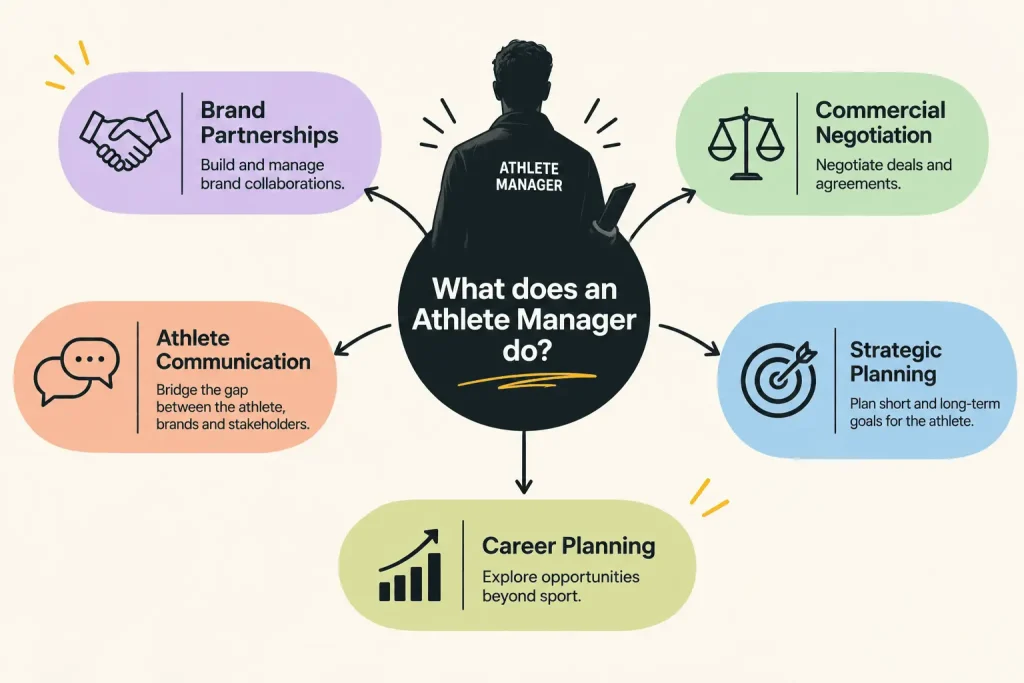
An example of this diversity is the difference between a long-term brand association and a short-term brand association. A long-term brand association may involve annual or multi-year partnership that include shoots, social media campaigns, and event appearances. On the other hand, a short-term brand association may require brief calls, shoot co-ordination, and scripting. But a key similarity between the two is the ability of a good athlete manager to ensure that both the athlete and the brand have a seamless experience.
💡How to become a good athlete manager?
The ability to look beyond the athlete’s current sporting career can set you apart as an athlete manager. Your main goal as an athlete manager should be to build a sustainable professional journey, where your athlete is prepared for opportunities during and after their time in sport.
A manager should be able to identify an athlete’s interests, strengths, and aspirations beyond sport and help them explore opportunities accordingly.
This could mean building a personal brand, entering entrepreneurship, investing in a business, or developing a career in coaching, commentary, or sports administration.
Athlete Management is Evolving Beyond Performance Support
Athlete management today is about looking at the athlete beyond their sporting personality. This is because an athlete’s career on the field may be limited, but their identity, influence and potential can continue for decades.
Indian sport has several inspiring examples of athletes who have successfully diversified their careers.
-
Mahesh Bhupathi transitioned into sports entrepreneurship through ventures such as Globosport and the International Premier Tennis League.
-
Virender Sehwag established a sports school
-
Suresh Raina ventured into the restaurant business.
-
Virat Kohli has built a strong business portfolio through ventures and investments, including WROGN, One8 and FC Goa..
-
MS Dhoni has explored entrepreneurship through ventures such as SportsFit, his co-ownership of Chennaiyin FC, and his film production company, Dhoni Entertainment.
-
Yuvraj Singh has also built an entrepreneurial journey through YouWeCan, investments in startups, and his latest venture, PROTOCOL32, marking his entry into the health and wellness industry.
We also have inspiring examples from Olympic sports.
-
Gagan Narang established the Gagan Narang Sports Promotion Foundation and co-founded Gun for Glory Shooting Academy with Pawan Singh to nurture young shooting talent.
-
Olympic gold medallist Abhinav Bindra established the Abhinav Bindra Foundation and Abhinav Futuristics, focusing on grassroots sports development and technology-driven solutions for sports and healthcare.
-
Saina Nehwal has also explored entrepreneurship through her investment in the health and hygiene brand Paree, along with her commercial association with Yonex.
These examples highlight how athletes can contribute to the development of their respective sports while building opportunities beyond their competitive careers.
About Aethleti Circle
Aethleti Circle is one of India’s leading sports management and marketing firms. At Aethleti Circle, we firmly believe in creating opportunities that aren’t just limited to an athlete’s playing career.
One such example is our association with the kabaddi legend, Pardeep Narwal. We supported him in setting up a kabaddi academy in his hometown. The idea wasn’t just to diversify his professional kabaddi career but to also create opportunities for aspiring young players in his hometown to learn and develop in this sport.
As the CEO of Aethleti Circle, I believe this is what the future of athlete management should look like! A key advantage in achieving this ripple effect of goodness is for a manager to have these conversations early. This can help athletes translate their sporting experience, credibility and influence into meaningful long-term ventures.
“Career planning should not begin when an athlete announces retirement. It should be a continuous process throughout their sporting journey.”
The role of technology, data and professional support systems in helping athletes
Technology and data are going to play a crucial role in the future of athlete management. I believe that the biggest change would be visible in decision-making. It will go from being based on decision-making to a more structured, informed and data-driven approach. How?
Performance Perspective:
On the performance side, technology can help athletes and their support teams understand training loads, recovery patterns, injury risks, performance trends, and areas that require improvement.
Wearables, performance analytics, video analysis, and AI-based tools can provide valuable insights that help coaches and sports scientists make better decisions.
“However, these tools should complement professional expertise rather than replace it.”
Management Perspective:
Audience Insights:
From a management perspective, data can be equally valuable. An athlete’s social media analytics, audience demographics, engagement rates, content performance, and brand association history can help managers understand their commercial value more accurately.
For example, an athlete may not have millions of followers, but could have a highly engaged audience within a particular region or demographic. This can make them essential for brand targeting towards that specific market.
In sports such as kabaddi, wrestling, or regional cricket, understanding an athlete’s audience and influence beyond conventional follower counts can create meaningful sponsorship opportunities.
Record Keeping:
Technology can also help managers maintain structured records of contracts, brand deliverables, financial commitments, schedules, and career milestones. This allows the athlete and their management team to plan more efficiently and avoid missing important opportunities.
Data Safety:
Simultaneously, there needs to be a strong focus on data privacy and responsible use of technology. An athlete’s performance, health, and personal information are sensitive, and the athlete should remain informed about how this data is collected, accessed, and used.
“Ultimately, technology should make athlete management more efficient, transparent, and informed, while keeping the athlete at the centre of every decision.”
Athlete representation, sponsorships, social media and brand partnerships
Commercial opportunities can play a significant role in creating financial sustainability for athletes.
For a long time, an athlete’s earnings were primarily associated with prize money, match fees, or league contracts. Today, an athlete’s commercial value can extend far beyond their performance on the field. Brand endorsements, sponsorships, social media collaborations, appearances, licensing, and entrepreneurial ventures can become important sources of income.
Virat Kohli is a strong example of how an athlete can build a powerful commercial identity alongside sporting success. His association with brands such as Puma and MRF, along with his own business ventures, demonstrates how an athlete’s influence can translate into long-term commercial opportunities.
“However, I believe the opportunity is not limited to high-profile cricketers. Athletes from emerging sports also have the potential to build strong personal brands.”
A kabaddi player, an Olympian, or a national-level athlete may have a highly relevant audience for brands operating in specific categories or markets.
Social Media
Social media has made this particularly interesting. Athletes now have a direct platform to communicate with their fans, share their journeys, establish their personalities, and build credibility. This visibility can help them remain relevant even when they are not actively competing.
The role of athlete representation is to identify the right commercial opportunities and build partnerships that align with the athlete’s personality, values, and long-term goals. Instead of focusing only on one-time endorsements, the objective should be to develop long-term brand associations, recurring commercial opportunities, and potentially equity-based partnerships.
I strongly believe that the future lies in building an athlete’s brand as an asset.
The Importance of Holistic Athlete Development
Holistic athlete development is one of the most important aspects of athlete management, and I believe it deserves much greater attention in the Indian sports ecosystem.
An athlete’s life involves much more than training and competition. They have personal aspirations, financial responsibilities, emotional challenges, and long-term goals. A good management team should be able to provide the right professional support while ensuring that the athlete feels comfortable discussing these aspects of their life.
Financial Planning
Financial planning is particularly important. Sporting careers can be unpredictable, and athletes need to understand how to manage their earnings, plan investments, prepare for periods of limited income, and build financial security for the future. This should be done with qualified financial professionals.
Education and Skill Development
Education and skill development are equally important. Athletes should be encouraged to continue learning and explore opportunities that can help them transition into other professional roles. This could include coaching, entrepreneurship, sports management, commentary, or starting their own ventures.
Mental Well-Being
Mental well-being is another area where the support system plays a crucial role. Athletes experience pressure related to performance, selection, injuries, competition, and public expectations. Having a trusted management team that listens, understands, and connects them with qualified mental health professionals when required can make a meaningful difference.
Post-Retirement Planning
I believe post-retirement planning should begin much earlier than retirement itself. Managers should have regular conversations with athletes about their future aspirations and help them build a roadmap accordingly.
At Aethleti Circle, I believe the larger vision of athlete management should be to create an ecosystem where athletes feel supported not just professionally, but also in their personal growth and future planning.
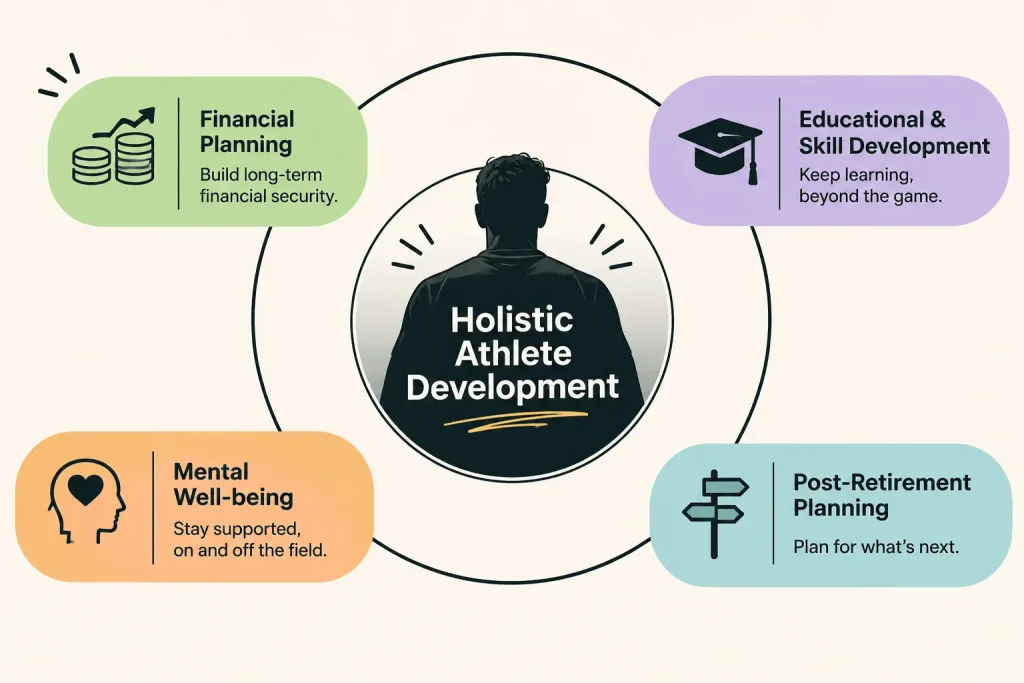
Holistic Athlete Development
Success in Athlete Management
Ultimately, success in athlete management should not be measured only by the number of sponsorship deals closed or the commercial value generated. It should also be measured by how well we help athletes build secure, fulfilling, and sustainable lives beyond their sporting careers.
Frequently Asked Questions (FAQs):