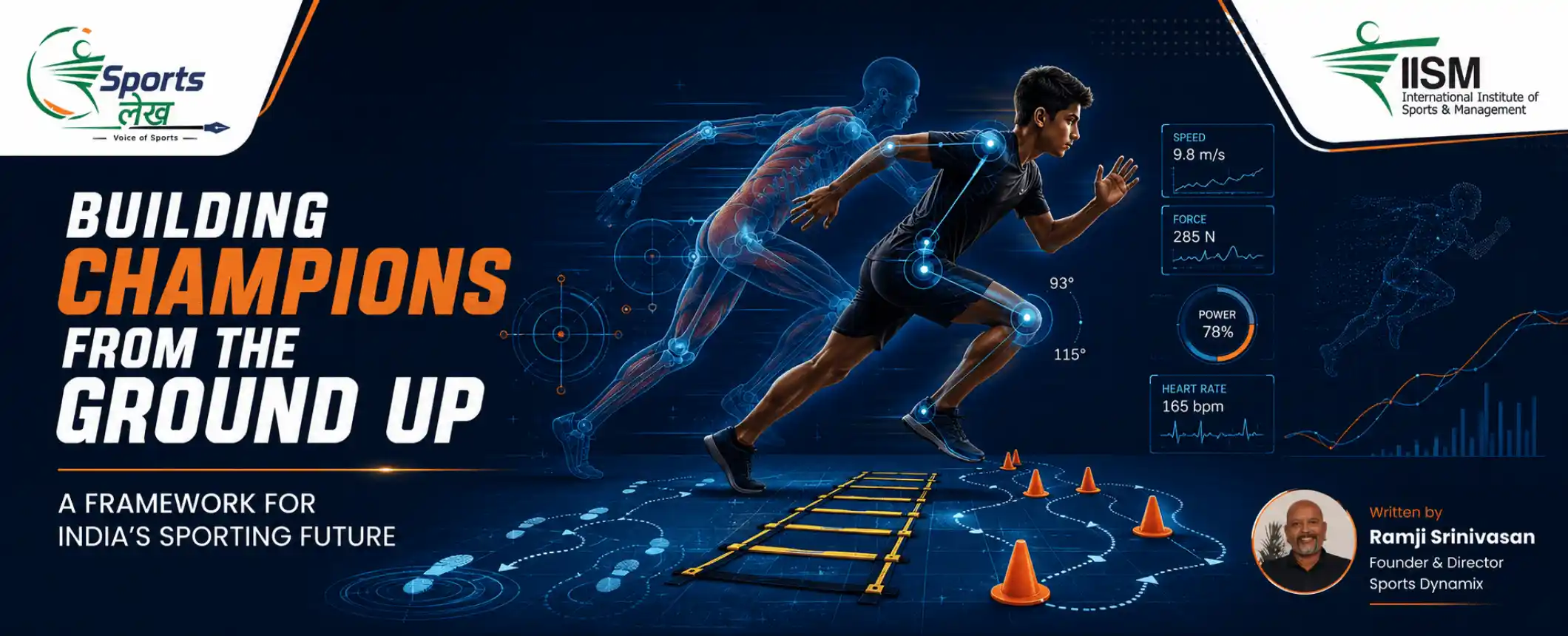
Building Champions From The Ground Up – A Framework for India’s Sporting Future

Physical Literacy and Long-Term Development
In the pursuit of sporting excellence, nations and academies often make a fundamental error, they chase results before building foundations. Across India and much of the developing sporting world, the pressure to produce medal-winning athletes has led to shortcuts that compromise not just performance, but the long-term health and potential of young athletes.
The solution lies in a principled, patient, and scientifically grounded approach to athlete development, one that begins with physical literacy that unfolds over years, not months.
What Is Physical Literacy?
Physical literacy is the motivation, confidence, physical competence, knowledge and understanding that provides children with the movement foundation necessary to engage in physical activities throughout their lives.
It is not simply about being physically fit; it is about developing a deep, embodied understanding of movement itself. A physically literate child can run, jump, skip, throw, catch, balance, and rotate with ease and joy. These are not trivial skills. They are the building blocks upon which every athletic discipline – from sprinting to swimming to wrestling is built.
Physical literacy develops most efficiently during the early and middle childhood years (ages 6–12), a window often called the ‘sensitive period’ for motor learning. During this time, the nervous system is particularly receptive to learning new movement patterns, and the body is highly adaptable. Missing this window does not make skill development impossible, but it makes it significantly harder and slower.
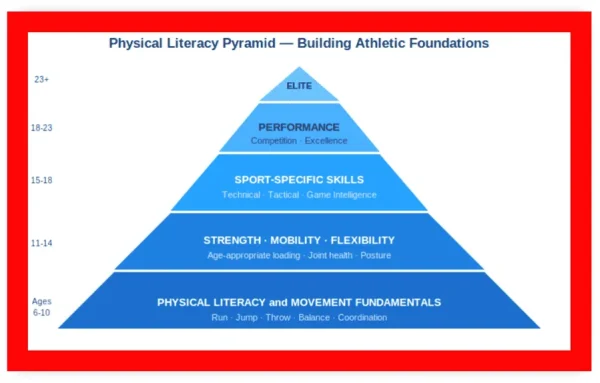
Figure 1: The Physical Literacy Pyramid: Foundational stages of athletic development from childhood to elite performance
The Six Pillars of Athletic Foundation
A comprehensive athletic foundation rests on six interrelated pillars. Each must be developed systematically and in harmony with the others:
● Movement Skills: The ABCs of athletics: Agility, Balance, Coordination, and Speed. These are cross-transferable skills that enhance performance in any sport and must be prioritised in early development programs.
● Strength Development: Often misunderstood, age-appropriate resistance training is not harmful to young athletes. On the contrary, it strengthens bones, connective tissues and muscles, reducing injury risk and laying the groundwork for later power development. Body weight exercises, resistance bands, and light loads introduced progressively are proven safe and beneficial.
● Mobility and Flexibility: Joint range of motion determines how effectively an athlete can express strength, absorb force, and perform complex movements. Tight hips, stiff thoracic spines, and inflexible ankles are among the most common limiters of athletic potential, and they are largely preventable through consistent, structured mobility work.
● Coordination and Proprioception: The ability of the nervous system to organise multiple body segments in space and time is the hallmark of athletic grace. Balance boards, multi-directional drills, and reaction-based activities train the proprioceptive system and improve overall athletic efficiency.
● Aerobic Capacity: The engine beneath all physical performance. Building a broad aerobic base during childhood supports every energy system and recovery mechanism used in sport.
● Psychological Readiness: Confidence, resilience, focus, and intrinsic motivation are not soft additions; they are core athletic attributes. Children who develop positive associations with movement and sport are significantly more likely to sustain engagement across their athletic lifespan.
Key Insight: Research consistently shows that athletes who receive broad, multi-sport, multi-skill development in early childhood outperform early-specialist peers by mid-adolescence with fewer injuries and greater longevity in their sport.
The Danger of Early Specialization
One of the most damaging trends in youth sport globally and increasingly prevalent in India is the pressure to specialise in a single sport before the age of 14. While early specialisation may produce short-term competitive results in age-group competition, the evidence for its long-term value is overwhelmingly negative.
Athletes who specialise early are two to three times more likely to experience overuse injuries compared to multi-sport athletes. They demonstrate narrower physical skill sets, making them less adaptable to tactical or technical demands of elite sport. Burnout rates are also substantially higher among early specialists, and many withdraw from sport entirely by late adolescence, exactly when they should be entering their prime development years.
Long-term athlete development frameworks from Canada, Australia, the UK, and Germany, all among the world’s most successful sporting nations, unanimously advocate for multi-sport participation until at least age 14, with gradual and guided transition into specialisation thereafter.
The Long-Term Athlete Development Model
The Long-Term Athlete Development (LTAD) framework, pioneered by Istvan Balyi and adopted by dozens of national sport organisations worldwide, provides a stage-by-stage blueprint for developing athletes across their entire lifespan. It recognises that different physical and psychological capacities develop at different rates and at different ages, and that training must be aligned with these developmental windows to be effective.
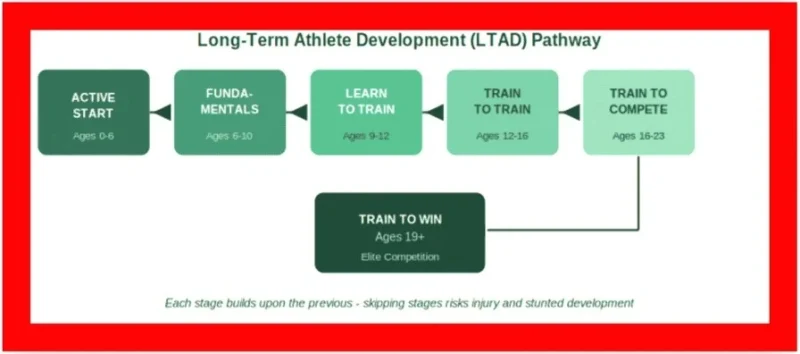
Figure 2: The Long-Term Athlete Development (LTAD) Pathway — Six progressive stages from early childhood to elite competition
The six stages: Active Start, Fundamentals, Learn to Train, Train to Train, Train to Compete, and Train to Win, each carry specific training priorities, volume recommendations, and competition ratios. Crucially, the model emphasises that competition should be a minor element of early development (less than 30% of activity) and that training quality, variety, and enjoyment are the primary drivers of long-term success.
For India, operationalizing LTAD at scale requires grassroots infrastructure, qualified coaching at school level, and a cultural shift away from obsessing over state-level trophies at under-12 age groups. The goal at early stages is not to win but to build athletes who will still be competing, improving, and excelling a decade later.
From Raw Talent to High Performance: Structured Physical Development Pathways
Identifying talent is not enough. India has long been a country with abundant raw physical talent across its diverse population. What has historically been missing is the structured pathway that transforms that raw talent into sustained high-performance potential. This requires a deliberate, progressive, and scientifically managed system of physical development.
Strength and Conditioning: The Engine of Performance
Strength and conditioning (S&C) is the science and practice of improving an athlete’s physical capacities such as strength, power, speed, endurance, flexibility, and body composition, in ways that directly transfer to their sport performance and injury resilience. It is not about making athletes look strong; it is about making them perform better and remain healthy longer.
A well-designed S&C program for a developing athlete includes periodic resistance training. It incorporates Olympic lifts for power development, compound movements for functional strength, unilateral exercises for balance and symmetry, and plyometric training for explosive capability. Equally important are energy system training, sprint mechanics work, and deceleration training, the latter being one of the most neglected injury prevention tools in youth sport.
The key principle is individualisation. Two athletes of the same age, sport, and apparent ability may have vastly different physical capacities, injury histories, and developmental timelines. The best S&C programs are not group templates but adaptive systems that monitor and respond to each athlete’s real-time state.
Nutrition: Fuelling Development and Recovery
Sports nutrition is not a luxury for elite professionals. It is a foundational requirement at every level of athletic development. Yet across India’s youth sports system, nutritional guidance is almost absent. Young athletes are routinely expected to train for hours on inadequate caloric intake, poor protein distribution, and micro-nutrient deficiencies that impair both performance and growth.
Relative Energy Deficiency in Sport (RED-S), formerly known as the female athlete triad, is an increasingly recognised syndrome in adolescent athletes of both sexes, characterised by insufficient energy availability relative to exercise load, with wide-ranging consequences for bone health, hormonal function, immune response, and cognitive performance.
The fundamentals of sports nutrition for developing athletes centre on several key areas. Energy availability, ensuring sufficient caloric intake to support both training demands and normal growth (most critical).
Protein timing and distribution – consuming high-quality protein spread across meals and snacks, with particular emphasis on post-exercise windows is essential for muscle protein synthesis and repair.
Carbohydrate periodisation, matching carbohydrate intake to training demands, supports energy availability without unnecessary caloric excess. Hydration, micro-nutrient density (particularly iron, calcium, Vitamin D, and zinc for young Indian athletes), and gut health are equally important considerations.
Evidence: Athletes receiving structured nutritional guidance demonstrate 15–20% improvement in training adaptation compared to nutritionally unsupported peers, and significantly lower rates of illness and stress fractures across development programs.
Recovery: The Overlooked Training Variable
In most athletic environments, recovery is treated as the absence of training, a passive interlude between workouts. In reality, recovery is where adaptation happens. The training stimulus creates the stress; recovery is where the body rebuilds stronger, faster, and more resilient. Without adequate recovery, training stress accumulates, leading to performance stagnation, illness, and injury.
Structured recovery programs for developing athletes include sleep optimisation (7–9 hours for adolescent athletes, with consistent sleep-wake timing), active recovery sessions (low-intensity movement that promotes circulation and clearance of metabolic by-products), cold water immersion or contrast therapy where appropriate, soft tissue work (massage or foam rolling), psychological recovery (mindfulness, relaxation techniques) and deliberate disengagement from sport.
Heart rate variability (HRV) monitoring has emerged as one of the most accessible and actionable tools for guiding daily recovery decisions. By measuring the variation between successive heartbeats (a proxy for autonomic nervous system readiness), coaches and athletes can make evidence-based decisions about training intensity on any given day, replacing guesswork with data.
Workload Management: The Science of Appropriate Load
Perhaps the single greatest cause of injury and burnout in youth sport is excessive and poorly managed training load. Workload management, the systematic monitoring and regulation of training and competition exposure, is a discipline that has transformed professional sport over the past decade and must now be extended to junior development environments.
The acute chronic workload ratio (ACWR) is a key metric. It compares an athlete’s training load over the past week (acute load) against their rolling four-week average (chronic load). Research consistently shows that athletes who spike their weekly load well above their established chronic level are at dramatically elevated injury risk. Conversely, athletes who maintain a progressive, managed loading trajectory can train harder and more consistently while remaining healthy.
For grassroots programs in India, basic workload management does not require sophisticated technology. Session ratings of perceived exertion (sRPE), where athletes rate the difficulty of each session from 1–10, multiplied by duration in minutes, provide a simple, and cost-free method for tracking cumulative training load across a squad.
Sports Science and Injury Prevention
The most talented young athlete in the world cannot fulfil their potential if they are injured. Yet, preventable overuse injuries remain one of the most common problems in youth sport, both globally and in India.
Sports science has developed sophisticated, evidence-based frameworks for understanding, predicting, and preventing athletic injury. Their implementation at every level of the sporting ecosystem is not optional but a prerequisite for building a sustainable sporting culture.
The Epidemiology of Youth Sport Injury
Understanding injury patterns in youth sport is the starting point for prevention. Research consistently identifies several major categories of injury in developing athletes.
Acute traumatic injuries (sprains, strains, fractures, and contusions) account for a significant proportion of youth sport injury presentations. They are often the result of inadequate preparation, poor technique, or unsafe competitive environments.
Growth-related injuries (including apophysitis) are unique to developing athletes and require specific management approaches.
Overuse injuries, however, represent the greatest burden of preventable harm. These injuries (stress fractures, tendinopathy, muscle imbalances, and repetitive strain conditions) develop gradually, when they exceed the tissue’s capacity to adapt. They are largely preventable through appropriate training design, workload management, recovery protocols, and physical preparation.
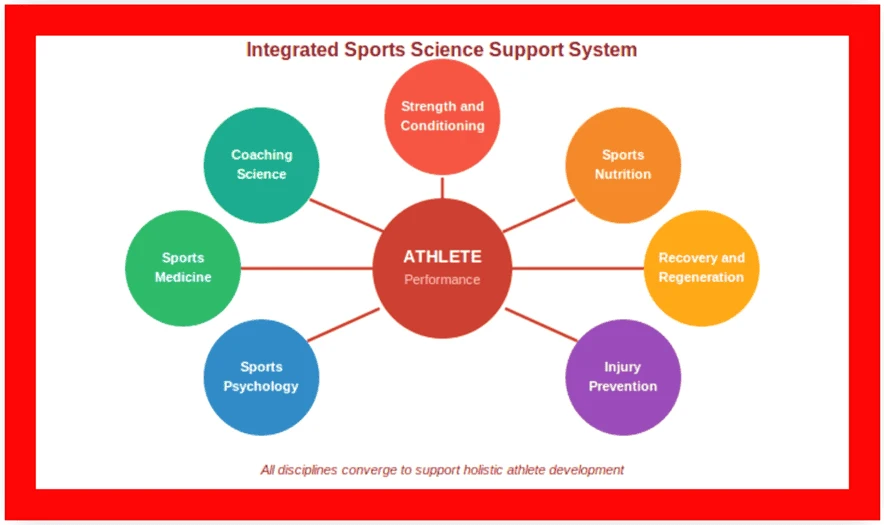
Figure 3: The Integrated Sports Science Support System — A multidisciplinary model centred on athlete well-being and performance
Key Sports Science Interventions for Injury Prevention
Biomechanical screening and movement assessment are among the most powerful injury prevention tools available. Systems such as the Functional Movement Screen (FMS), the Y-Balance Test, and sport-specific movement analysis protocols can identify asymmetries, mobility restrictions, and compensatory movement patterns that significantly elevate injury risk. Addressing these through targeted corrective exercise, before they manifest as injury, is both cost-effective and evidence-based.
● Neuromuscular training programs (most famously the FIFA 11+ warm-up protocol) have demonstrated 30–50% reductions in lower limb injury rates across multiple large-scale studies by combining dynamic warm-up exercises, strength training, and balance challenges in structured protocols that can be delivered without equipment in any training environment. Equivalents exist for most major sports and injury types.
● Sleep and recovery monitoring addresses what has been described as the most powerful legal performance-enhancing intervention available. Sleep deprivation of even modest magnitude (one to two hours below optimal) substantially elevates injury risk, impairs reaction time, decision-making, and skill execution, and compromises immune function.
● Systematic education of athletes and their families about sleep hygiene is a high-impact, zero-cost injury prevention strategy.
● Graduated Return-to-Sport Protocols: A structured, stage-by-stage return pathway progressing from rest through rehabilitation to full training and competition.It dramatically reduces re-injury rates and ensures athletes return with restored function rather than simply reduced pain.
● Psychological Dimensions of Injury: Fear-avoidance, catastrophising, and low athletic self-confidence following injury are significant predictors of delayed recovery and re-injury. Sports psychology support should be integrated into injury rehabilitation as standard practice.
● Load Monitoring Systems: Whether using GPS-based wearables, accelerometers, or simple questionnaire-based methods, systematic monitoring of training and competition load is the single highest-return investment in injury prevention infrastructure.
Critical Developmental Stages and Their Specific Vulnerabilities
Puberty represents the most vulnerable and important period in athletic development. The rapid skeletal growth of the adolescent growth spurt temporarily alters biomechanics, flexibility, and neuromuscular coordination. Muscles and tendons often lag behind bone growth, increasing stress. Training loads that were appropriate before the growth spurt may become excessive during it, requiring careful adjustment.
The Peak Height Velocity (PHV), the period of most rapid height gain during puberty is a critical marker for training design. Coaches trained to identify and respond to PHV can protect athletes during this vulnerable window while capitalising on the simultaneous window of opportunities for aerobic development (males) and skill refinement (females).
Post-puberty, the transition from junior to senior competition represents another high-risk juncture. Athletes accustomed to age-group competition suddenly face older, stronger, more experienced opponents and frequently increase their training loads dramatically. This transition requires careful management from both a physical preparation and psychological support perspective.
Critical Principle: The goal of sports science in athlete development is not to produce athletes who survive training, but to produce athletes who thrive through it, arriving at their physical and competitive peak with their bodies and motivation intact.
Technology, Data and Multidisciplinary Support
The integration of sports science, technology, and data-driven decision-making represents not merely the frontier of elite athletic performance, it is increasingly the infrastructure of effective mass participation development.
For India, with its vast population, geographic diversity, and rapidly expanding digital connectivity, the strategic application of these tools offers an extraordinary opportunity to build a sporting ecosystem capable of producing sustained international excellence at scale.
Wearable Technology and Performance Monitoring
Wearable technology has democratised access to performance data that was previously available only to the wealthiest professional organisations. GPS tracking units, accelerometers, heart rate monitors, and inertial measurement units (IMUs) can now be deployed across junior academies and development programs at relatively modest cost, providing objective, continuous data on physical outputs, movement patterns, and physiological load.
At the grassroots level, even simpler technologies: heart rate monitors paired with smartphone applications, GPS-enabled sports watches, and basic force plates provide coaches with far richer information than traditional observation alone. The critical requirement is not the sophistication of the technology, but the quality of interpretation and the responsiveness of coaching practice to the insights generated.
Recovery-tracking technologies including HRV monitors, sleep trackers, and readiness questionnaire applications allow for the individualisation of daily training prescription. A squad of 20 athletes may arrive at training in different physiological states. Technology enables the coach to respond to this diversity rather than imposing a uniform workload that is appropriate for some and harmful for others.
Video Analysis and Biomechanics
High-speed video analysis has become one of the most widely accessible and impactful tools in sports science. Using nothing more than a smartphone and freely available software, coaches can conduct frame-by-frame analysis of athletic technique, identifying inefficiencies and injury risk patterns that are invisible to the naked eye.
Advanced applications using AI-powered pose estimation (several of which are now available as mobile applications) can automatically extract joint angles, movement velocities, and symmetry metrics, bringing laboratory-grade biomechanical analysis to the training ground.
At national academy level, three-dimensional motion capture systems, force plates embedded in athletic surfaces, and pressure mapping insoles provide the highest-resolution picture of athletic movement, enabling the most precise interventions in technique, equipment, and injury rehabilitation. The Sports Authority of India (SAI) has begun investing in such facilities, and their outputs must be systematically translated into practical coaching guidance that flows through the entire development pathway.
Data Analytics and Decision-Making
Data analytics in sport extends far beyond match statistics. At the athlete development level, data-driven decision-making encompasses tracking longitudinal physical development benchmarks, identifying talent early and accurately through objective testing batteries, optimising training periodisation based on individual athlete response data, monitoring academic performance and its interaction with athletic training loads, and tracking injury incidence and its relationship to training variables to enable continuous improvement of safety protocols.
Machine learning algorithms trained on large athlete development datasets can identify patterns predictive of injury, under-performance, or rapid improvement long before they are apparent to even experienced coaches. For a country the size of India, where identifying the top one percent of athletic talent from a population of 1.4 billion requires sifting through extraordinary numbers, AI-assisted talent identification systems could be genuinely transformative.
Unified athlete management platforms – centralised digital systems that track athlete health, performance, training history, educational outcomes, and psychological wellbeing from grassroots entry through to national squad are essential infrastructure that India’s sporting ecosystem currently lacks. Building this infrastructure is a foundational investment in the country’s sporting future.
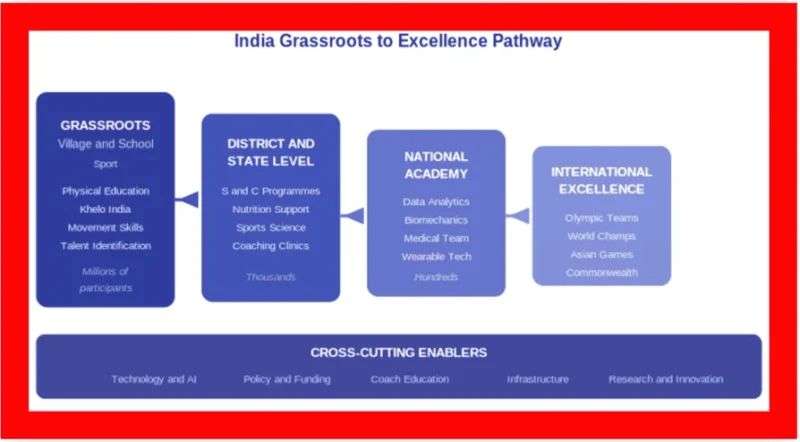
Figure 4: India’s Grassroots to Excellence Pathway – An integrated model from village sport to international competition
The Multidisciplinary Support Team
High-performance sport in the 21st century is not the domain of the solo genius coach. It is a team enterprise. The modern high-performance environment integrates contributions from sports scientists, strength and conditioning specialists, sports dietitians, physiotherapists and sports medicine physicians, psychologists, video analysts, biomechanists, and data scientists all working in coordinated service of the athlete and coach.
For India’s grassroots ecosystem, achieving this level of multidisciplinary support across every district sports centre and school athletic program immediately is neither realistic nor necessary. What is achievable and urgently required is a tiered service delivery model.
-
At the elite and national academy level, full multidisciplinary teams should be standard.
-
At the state and regional level, shared service arrangements where sports science professionals support multiple programs can create broad coverage at manageable cost.
-
At the grassroots level, access to basic sports science resources: evidence-based training guides, online professional development for coaches, telemedicine access to sports medicine can raise the quality of development across the widest possible base.
Policy, Ecosystem and Culture: The Enabling Environment
Technology and expertise are necessary but not sufficient. Transforming India’s grassroots sporting ecosystem requires an enabling policy environment that treats physical education as a genuine academic priority, with qualified teachers, dedicated time, and appropriate facilities. It requires investment in sports infrastructure, not just elite stadiums, but village playgrounds, school sports fields, district swimming pools, and local athletics tracks.
It demands a coaching workforce development strategy that creates pathways for thousands of qualified, science-literate coaches rather than dozens, supported by continuous professional development and a credentialing system that rewards evidence-based practice. It requires a competition calendar designed to serve athlete development rather than administrative convenience, with age-appropriate formats, appropriate volumes, and explicit developmental rather than purely competitive objectives at junior levels.
Perhaps most critically, it requires a cultural shift in schools, families, and sporting bodies away from the seductive but destructive logic of early competitive success, and toward a patient, principled investment in the full human and athletic development of every young person who laces up their first pair of sports shoes. The medal table is an outcome; it cannot be the starting point.
Vision for India: A national sporting ecosystem where every child has access to quality physical literacy education; every talented athlete progresses through a scientifically designed development pathway; every coach is equipped with evidence-based knowledge; and every major international competition sees Indian athletes, not just surviving on the world stage, but setting the standard.
The Patient Path to Permanent Excellence
India’s ambitions in international sport are legitimate and achievable. The country possesses the population, the talent, the economic growth trajectory, and increasingly, the institutional awareness to build a truly world-class sporting culture. But ambition without architecture produces frustration, not medals.
The principles outlined in this document, the primacy of physical literacy, the wisdom of long-term athlete development, the necessity of structured physical development pathways, the power of sports science in protecting and extending athlete careers, and the transformative potential of technology and multidisciplinary support, are not theoretical ideals. They are the demonstrated foundations of every nation that has built lasting sporting greatness.
They require patience. They require investment. They require a willingness to measure success not by the trophies won at under-14 level, but by the number of healthy, motivated, excellent athletes who emerge a decade later, ready to represent their country on the world’s highest stages.
The children who will win Olympic medals for India in 2036. There is no better time to begin than now, and there is no better investment for a sporting nation than the foundations from which all else grows.
and beyond are in school today, or not yet born. The decisions made now about physical education curricula, coach development, early specialisation, and sports science infrastructure will determine. whether they fulfil or forfeit their potential.