The Future of Sports Events: Building Sustainable, Scalable and Experiential Sporting Experiences

Sports in India
How a nation that once just watched cricket built a $130 billion industry around playing everything!
It was June, 1983. In the wee hours of that eventful night, a spellbound India watched something unimaginable happen thousands of miles away from their homes.
The all-rounder and captain of the Indian cricket team proudly lifted the Cricket World Cup, beating the formidable and fearsome West Indian team in what will continue to be called one of the biggest upsets in any sporting event ever. Indians had done the unthinkable and crossed the ultimate frontier on an international sporting stage.
This victory not only marked a milestone in cricket but also ignited a new era of sporting ambition and national pride, inspiring generations to come. Sport changed forever in India.
Moving from Spectators to Participants
After more than four decades, much water has now flowed down the Ganges. Sport in India has undergone a visible transformation from being largely spectator-driven to participative. The country that once loved cheering from the sidelines now wants to join in, sweat through it, and fight it out, win or lose. That mirrors something bigger happening in India as a whole. This is a country that has gradually pivoted from self-doubt to assertiveness in most essential facets. And sport was no exception to this change.
Sporting ambition today tracks national ambition. The energetic youth of India want nothing less than the best in whatever they set out to do. As a nation, we no longer pray for victory but instead prepare scientifically, putting in innumerable hours of mental and physical effort to win glittering medals or shining trophies. Our appetite for sport, and most importantly, for participation and winning, is skyrocketing. Sport has gained deeper respect, seeping into the fabric of our society as something no longer peripheral but central.
Government policies and initiatives, such as the Khelo India program, are instrumental in this shift, fostering physical literacy and supporting grassroots development. Sport now means different things to different people, but there is a unanimous recognition that it fuels great energy and force at individual and societal levels. Governments, corporations, educational institutions, and families are all looking at sport through an extremely refreshing lens.
India’s emerging soft power as an experiential economy is evident to the world. Today, India is not only conceiving and hosting world-class events but also giving a holistic and fulfilling experience. Spiritual, Sporting, Economic, Governmental – it is becoming a model for experiential events.
In the last few decades, the country has successfully created some iconic global sporting intellectual property (IP) and continues to do so. These IPs have now become a part of life for most Indians.
A Story First, A SpreadSheet Second
Touch, feel, and human connection are the essence of any sport. A sports event that keeps working on building that connection has found the key to lasting success. Sports events are a beautiful blend of storytelling and financial discipline. Neither survives long without the other.
A sports event promoter must identify the founding pillars on which he wants his sporting event to stand the test of time. He therefore has to ensure that the event he is conceiving and seeking financial backing for not only returns to him but also makes a wholesome contribution to our nation at large. Is it giving something back to people beyond a finish-line photo? That is what makes it a story worth telling and retelling, year after year.
Any sporting event becomes more of a city event as it engages and involves various stakeholders who, in some way, are influenced by it. Whether it is the Government, Civic authorities, Police, Defense Services, NGOs, or educational institutions.
In the Indian metro cities, Resident Welfare Associations are becoming deeply involved in such public sporting events and serve as a great source of motivation and support. The real test of a sports promoter comes the moment an event is missed and thought of fondly. If a city or country goes through a year without hosting sports events, that absence is the moment of truth.
Thanks to an exploding internet, rising disposable income, and demographic dividends in India, people are finally willing to spend on good experiences. The onus to deliver them a stellar experience, event after event, is back on the sports event promoter. The one who has got this right is on the way to creating a hugely successful and sustainable event.
Like most facets of new-age living in India, sport is now a 24 x 7 x 365 stream of content. Fans or followers of sport have to be constantly kept engaged, as there are hundreds of other activities competing for their attention. Thus, enough reasons are created to keep the fans loyal and hungry for more. Sporting events are now becoming a rich source of engagement and interaction wherein one can dive into an immersive experience.
Running, Cricket, Football, Tennis, kabaddi, and many other sports are getting showcased through spectacular events in India today. A successful sports event is one that keeps its participant base engaged beyond the event days through content, community, and commerce. With this happening, this base silently and steadily grows in no time, adding value to that event.
Ingredients of Successful Sports Event Management
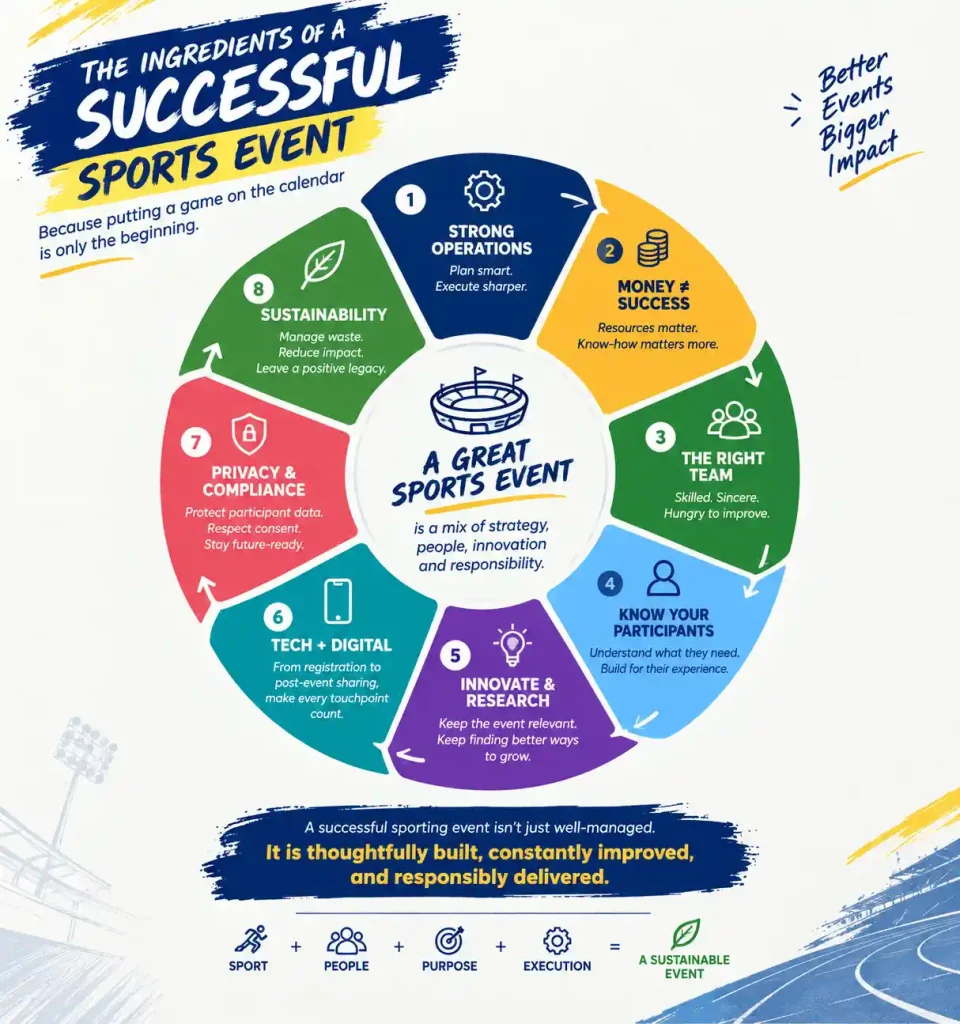
A sports event promoter is expected to do a lot of groundwork before embarking on what is usually an taxing and draining journey – putting a scalable sporting event together. The availability of financial resources does not automatically translate into a successful sporting event.
Operational knowledge is also important, having the necessary skill sets, and putting together an honest and hard-working team, keeping a pulse on the sport for which the event is being planned, deep-diving into participants’ expectations, and pulling out all the stops to meet all their fair expectations.
A sports event promoter must recognize and respect that there is always scope for improvement, and one who works with such humility and hunger is surely on the way to establishing a sustainable event, commercially, operationally, and emotionally. Sincerity and empathy are foundational for creating a success story, and a sporting event is no different.
Innovation and research are critical facets of any growing large sporting event. Creative ways to attract brands, create success stories, make the event relevant to an ever-wider range of brands, and offer an end-to-end experience for participants are key to ensuring a sustainable legacy event.
The use of technology and digital spaces has seen a huge upswing over the last decade or so. Body-worn wearables, UPIs, drones, DSLR and GoPro cameras, etc., are now more visible at sporting events than ever. Keeping pace with changing technology is non-negotiable now. In fact, the tech and digital experience of any sporting event is usually the first and last touchpoint for participants, as they begin by registering for the event online and end by sharing their overall experience on whichever digital platforms they are part of.
Social media has now taken centre stage for interaction between the promoters of any sporting event and its constituents. Feedback, suggestions, stories, status, trivia, and content announcements-social media is the place to be and to go.
With increasing awareness and rapidly growing digital literacy, the concepts of data privacy and confidentiality, parental consent, and related issues are becoming critical areas of focus for sporting events. Complying with new-age laws like the Digital Personal Data Protection Act is no longer a choice but a compulsion. A sports event can’t afford the luxury of being ignorant of these aspects, as it aspires to create a sustainable event.
Another critical aspect for any sports event is sustainability and waste management-ensuring that the event causes no ecological disturbance of any kind. With thousands of people participating, it is only natural that there will be a humongous amount of food, water, disposables and bio-waste that needs to be managed. This is not only an operational or experiential responsibility, but an ethical one too.
Key Components of a Sports Event
Sport has a great parallel to a corporate ecosystem. Tenets of teamwork, strategy, resource optimization, fair play, etc., are direct parallels between sport and business. Sports events can directly and indirectly infuse these priceless virtues into any business environment. Therefore, business and corporate houses should not shy away from backing and investing in sports events of their choice.
Today, most participative events, especially distance-running events, draw thousands of participants, either individually or as groups. Taking part in sports can have a clear and positive impact on a person’s productivity, mental well-being, and physical health.
Women in India have emerged from the patriarchal shadows across all spheres, and sport is no exception. Thousands of Indian women are learning, training, and participating in sports events. Be it a woman battling it out in a competitive business environment, a housewife who goes through a gruelling routine yet cherishes that sense of achievement, or a professional juggling her work, health, family, and social life. Women are finding their moment of freedom and sense of individuality through these sports events.
Inclusiveness and human stories related to any sporting event fuel its growth. Seniors, people with disabilities, and the underprivileged are among the communities that must have easy access to sporting events. A sporting event will serve a great purpose if it can instil competitiveness, pride, a sense of purpose, and a sense of achievement among these sections. Once this section becomes the most shining ambassador of a sporting event, that event is birthing a great story.
The Balancing Act Between Economics and Storytelling
Experience and scale in any sporting event demand equivalent financial resources. Therefore, backing of sporting events by Corporations in the form of sponsorships and collaborations, by authorities in the form of facilitating easy, low-cost access to infrastructure, and by participants in the form of paying the required participation fee make a sporting event both experiential and economically viable.
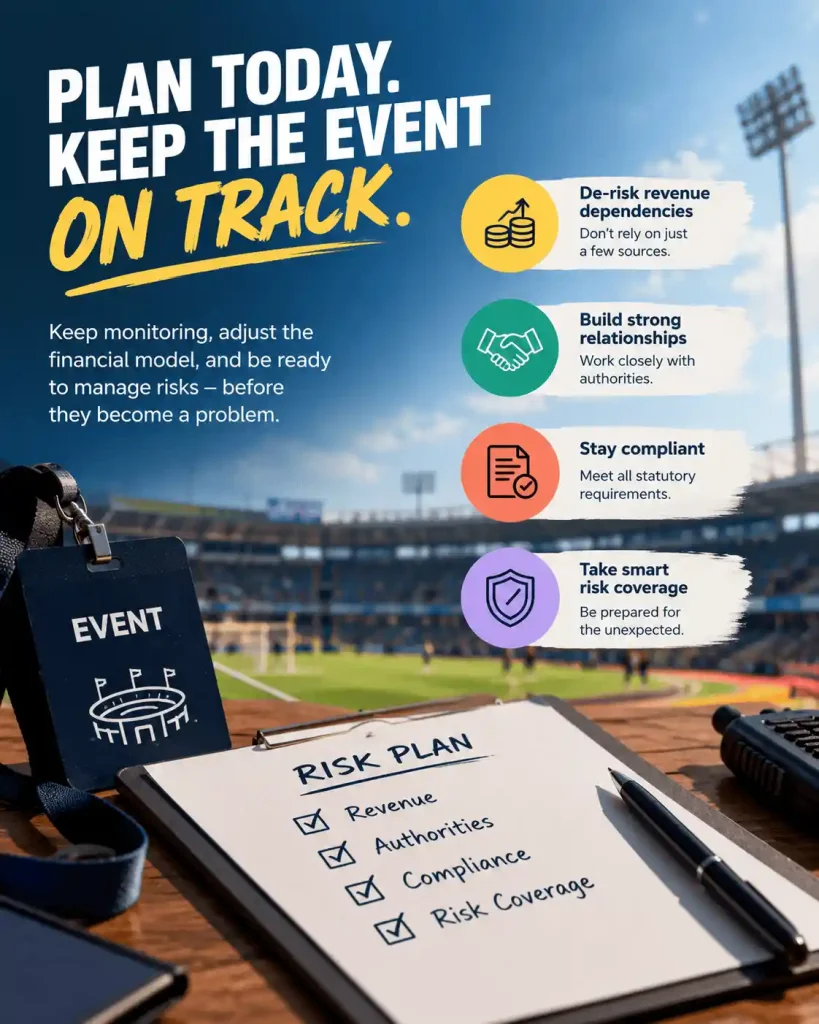
A sports event should continue to monitor and adjust its financial model and ensure it can implement reasonable measures to mitigate risks and dependencies. Any dependency, be it operational, financial, logistical, or natural, can spiral out of control without warning, putting the event at risk. De-risking revenue dependencies from a handful of sources, developing cordial relationships with authorities, ensuring statutory compliance, and taking reasonable risk coverage are all areas to keep in mind.
The Ripple Effect through Sports Events
A single well-run sports event creates layers of clearly measurable socio-economic impact. Employment generation, a boost to the local economy through increased travel and hospitality, a spike in funds raised by participants in causes they value, an increase in nutrition-related demand, merchandising, and shopping are all outcomes of a successful sports event. Needless to say, the more such sports events, the bigger the multiplier effect.
Irrespective of the sport, sports event promoters will always want to create and leave behind an event that outlasts them and becomes a story for generations to come. A successful sports event not only brings pride and prestige to the nation but also uplifts society’s collective energy, creates a significant economic impact, and serves as a catalyst for elevating the level of that particular sport.
“A nation’s sporting culture and receptivity towards sports are directly proportional to the growth of its sports industry.”
Sports events are the critical building blocks on which the future of sport in any country stands, and the stronger these building blocks become, the more glorious a nation’s sporting culture becomes. Sport is probably one of the few facets of life in which a human being can indulge, irrespective of age, sex, creed, religion, economic background, or nationality. A sports event of any kind, held with honesty, empathy, and inclusiveness, is nothing but a place and a period of worship, immersion in meditative energy, and universal human connectedness.
“ A nation that prepares, plays, and prays is en route to becoming great. “