

Sports Infrastructure: The Bridge Between Talent and Triumph

Infrastructure connects raw potential with world-class performance and lasting sporting success.
Before he became one of India’s greatest hockey icons, Dhanraj Pillay was simply another barefoot dreamer on the dusty grounds of Khadki near Pune, chasing a tattered ball with a broken stick bound together by twine. The son of a groundsman at the Ammunition Factory, he possessed none of the advantages normally associated with sporting success—no celebrated coach, no sophisticated equipment, no synthetic turf, and certainly no sports science.
What Pillay did possess, however, was something no academy could manufacture: an insatiable hunger to play. “Hockey was my life,” he would later say. “If not for hockey, I don’t know what I would do.”
Talent gave him hope. Opportunity gave him wings.
How Dhanraj Pillay Evolved in Mumbai
At 17, Pillay arrived in Mumbai to play for RCF, and for the first time, his extraordinary talent met world-class sporting infrastructure. The sprawling sports complex at Chembur became his second home. Long before sunrise, he could often be found alone on the natural turf, running wind-sprints, working on his dribbles, and striking hundreds of balls into an empty goal.
When teammates called it a day after exhausting practice sessions, Pillay stayed back — running extra laps on the hockey ground, building strength in the gymnasium, and recovering in the swimming pool. Every facility became another instrument in his relentless pursuit of excellence. He demanded more of himself than any coach ever could.
The transformation was inevitable. Outstanding infrastructure, combined with extraordinary commitment, moulded a gifted youngster into one of the finest hockey players India has ever produced. A subsequent move to Mahindras, where he trained and competed alongside some of the country’s greatest players, elevated his game still further. National selection soon followed.

Mahindra Hockey Stadium, Mumbai
Over the next two decades, the boy from Khadki represented India in four Olympic Games and four World Cups, besides four Champions Trophy tournaments, captivating hockey lovers with his breathtaking pace, magical stickwork, and fearless attacking flair.
Pillay’s journey raises an intriguing question. Would he have become the player he did had he remained in Khadki without access to quality sporting infrastructure?
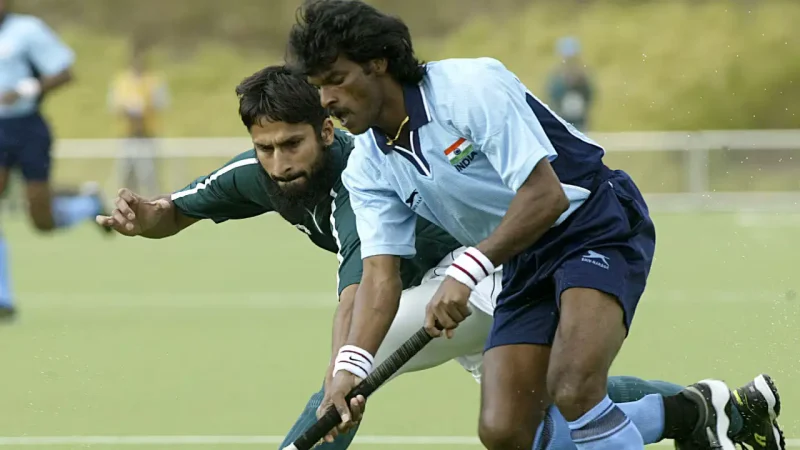
Dhanraj Pillay
An even bigger question confronts India today. How many future Dhanraj Pillays are still waiting in our villages and small towns? The talent exists. The passion certainly exists. What often separates a promising youngster from an Olympic champion is not ability, but opportunity.
Why Quality Sports Infrastructure Matters
Sporting infrastructure is far more than brick, concrete, and steel. It is the vital bridge between raw potential and world-class performance. Quality facilities do much more than improve training; they act as a social catalyst. They inspire mass participation, widen the talent pool, and convince parents that sport can offer a genuine, viable career rather than an uncertain pastime. By taking modern facilities to rural and semi-urban India, sport ceases to be an urban privilege and transforms into a national movement.
The Khelo India programme has made an encouraging beginning in this direction. Across the country, synthetic tracks, astroturfs, modern equipment, strength and conditioning centres, sports science support, and qualified coaches are gradually reaching regions that were once neglected. Talented youngsters are no longer compelled to abandon their dreams simply because they were born far from a metropolitan city.
Yet this is only the beginning. Every school, every town, and every district deserves access to quality sporting facilities, supported by trained physical education professionals capable of identifying and nurturing talent at an early age.
India has already witnessed what happens when opportunity reaches the hinterland. Haryana has become a cradle of world-class wrestlers and boxers. The North-East continues to produce exceptional footballers, weightlifters, and boxers.
Cricket, once dominated by Mumbai, Delhi, Chennai, Bengaluru, and Kolkata, now regularly discovers stars from Ranchi, Meerut, Rajkot, Kanpur, and dozens of smaller centres that were once entirely ignored.
The Golden Foundation of Neeraj Chopra
Perhaps no modern example illustrates the power of infrastructure better than that of Neeraj Chopra. At 13, Chopra first picked up the javelin simply to lose weight. Coaches at Shivaji Stadium in Panipat quickly recognised his exceptional talent and moved him to the Tau Devi Lal Sports Complex in Panchkula, followed by the National Institute of Sports in Patiala and later the Kalinga Stadium in Bhubaneswar, where he trained under increasingly accomplished coaches.

Neeraj Chopra whle training in Lisbon
As his potential grew, so did the quality of his preparation. He trained in South Africa, Antalya in Turkey, Uppsala in Sweden, and Lisbon in Portugal, gaining exposure to world-class coaching methods and facilities. He worked under Werner Daniels before coming under the guidance of Uwe Hohn, the legendary German whose 104.80-metre throw remains one of athletics’ most remarkable achievements.
The investment paid rich dividends. At the Tokyo Olympics, Chopra produced a magnificent throw of 87.58 metres in his second attempt to win India’s first-ever Olympic gold medal in athletics. Natural talent had found its perfect partner in world-class coaching, scientific training, and outstanding infrastructure.
How Indian Cricket Ecosystem Was Upscaled
Indian cricket offers another compelling example of structural transformation. Between the 1960s and early 1990s, many Indian cricketers spent the monsoon months playing league and county cricket in England because India lacked adequate year-round facilities. Overseas exposure was not a luxury — it was a necessity to maintain competitive match fitness.
Everything changed once the BCCI became financially strong around the turn of the century. State-of-the-art cricket academies, indoor practice centres, specialised coaching programmes, and the National Cricket Academy in Bengaluru revolutionised player development.
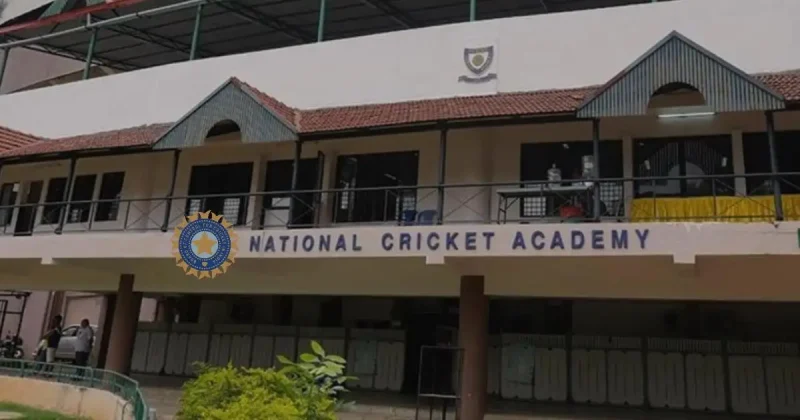
National Cricket Academy Bengaluru
Young cricketers could now train throughout the year using modern technology, sports science, and world-class facilities. The results speak for themselves. India has become the undisputed powerhouse of world cricket, producing an endless stream of technically accomplished players while creating lucrative professional careers that once seemed unimaginable.
Opportunities to excel begin with basic infrastructure being made available to young aspirants in every sport. However, we must ask ourselves a sobering question: how many talented athletes have we lost over the years to preventable injuries and poor safety standards?
Integrating Sports Science
Sports facilities need to be world-class, but they also require integrated, regional sports medicine and rehabilitation centres. Access to top-tier physiotherapists, sports doctors, and recovery technology ensures that an athlete’s career is not cut short by injury, allowing them to return to peak performance faster and safer.
Furthermore, India is a vast and diverse nation. Weather conditions, topography, and cultures change drastically from state to state, sometimes even from district to district. A high-altitude training centre in Himachal Pradesh serves a different purpose than a coastal academy in Kerala. Consequently, there cannot be a singular, monolithic development plan for the entire country. Infrastructure must be tailored to regional strengths and environmental realities, capitalizing on local geography to maximize athletic efficiency.
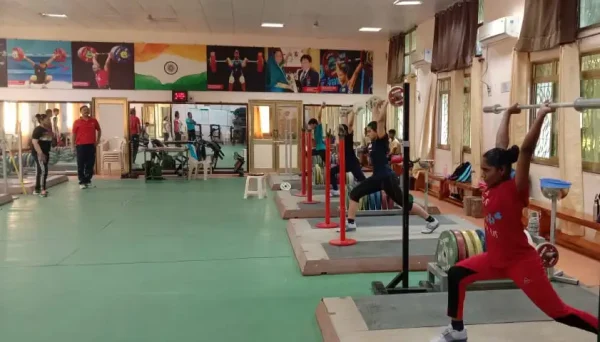
A Sports Authority of India (SAI) Training Centre
Crucially, physical infrastructure must be paired with psychological infrastructure. Another critical area Indian sport needs to urgently address is psychological conditioning, especially for rural athletes. For a youngster transitioning from a quiet village to a high-pressure international arena, the experience is nothing less than a massive culture shock. The glare of the media, the pressure of expectations, and the sheer scale of global competition can be overwhelming.
A winning mindset, emotional resilience, and mental toughness are not traits that develop overnight; they must be systematically ingrained in up-and-coming athletes at a very young age by professional sports psychologists working right alongside the coaches on the ground.
Conclusion
The success stories of our champions demonstrate that excellence is not confined to metropolitan cities. They also remind us that India has only begun to scratch the surface of its immense reservoir of sporting talent.
If India truly aspires to become a global Olympic powerhouse, the search for champions cannot begin at selection trials. It must begin much earlier — in school playgrounds, village sports centres, district academies, and world-class training facilities that give every gifted child, irrespective of geography or background, an equal chance to dream, to train, and, ultimately, to triumph.
The next Dhanraj Pillay or Neeraj Chopra is almost certainly out there today, running on a dirt path or throwing a makeshift spear. Whether that child becomes a world champion depends not merely on their inherent talent, but on whether India builds the comprehensive pathways — physical, medical, and psychological — that allow that talent to flourish.