7 Key Skills You Must Learn to Become a Sports Manager
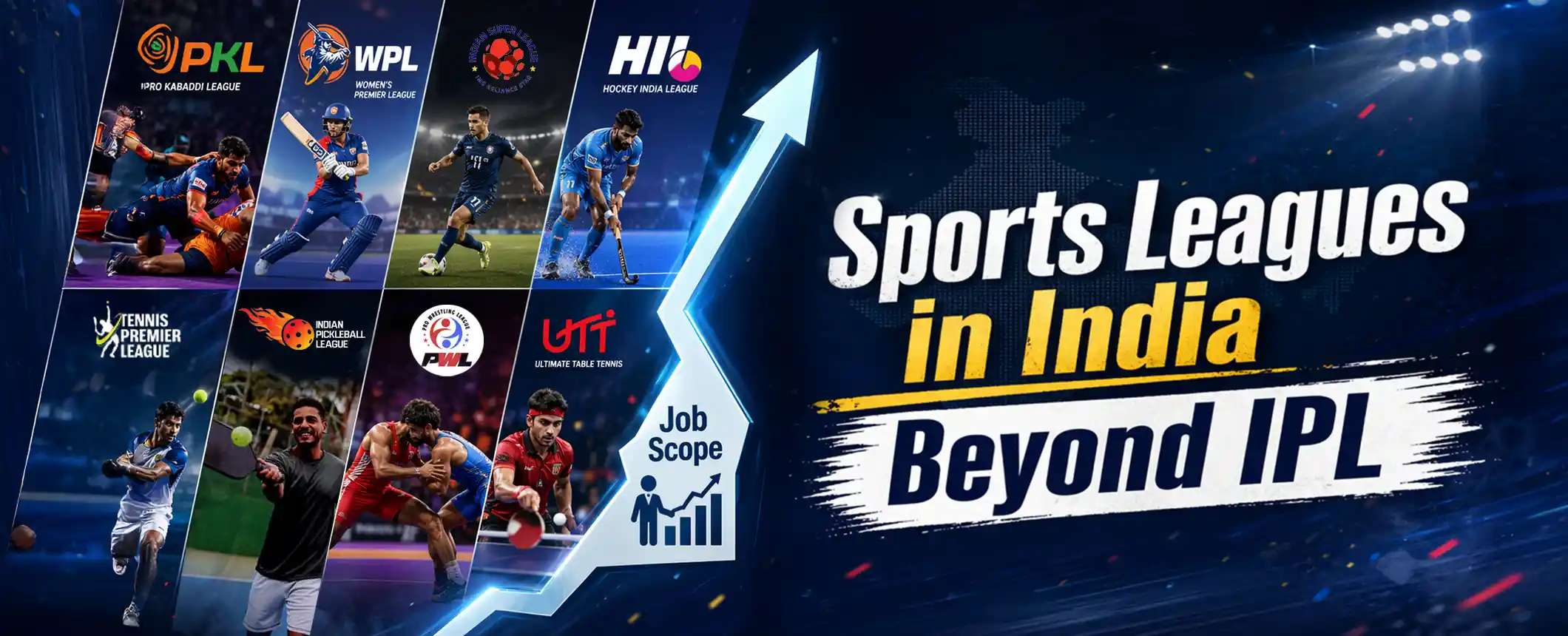
Medals galore for India at CWG & Asian Games. League & franchise valuations crossing billions. The 2030 Commonwealth Games hosting rights secured with a vision for the 2036 Olympics.
India’s sports industry is rising rapidly beyond the playing arena as well! Apart from the on-field achievements, the business side of sports is on the upward curve. From grassroots initiatives like Khelo India to an increased sponsorships in the IPL, PKL, ISL, India’s sports ministry allocating the highest-ever sports budget of 4479 crores — all these factors are contributing to this growth curve of India’s sports economy.
And with a projection to reach $40 billion by 2030, per KPMG’s Sportlight report, the scope for job opportunities & business is also going to diversify. So, a Career in Sports Management has become a go-to career choice. But what does Sports Management actually entail?
Sports Management involves the business side of sports. In simple terms, it is about planning, organizing, and taking care of everything that helps teams, athletes, and events succeed and promotes sports products and services.
It includes running or managing sports leagues like IPL, World Cups and international events of the ICC, FIFA, and global level multi-sport competitions like the Olympics. From handling sponsorships for a team or an athlete to collaborating between athletes and brands, endorsing brands through sports, and promoting sports products, services, or institutes (Nike, Cult.fit).
Sports managers are the masterminds who run these various verticals like sports marketing, venue operations, event management, athlete management, sponsorships, etc.
Now to build a successful career in these diverse verticals of sports management, you need a potent mix of pre-requisite knowledge and experience along with some core competencies & skill sets.
Education/Training in Sports Management
While sporting passion gets you started on your ambition to pursue Sports Management, the long-term career needs business understanding. To understand the sports business and gain insights into each vertical with hands-on experience, a degree in Sports Management will help you become a well-trained & seasoned sports professional.
Not only that, whether you want to work for a sports event, take care of the administration in leagues, manage elite athletes, or deal with sports brands, knowledge, support & training from a premier sports education institute will help you keep ahead of the rest.
If you wish to pursue Sports Management after completing class 12, enrolling in a Bachelor of Sports Management (BSM) programme at IISM is the ideal move for you.
If you want to study advanced sports business, IISM also offers a Master of Sports Management (MSM), regardless of your field of education in your graduation.
Besides, you can go for a Postgraduate Programme in Sports Management (PGPSM) as well, which is 11-month autonomous programme, and build an exceptional career in the sports business world.
Click here to explore all the Sports Management programmes offered at IISM.
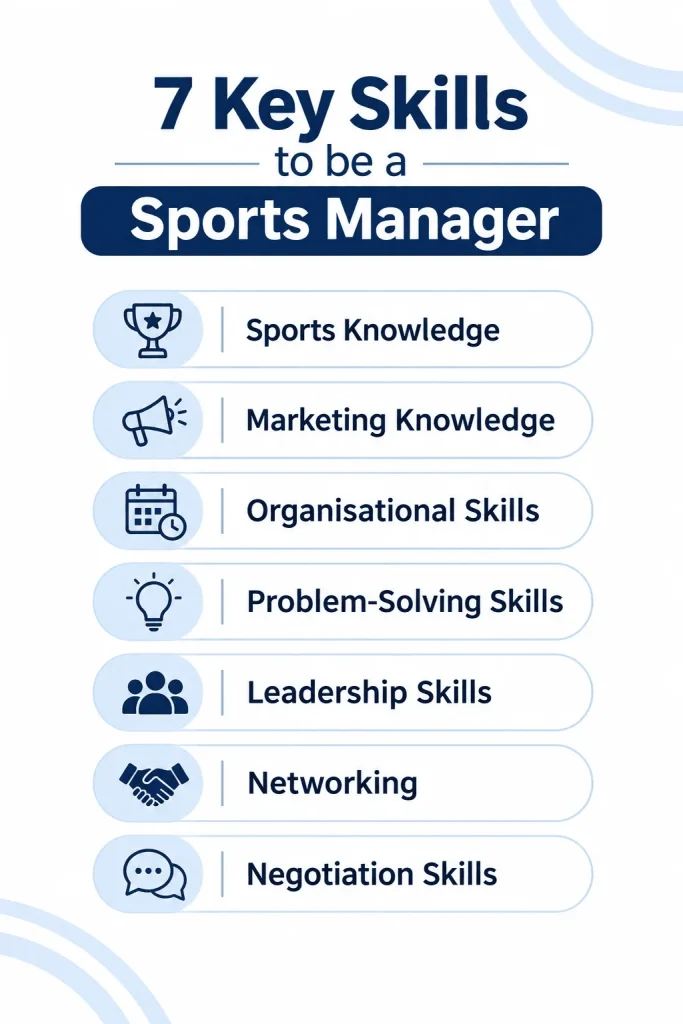
Now, apart from the formal education pathways, here are the seven key skills you must develop to excel as a sports manager.
7 Key Skills of a Sports Manager
1. Sports Knowledge
You don’t have to be an athlete to work as a Sports Manager.
However, having a thorough understanding of a few sports and the rules, top leagues and tournaments, players, current sports news, and a curious mind about how everything works in the sports ecosystem are essential to succeed as a sports business professional.
It is equally important to have a strong understanding of managerial functions like marketing, finance, law, strategy, and operations, and to know how to apply this knowledge in the field of sports.
2. Marketing Knowledge
You can’t be a good sports manager until you know the hack of being a good marketer.
Have you noticed the logos of brands on athletes’ jerseys during matches? This is a marketing tactic where brands promote their products or services. Through sports marketing, many brands also promote athletes, teams, and events, which also indirectly gives them visibility of a larger audience.
Along with traditional marketing, sports are marketed on digital platforms through social media channels, influencer collaboration, etc.
7 Skills Needed to Be a Sports Manager
3. Organisational Skills
Your sports knowledge and marketing skills will only work when you channel them through an organized system. Whether you’re coordinating a team’s trip, planning a tournament, or launching a campaign — being organized is non-negotiable.
You’ll often be managing tight timelines, large teams, high-stress events, sponsorships, and brand dealings. So, judging situations, leading the team confidently, and responding in a crisis are the keys to conducting your responsibility successfully.
For more clarity on this, watch the podcast linked below: “How to Become a Sports Agent ft. Bhavesh Singh”, — the Athlete Manager of the former captain of the Indian Cricket team, Mr. Sourav Ganguly.
4. Problem-Solving Skills
What will you do if an athlete drops out at the last moment?
What will be your strategy if more than one brand of similar product approaches your athlete?
or,
What will be your call at the last minute if you don’t get permission at a venue for a tournament?
Sports managers face these kinds of problems all the time. But, with hands-on training and experience working with the management team, you will learn to navigate the problem easily.
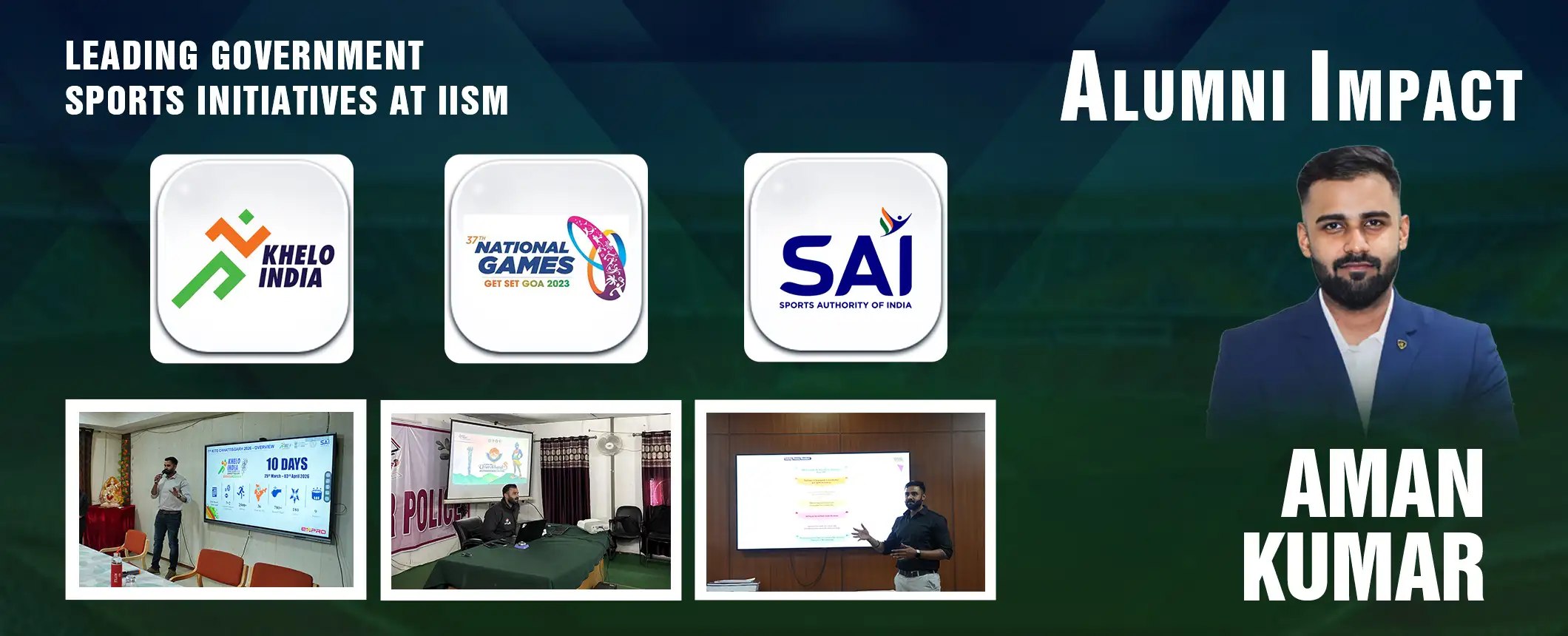
Students at IISM receive many such real-time experiences at work exposures and internships during their Sports Management program, be it in the IPL, Cricket World Cups, National Games, Khelo India, or the Tata Mumbai Marathon. Their experiences at sports events and organizations help them learn how to tackle challenges in the face of uncertainty and obstacles, making them industry-ready sports professionals.
5. Leadership Skills
Do you remember the movie, Jerry Maguire? And do you recall how the sports agent bounced back as an independent athlete manager with only one athlete client? Well, that kind of spirit, motivation, and determination are required to excel in the sports business.
As a sports manager, you’ll be guiding teams, motivating players, and making big decisions.
Strong leadership helps you gain confidence, resolve conflicts, and bring visions to life — whether you’re running a local marathon or managing a multi-million-dollar league.
6. Networking
Networking is net worth, even though this statement is repetitive, it ‘s a universal truth.
You must be out there. If a sponsorship deal demands knocking on the doors 100 times, you better be ready to do that too. Like every industry, the sports industry runs on connections.
Building professional connections with athletes, media, sponsors, event organizers, and brands is crucial to growing your career. Attend industry events, join sports forums, and reach out to the people who can help you achieve your goals. Use social media, especially LinkedIn, to showcase your thoughts and your area of expertise and build your credibility as a sports manager. These are the opportunities where you actually create value with your knowledge and insights.
To delve deeper into this topic, read our blog about Networking in the sports industry.
How to Build a Network in the Sports Industry?
7. Negotiation Skills
One of the most crucial skills for a sports manager.
It’s the right blend of what you want, and what you need to walk away with. Besides having good communication and interpersonal skills, you should be updated with the market trends, market research, and sports news and polish your negotiation strategy accordingly.
If you are dealing with brands for your athlete or want the sponsor for a marathon, being able to negotiate effectively ensures you get the best outcome for everyone involved.
However, just developing these skill sets won’t be enough. Your skills will be of no value if you don’t apply them at the right place. This is where another vital pre-requisite comes into play for aspiring sports managers.
Hands-on Experience through Work Exposure and Internships
There’s no substitute for real-world experience.
To become a successful sports manager, you need to start experiencing the work in every facet of the sports industry, like Sports Marketing, Venue Operations, Sports Broadcasting, Sports PR and Journalism, Sports Administration, Content Creation, and more.
At IISM, along with theoretical knowledge you will experience on-field practical exposure. Working at many leagues and sports events, you will gain a deeper understanding of how sports events run. Not only that, live exposure and internships throughout the year will help you handle real-time problems as well.
Every such opportunity of experiential learning allows you to build your portfolio and helps you identify which field in sports management is best for your growth, thereby solidifying your credibility in the industry.
Frequently Asked Questions – FAQs
Conclusion
Today, India’s increased prioritisation of sports is reflected everywhere. With the increasing sports budget, government policies aimed at developing grassroots sports, major sports events taking place in India, and a growing fan base, businesses and brands have a significant opportunity to capitalise on the expanding sports market. Hence, the demand for skilled sports professionals is continuing to multiply.
So, if you think you can be the right fit in the sports ecosystem, now’s the best time to train yourself to build a phenomenal future as a sports professional.
If you are interested to pursue your career in Sports Management, Apply for SMAT (Sports Management Admission Test) – IISM’s online entrance exam for Sports Management programmes.
Read More: Sports Education Programmes after Graduation