High Demand Sports Science Job Roles Today
Sports science is one of the reasons your favourite athletes perform at their peak, and if, you’re wondering whether this is the right time to get into it, the short answer is: yes.
In an interview with Dr. Pradyumna Tembhekar, Orthopaedics & Sports Medicine Physician and CEO of TubewireInc, he shared an encouraging perspective:
“And when it comes to Sports Science, the future has never looked more promising.”
He highlights the growing importance of:
-
The demand for sports science professionals
-
Mental conditioning and performance
-
Thriving in competitive sporting environments
Building a long-term career while staying connected to your passion for sport
Watch the full video here
But if you’re an aspiring sports professional, you probably have questions: What roles actually exist? Does this match my interests? How do I even get started?
Let’s break it all down.
What Is Sports Science?
Sports science is the study and application of scientific principles to improve human performance, fitness, recovery and overall well-being.
But let’s look at it beyond the textbook definition.
Think about India’s top athletes. When you watch a cricket team lift a trophy, a badminton player win an international match, or an athlete return after an injury, you’re seeing the final result. What you may not always see is the team behind them.
Here’s an example. Every time the Indian Women’s Cricket Team steps onto the field, there’s a whole crew working behind the scenes that rarely gets the spotlight.
Take Dr. Mugdha Bavare, the sports psychologist who has worked with the team, helping players push past mental blocks during high-pressure international tours.
Her work (and the work of nutritionists, coaches, physios, and analysts around her) directly shapes how the team performs.
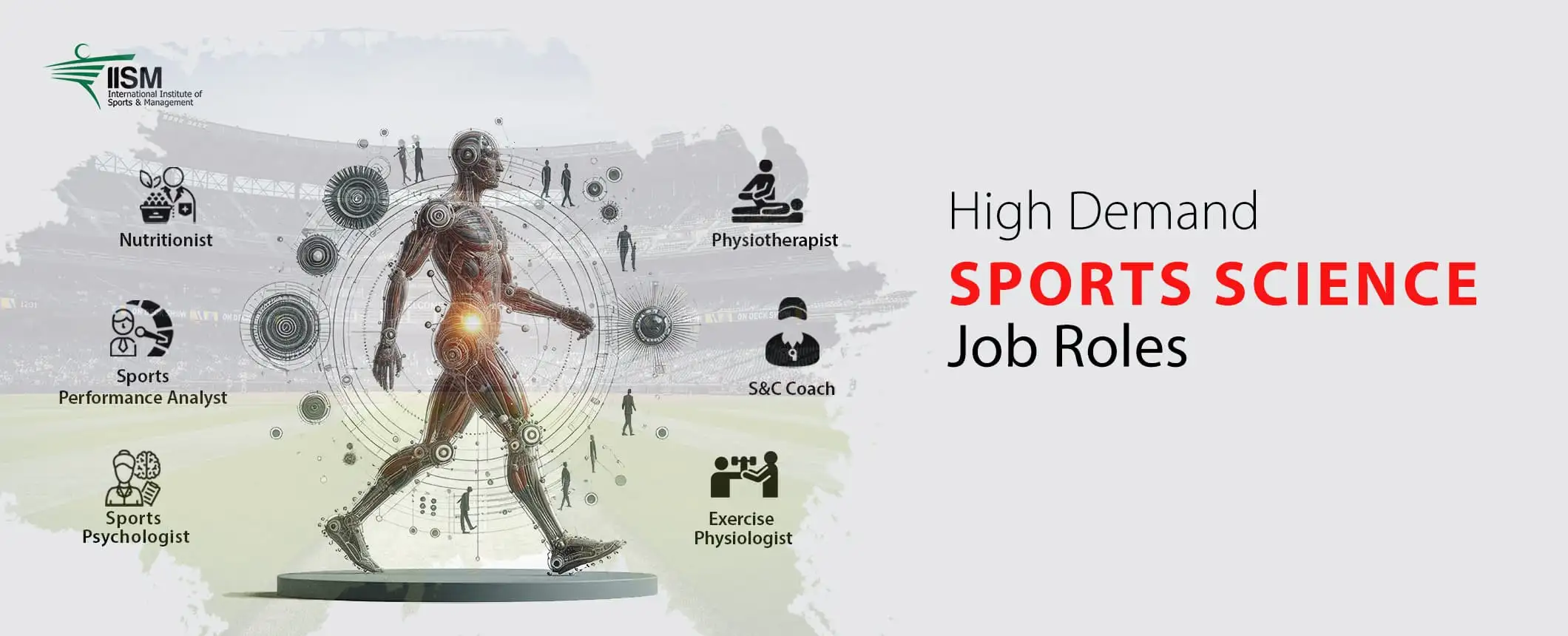
And this could be you: as a sports psychologist, nutritionist, coach, exercise physiologist, or performance analyst.
Let’s look at various careers in sports science!
Careers in Sports Science
Nutritionist/ Dietitian
Every sport places different demands on the body, pistol shooting needs shoulder stability, gymnastics needs flexibility, wrestling needs precise weight management, and more.
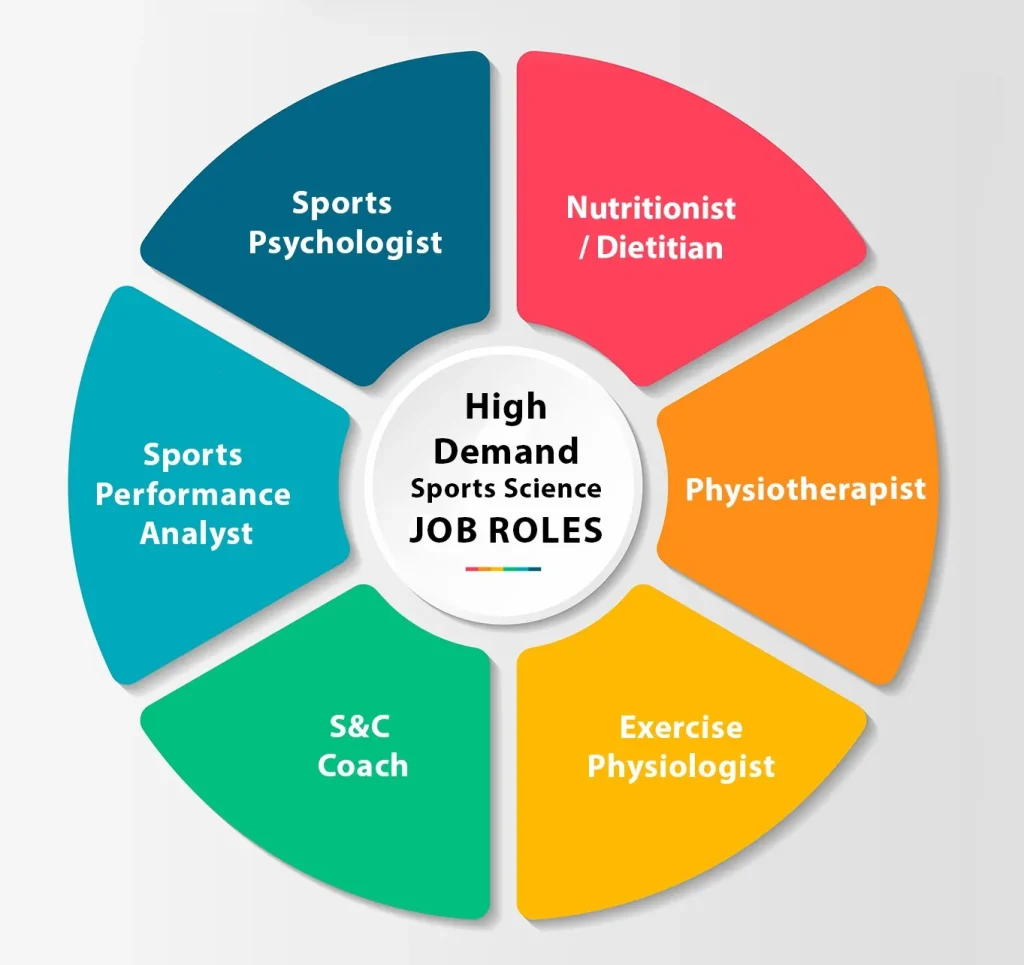
High Demand Sports Science Job Roles
This is where nutritionists play a vital role in an athlete’s daily life. They provide a detailed diet plan for what the person should eat and what should be avoided for the best performance on ground, giving evidence-based advice while keeping the individual athlete’s needs in mind.
Physiotherapist
An athlete’s biggest worry: what if I mess up? What if I get injured? Completely valid.
Physios are the first line of defence against injuries. They assess movement, guide rehabilitation, and help athletes safely return to training and competition.
And yes, they may sometimes be the person telling an athlete: “You’re not ready to return yet.”
Athletes find it frustrating. But it’s crucial, a fleeting moment of annoyance is worth it for a longer, risk-free career.
Strength and Conditioning (S&C) Coach
S&C coaches build the engine: strength, endurance, power.
They design and implement training programmes to develop the physical qualities that support sporting performance, tailored to the athlete and the sport.
They often work closely with coaches, physiotherapists, and other sports science professionals to support athlete development and manage training loads.
Exercise Physiologist
An exercise physiologist studies how the human body responds and adapts to physical activity and exercise.
Their work may involve assessing:
-
Aerobic capacity
-
Strength
-
Flexibility
-
Balance
-
Physical fitness
They use this understanding to design and support exercise programmes suited to individual needs and goals. It’s a role for people who genuinely enjoy understanding how the body works.
Sports Psychologist
Sport isn’t just physical. The mind matters too.
Athletes often face enormous pressure, from competition expectations to injuries, selection challenges, and performance slumps.
A sports psychologist helps athletes develop mental skills and strategies that support both performance and well-being.
It’s not a one-time chat; it’s training athletes to build mental skills they can use independently, long after the season ends.
The goal isn’t just to help athletes perform better, it’s to support their overall psychological well-being.
Sports Performance Analyst
A sports performance analyst studies sporting performances and uses data and observations to identify useful patterns and insights.
Their work may involve analysing:
-
Individual athlete performance
-
Team performance
-
Opponent strategies
-
Match trends
-
Tactical patterns
-
Strengths and areas for improvement
This information helps coaches and teams make more informed decisions. With the growing use of data, technology, video analysis, and artificial intelligence in sports, performance analysis is becoming an increasingly important part of modern sport.
Sports Science Is a Team Sport Too!
One of the most exciting things about working in sports science is that professionals rarely work completely independently. Athlete performance is complex.
Say an athlete is struggling with a demanding nutrition plan, that challenge could affect their training and overall well-being. A nutrition professional may work alongside the athlete’s coach and other members of the performance team to understand the situation better.
Or imagine an athlete recovering from an injury. The physiotherapist guides rehabilitation. The strength and conditioning coach manages the athlete’s return to training. A psychologist supports the athlete through the emotional challenges of being injured.
This multidisciplinary approach is one of the biggest reasons sports science is such an exciting field to work in.
How to Pursue Sports Science?
You can start your journey with the International Institute of Sports & Management (IISM), offering:
🎓 Bachelor of Sports Science — A 3-year full-time programme, Mumbai University accredited
🎓 Master of Sports Science — A 2-year full-time programme, Mumbai University accredited
With hands-on training, live exposure, and internship opportunities across sports science disciplines, IISM is built to take you from classroom to career.
You Can Build a Career in Sports Without Being an Athlete
Not everyone who loves sport becomes an athlete. Some become the people athletes rely on.
So if you’ve ever watched sport and thought: “I want to be part of this.”
Maybe you don’t need to stand on the podium. Maybe you can help someone get there.
And that could be your career in Sports Science.