Rise of WPL: History, Teams, Salaries & Growth
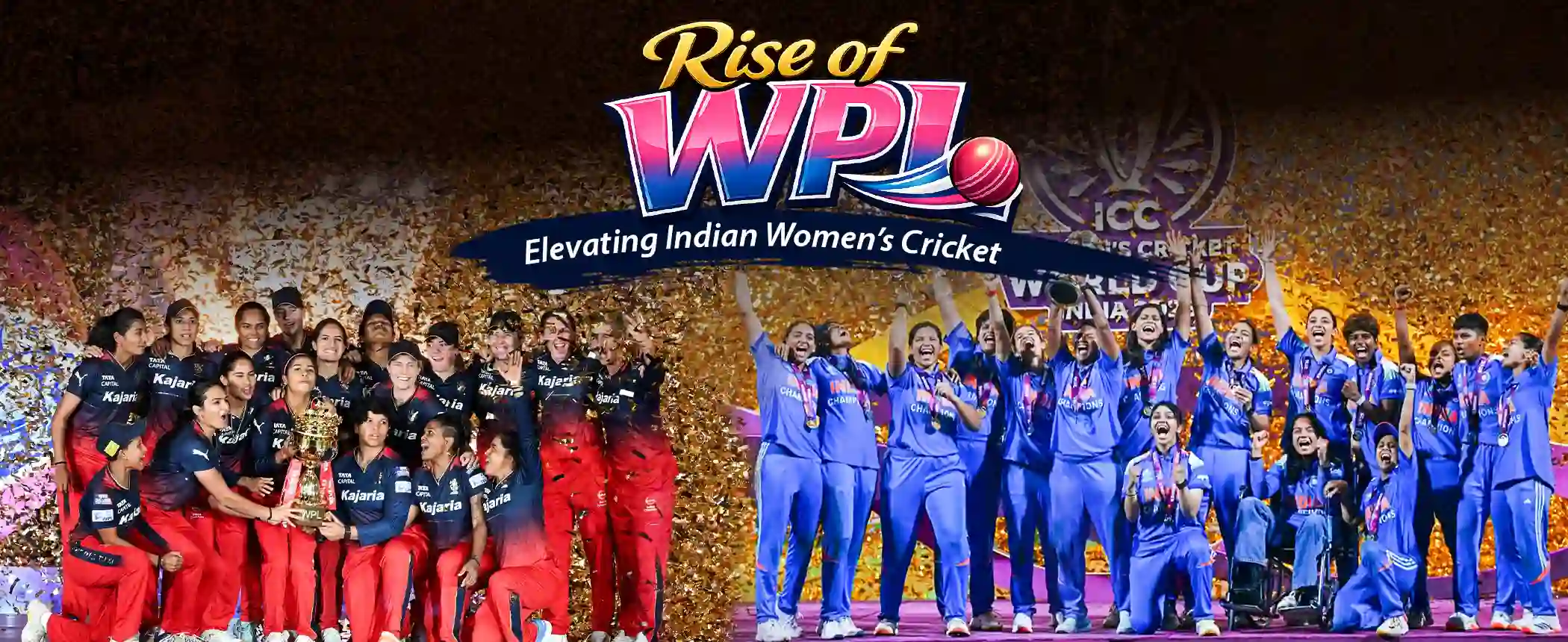
The Women’s Premier League (WPL) just wrapped its 4th season, and it delivered exactly the kind of fireworks it promised. Royal Challengers Bengaluru (RCB) chased down 204 against Delhi Capitals (DC) in the final at the Baroda Cricket Association Stadium in Vadodara on February 5, 2026, the highest successful chase in WPL history, to win their second title in four years.
This piece breaks down where the WPL came from, how the 2026 season played out, and why the league keeps getting bigger!
History of the Women’s Premier League
WPL or Women’s Premier League spent decades as an afterthought. Players like Mithali Raj and Jhulan Goswami, now regarded as two of the greatest to play the format, built their careers on token match fees, patchy travel support, and near-zero public attention.
But this started changing after the 2017 ODI World Cup, where Smriti Mandhana and Harmanpreet Kaur’s performances put Indian women’s cricket in front of a new audience.
As Indian stars went on to secure contracts in global T20 leagues such as the Women’s Big Bash League, The Hundred, and the Caribbean Premier League, conversations around launching a dedicated franchise league gathered momentum.
Even international players like Ellyse Perry, Alyssa Healy, Megan Schutt and Meg Lanning vouched for having a Women’s IPL after playing in the highly-competitive one-off game at the Wankhede stadium.
The Board of Control for Cricket in India (BCCI) first tested the waters in 2018 with a one-off Women’s T20 exhibition match.
Encouraged by its reception, the concept evolved into the Women’s T20 Challenge, a three-team tournament that ran from 2018 to 2022. The success of those editions laid the foundation for the launch of the Women’s Premier League (WPL) in 2023, marking a new era for women’s cricket in India.
WPL Teams, Auction Rules and Tournament Format
Five franchises hold WPL rights today: Mumbai Indians (MI), Royal Challengers Bengaluru (RCB), Delhi Capitals (DC), UP Warriorz (UPW), and Gujarat Giants (GG). The five teams together sold for roughly ₹4,670 crore in the original 2023 bidding, with Gujarat Giants’ ₹1,289 crore bid remaining the single highest franchise fee in the league.
The auction purse has climbed steadily, from ₹12 crore per team in 2023 to ₹15 crore for the 2026 mega auction, held on 27 November 2025 in New Delhi.
That auction reset most squads, and Deepti Sharma, fresh off being named Player of the Tournament at the 2025 World Cup, went to UP Warriorz for ₹3.2 crore, the top price of the auction.
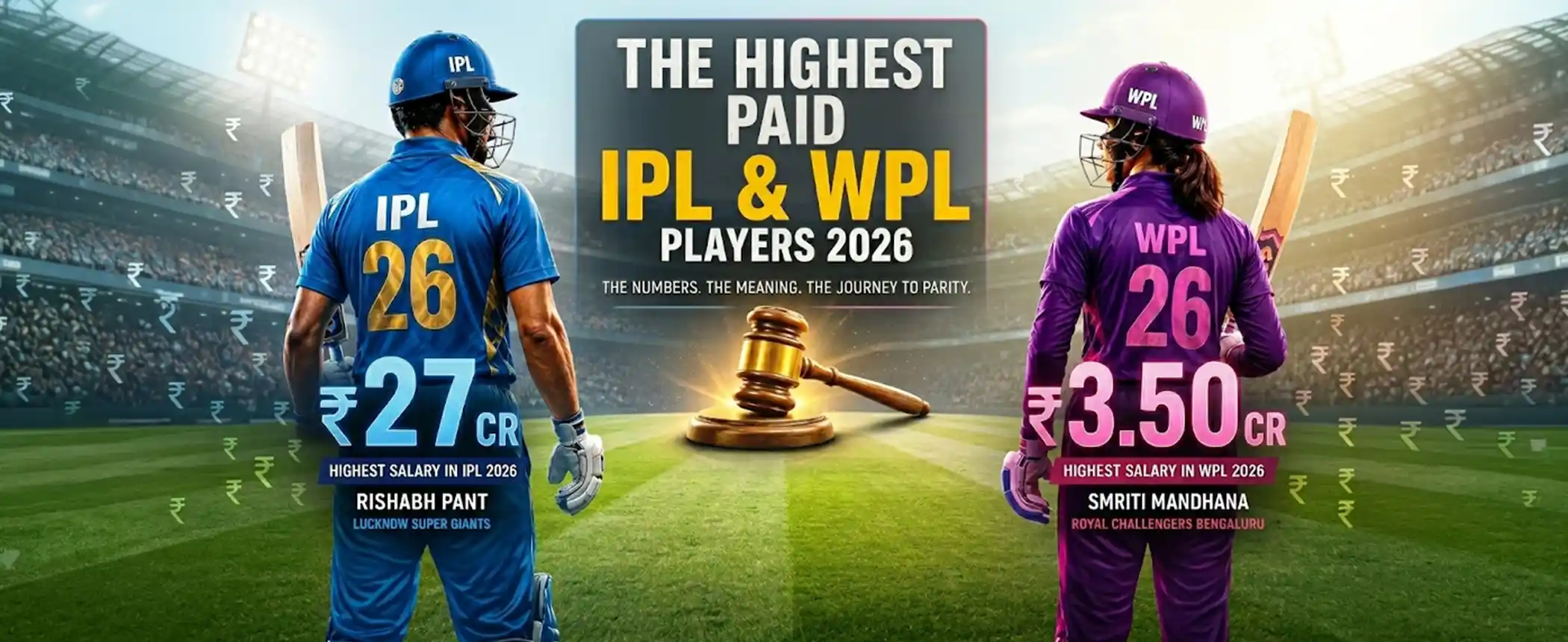
Smriti Mandhana remains the most expensive player in Women’s Premier League history, having been bought by Royal Challengers Bengaluru for ₹3.4 crore at the inaugural 2023 WPL auction. Ahead of the 2026 season, RCB retained her for ₹3.5 crore, making her the highest-paid retained player as well.
The format is a straightforward double round-robin among the five teams, followed by an IPL-style play-off: the top team goes directly to the final, while second and third play an Eliminator for the second final spot.
The league hasn’t yet gone fully home-and-away. The 2026 matches were split between Navi Mumbai and Vadodara, partly to avoid clashing with venues booked for the ICC Men’s T20 World Cup (co-hosted by India and Sri Lanka in February–March 2026).
WPL 2026: How the Season Played Out
RCB topped the league stage with 12 points from six wins, earning a direct final berth. DC beat Gujarat Giants in the Eliminator to reach their fourth straight final, a record for consecutive final appearances, though still without a title to show for it.
The final itself was record-breaking. Delhi Capitals posted 203/4, the highest total ever in a WPL final, thanks to Jemimah Rodrigues’ 57 and Chinelle Henry’s unbeaten 35. In response, RCB pulled off the highest successful run chase in WPL history, surpassing the record they had set the previous year against Gujarat Giants.
Season award winners:
-
Orange Cap: Smriti Mandhana — 377 runs
-
Purple Cap: Sophie Devine (Gujarat Giants) — 17 wickets
-
Most Valuable Player: Sophie Devine
-
Emerging Player of the Season: Nandni Sharma
With this win, RCB became the second franchise (after Mumbai Indians) to win multiple WPL titles.
The Bigger Impact: Player Pool and Pay-checks
The WPL’s real job was always to widen the talent pipeline, and the results show up directly in the national team.

Highest Paid Indian Players in WPL
Players like Shafali Verma, Richa Ghosh, Shreyanka Patil, and Titas Sadhu earned India call-ups after establishing themselves in the WT20 Challenge and early WPL seasons.
More recently, Sree Charani and Kranti Gaud went from a handful of WPL games straight into India’s 2025 World Cup-winning squad, while Amanjot Kaur and Pratika Rawal turned domestic-circuit form into starting XI roles.
On salaries, the gap with the men’s game has narrowed a little. Richa Ghosh was retained by RCB for ₹2.75 crore; Jemimah Rodrigues and Shafali Verma each earn ₹2.2 crore a season at Delhi Capitals. Rising names like Kranti Gaud and Pratika Rawal are now commanding close to a crore at auction.
BCCI’s central contracts (identical pay scale for men and women since 2022) currently stand at:
| Grade | Annual Retainer |
|---|---|
| Grade A | ₹50 lakh |
| Grade B | ₹30 lakh |
| Grade C | ₹10 lakh |
Match fees (same for India Men and Women):
₹15 lakh per Test, ₹6 lakh per ODI, ₹3 lakh per T20I.
Endorsements have followed the same curve. Smriti Mandhana is a Red Bull athlete with a brand roster that includes Hyundai, SBI, Nike, Mastercard, and Gulf Oil.
Jemimah Rodrigues, whose profile spiked after the 2025 World Cup win, has signed with Boat, KFC, Hyundai, and Red Bull.
Viewership and Money: WPL 2026 Was the Biggest Yet
The numbers back up the hype. According to JioStar (the league’s official broadcast and digital partner), WPL 2026 was the most-watched season in the tournament’s four-year history:
According to JioStar, the league’s official broadcast and digital partner, WPL 2026 was the most-watched season in the tournament’s four-year history.
-
Digital reach grew 17% year-on-year, while digital content consumption surged 69%.
-
Across all screens, fans watched a record 34.5 billion minutes of WPL action, an 11% increase from the previous season.
Money followed the eyeballs. The league’s central sponsorship pool has grown from around 10 brands in 2025 to more than 15 in 2026, with new entrants like OpenAI (as ChatGPT) alongside automotive and jewellery brands joining the traditional FMCG sponsor base.
Combined central-plus-team sponsorship revenue for the 2026 season is estimated at around ₹120 crore. The original ₹951 crore Viacom18 (now JioStar) media rights deal, signed in 2023, runs through 2027.
WPL vs IPL: How the Two Leagues Actually Compare
The WPL is often called the “women’s IPL,” but the two leagues run on very different scales and rules. WPL vs IPL, what’s the difference:
| WPL | IPL | |
|---|---|---|
| Teams | 5 (MI, RCB, DC, UPW, GG) | 10 |
| First season | 2023 | 2008 |
| Franchise fees (total) | ~₹4,670 crore (current) | Original 2008 sale: ~₹723 crore combined; current franchise valuations run into tens of thousands of crore |
| Season length | ~23 matches over 4 weeks | ~74 league matches plus playoffs, over roughly 2 months |
| Auction purse per team (2026) | ₹15 crore | ₹125 crore |
| Squad size | Up to 18 players, max 6 overseas | Up to 25 players, max 8 overseas |
| Media rights deal (2023-27) | ₹951 crore (JioStar) | ₹48,390 crore (JioStar) |
| Match format | League stage + Eliminator + Final | League stage + Qualifiers + Eliminator + Final |
| Highest player price | ₹3.4 crore (Smriti Mandhana, 2023) | ₹27 crore (Rishabh Pant, 2025) |