Career Opportunities in Sports Management: Jobs and Scope in India
Everyone tells you to follow your passion. But when you say your passion is sports, the advice suddenly changes.
“That’s not a real career.” “You can’t earn with this”. “Study something practical.”
Here’s what those people don’t know:
India’s sports industry has quietly become one of the fastest-growing sectors in the country, and it desperately needs trained professionals to keep it running.
Not only athletes.
But Managers, marketers, analysts, and communicators as well.
A career in sports management is real. It pays. And right now, it’s wide open.
What is the scope of sports management in India?
Ten years ago, “sports management” barely existed as a career in India. Today, it’s a completely different story.

The result? More career options in sports management in India than ever before!!
That gap is your window.
What does a sports manager actually do?
A sports manager is not a coach. You’re not training athletes or drawing up game plans.
As a sports manager you’re running the business of sport and everything that happens off the field that makes the game possible!
When an IPL match happens —
-
Someone booked the stadium
-
Someone negotiated the sponsorships on the boundary boards.
-
Someone managed the broadcast crew.
-
Someone handled the player’s media appearances.
-
Someone analysed fan engagement data after the final over.
None of them were just athletes. All of them fall within the broader sports business and sports management ecosystem. You could be too!
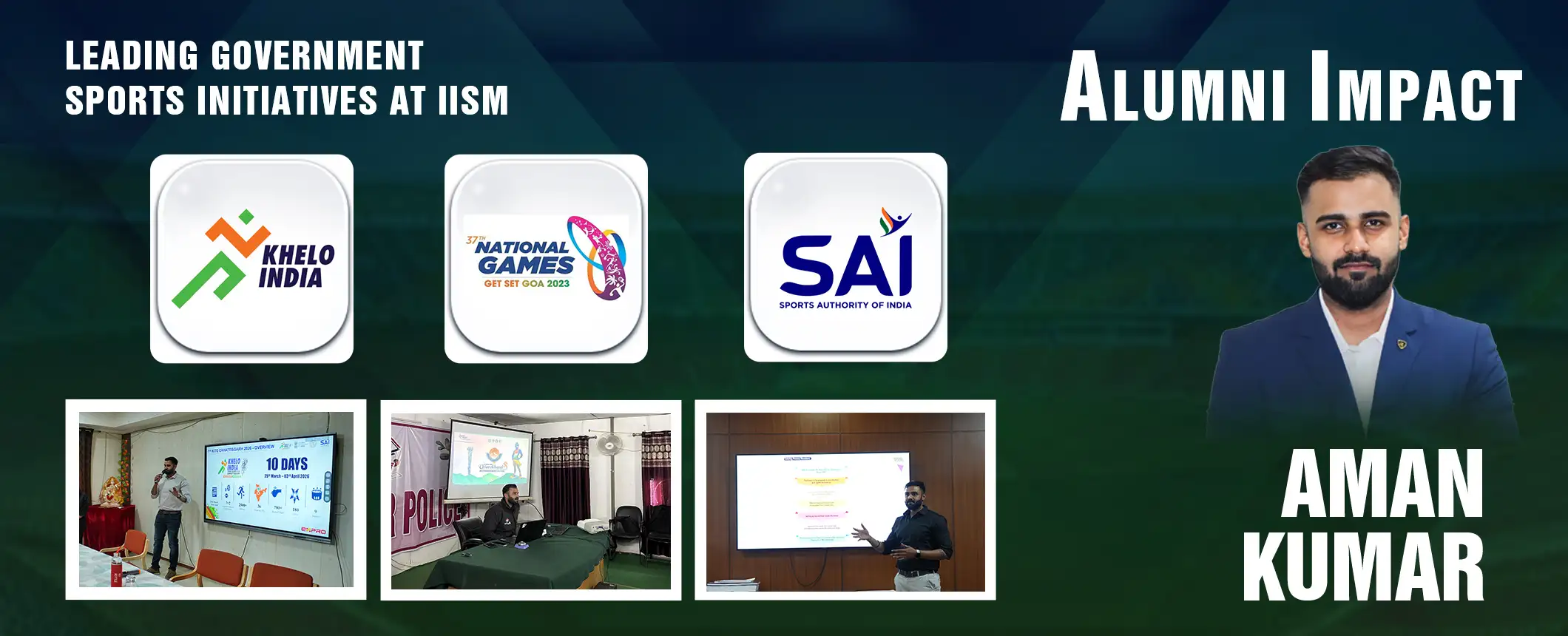
IISM alumni today work across athlete management, media, sponsorship, and league operations roles throughout India’s sports ecosystem.
The 8 Most Popular Sports Management Jobs in India
Administration & operations
Run the engine room of the sport
If you’re someone who likes organising things, solving problems on the go, and being at the centre of the action, this is worth exploring. It’s fast-paced, requires sharp multi-tasking, and puts you closest to where the sport actually happens.
-
managing a stadium’s day-to-day operations,
-
coordinating a state-level tournament,
-
or working at a federation
-
handling logistics, scheduling, and compliance.
Roles:
-
Stadium Manager
-
Events Coordinator
-
Operations Associate
Main companies that hire: BCCI, Sports Authority of India (SAI), AIFF, IPL franchises (Punjab Kings, Chennai Super Kings,Rajasthan Royals), PKL teams, state sports associations.
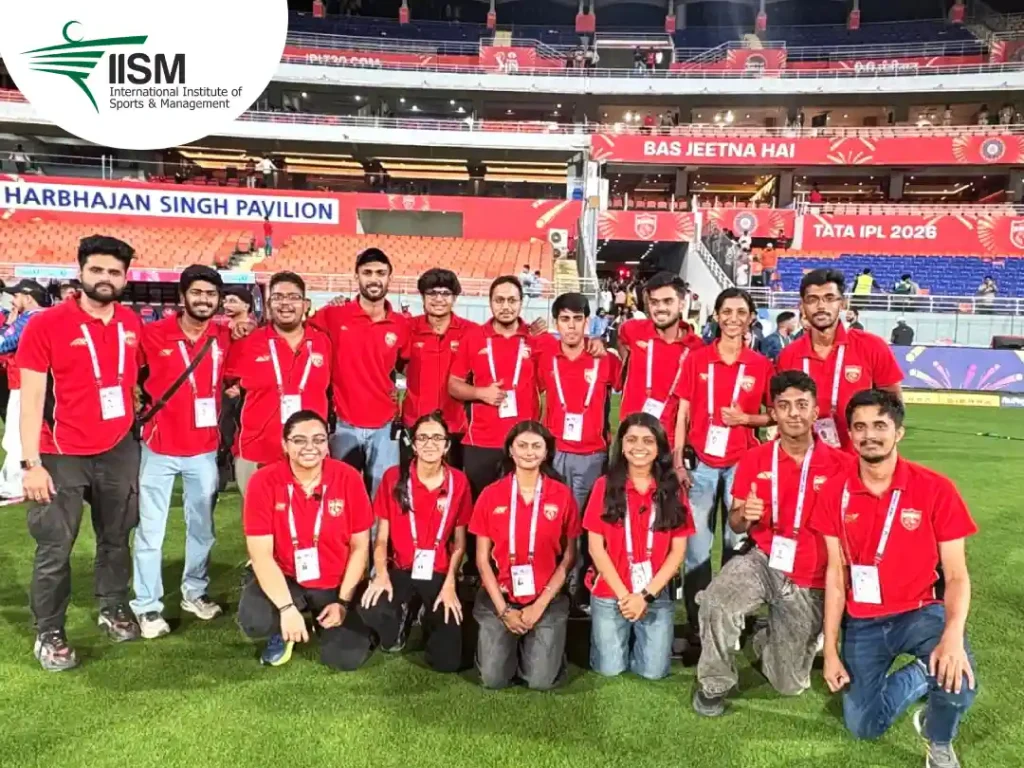
IISM Students interning with Punjab Kings in IPL 2026
Athlete & Team Management
Manage the off-field life of top athletes
Virat Kohli, PV Sindhu, Neeraj Chopra, athletes at this level don’t manage their own calendars, endorsements, or media appearances.
They have managers for that.
At the team level, they also manage logistics, travel, and scheduling for an entire squad,making sure players can focus entirely on performing.
You could be:
-
managing brand endorsements,
-
coordinating media appearances,
-
advising on social media,
-
and making sure your client can focus entirely on performing.
Roles:
-
Talent Manager
-
Team Manager
-
Brand partnerships
-
League operations
Main companies that hire: Cornerstone, Baseline Ventures, JSW Sports, RISE Worldwide, IOS Sports & Entertainment, IPL / ISL / PKL franchises
Did you know? An IISM Alumnus, Mr. Bhavesh Singh is the Chief Business Officer and Direct & Exclusive Representative of Mr. Sourav Ganguly. A literal fan to industry leader moment!
Media & communications
Tell the stories that move fans!
Sports media is one of the most visible career options in sports management, and one of the most competitive.
The role blends creativity with strategy: knowing what story to tell and how to tell it across platforms.
You could be:
-
writing match analyses,
-
producing content for a team’s social channels,
-
handling a league’s PR,
-
or coordinating media coverage at a major event.
Roles:
-
Content creator
-
Sports journalist
-
PR executive
-
Social media manager
Main companies that hire: Jiostar, Sports Interactive, Cricbuzz, ESPN, Sportskeeda, The Bridge, Sportstar (The Hindu Group), WPP Media, and league in-house teams.
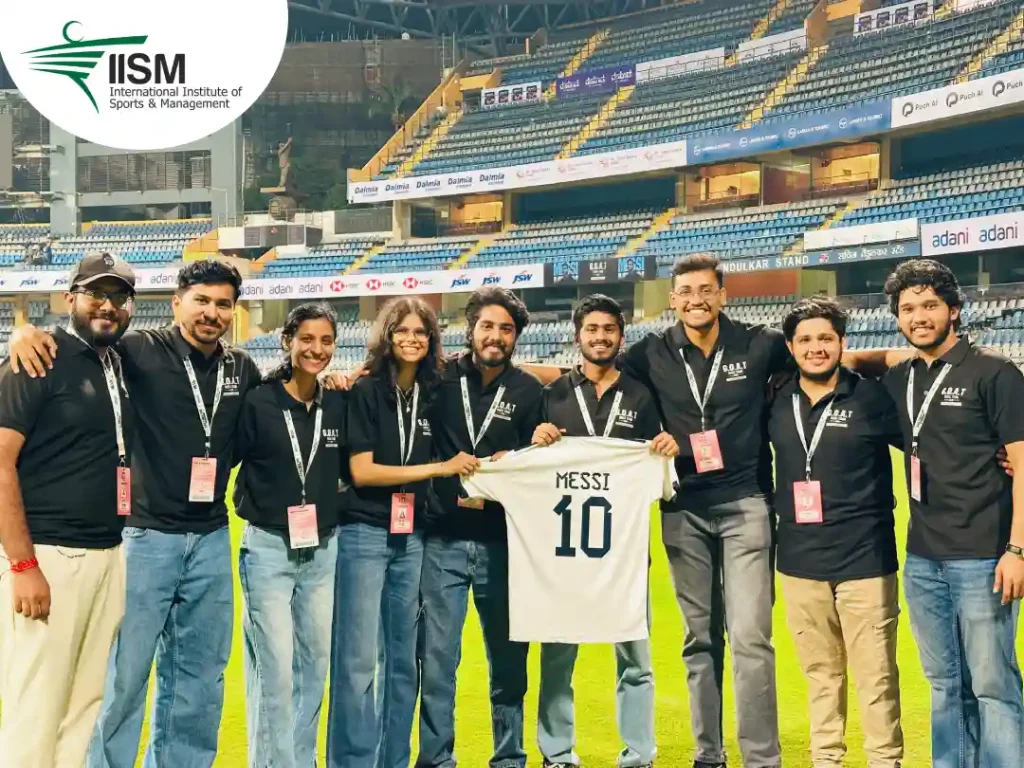
IISM students working at the GOAT India Tour Event Lionel Messi, 2025
Sports Broadcasting
Bring the game to millions
Broadcasting has grown into its own world. Traditional TV still dominates viewership in India, but OTT and digital streaming have added a whole new layer, and a new set of job roles with it.
The modern sports broadcast is a full production operation.
It needs people who understand both the technical side and the fan experience they’re trying to create.
Roles:
-
Production manager
-
Scriptwriter
-
Live stream coordinator
-
Graphics & sound
Main companies that hire: JioStar, Sony Pictures Networks India, FanCode, Amazon Prime Video, SportVot, wTVision.
Sponsorship & Marketing
Where sport meets business directly!
Sponsorships fund leagues, teams, and athletes, and the professionals who make those deals happen are among the most valuable in the industry.
You could:
-
identify brands,
-
pitch those brands,
-
negotiate deals,
-
manage ongoing relationships,
-
and run digital campaigns
“The dream corporate job but make it sports.”
Roles:
-
Sponsorship executive
-
Digital marketer
-
Brand manager
-
Business development
Main companies that hire: JSW Sports, Baseline Ventures, Dream Sports, RISE Worldwide, JioStar, WPP Media and ITW Consulting.
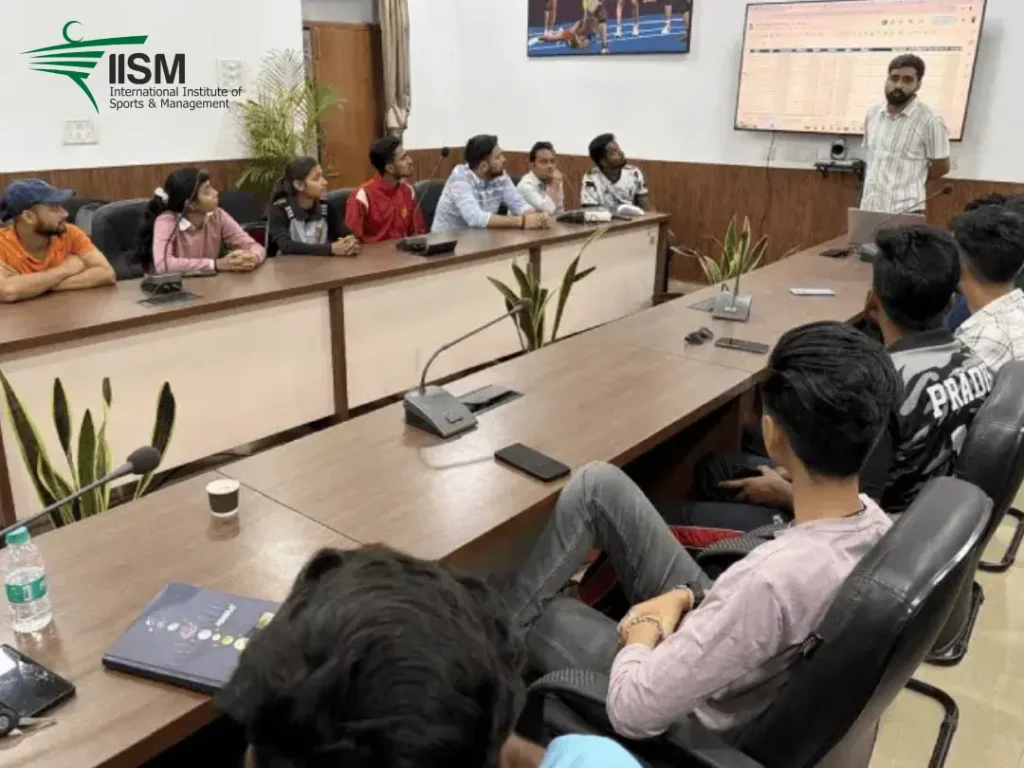
Sports Data Analytics
The fastest-growing area!
Data? In sports management?
Yes, and for some reason, it surprises a lot of people!
-
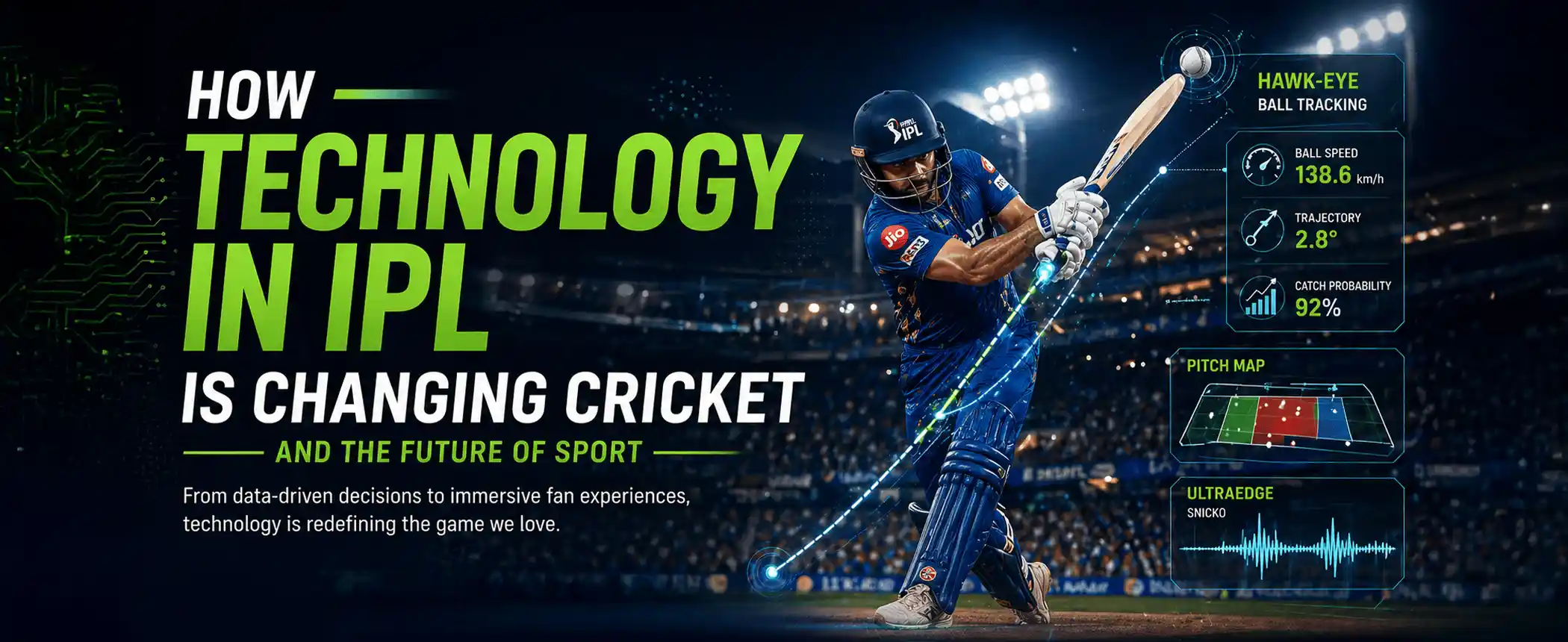
IPL franchises use data to analyse players and plan strategy.
-
Broadcasters use it to serve better stats to fans.
-
Media companies use it to understand what content people actually watch.
If you’re comfortable with numbers and enjoy finding patterns, this is a strong career path that doesn’t get nearly enough attention.
Roles:
-
Performance analyst
-
Fan insights analyst
-
Broadcast data
Main organisations that hire: IPL franchises, Cricbuzz, ESPN, Sportz Interactive and Kadamba Technologies, YouGov.
Sports Retail
More than just selling shoes!
Merchandise, apparel, equipment, sports retail in India is growing as fast as the industry itself!
It’s no longer just about shelf space.
It involves:
-
brand licensing,
-
product strategy,
-
e-commerce,
-
and understanding what fans actually want to buy.
Roles:
-
Category manager
-
Brand licensing
-
Visual merchandiser
-
E-commerce manager
Main organisations that hire: Nike, Puma, Decathlon, Asics, Nivia, Under Armour, Ten x You, Cosco and Total Sports.
Sports Tourism
An emerging vertical with early-mover advantage!
Still early-stage in India, but the opportunity is real.
IPL finals and Cricket World Cups draw international visitors, and there’s growing demand to build premium experiences around them.
TCM Sports recently launched a sports hospitality vertical (TCM Sports LIST), combining luxury travel with premium event access, a signal of where this sector is heading.
If you love travelling and sports, this could be the most interesting career path for you!
Roles:
-
Event host manager
-
Hospitality coordinator
-
Sports tour executive
Main organisations that hire: Cutting Edge, Fanatic Sports, IndeBo Sports, TCM Sports, and DreamSetGo.
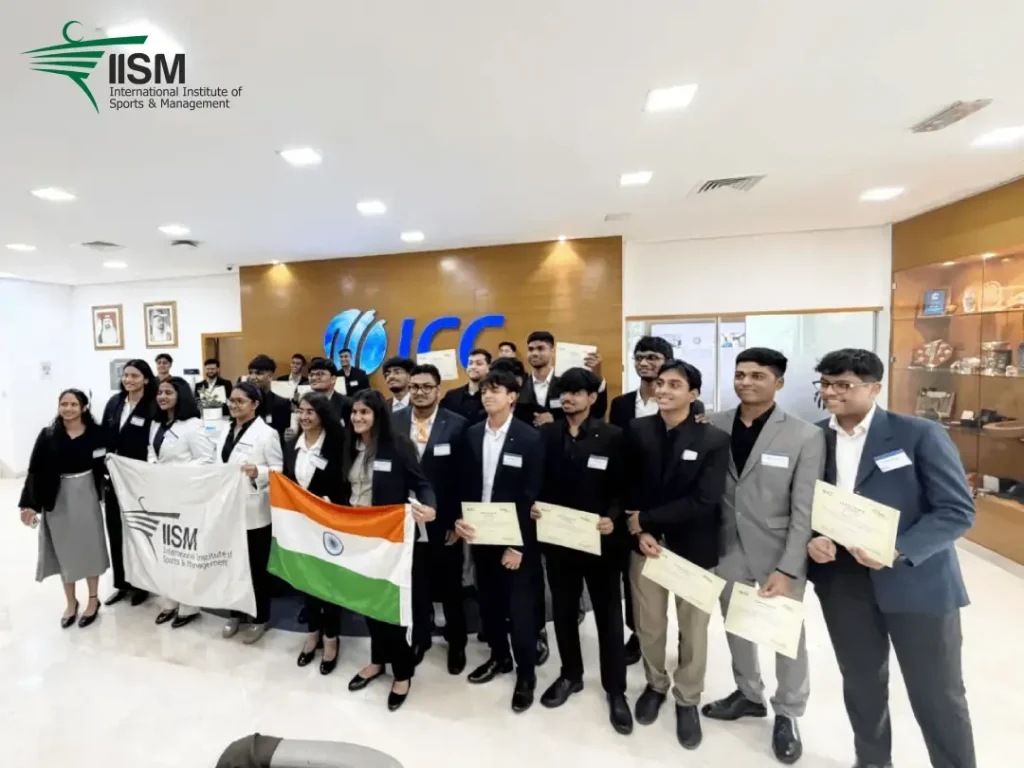
IISM students at the ICC Headquarters, Dubai
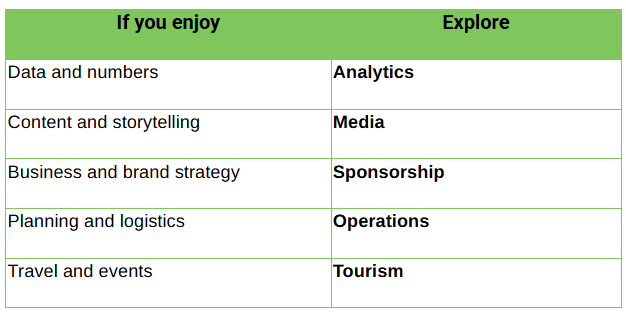
Table 1: Which Sports Management Career Is Right For You?
Bonus Path
Most career guides stop at jobs. But some of the most exciting opportunities in Indian sport right now aren’t only inside existing companies, they are the companies themselves.
Sports startups are booming, and a background in sports management is exactly the foundation you need to build one.
India’s sports ecosystem is still young enough that the infrastructure problems are obvious, athlete discovery, fan engagement, sports content, performance data, grassroots coaching.
Every one of those is a startup opportunity waiting to happen.The business of sports can become your business literally.
You could build:
-
A sports media startup: covering leagues, athletes, or sports that mainstream media ignores
-
A sports consulting firm: helping brands, teams, or athletes make better business decisions
-
An athlete management agency: representing the next generation of Indian sporting talent
-
A sports tech company: performance analytics, fan apps, ticketing, grassroots scouting platforms
Starting a sports business without understanding how the industry works is the fastest way to fail.
You need to know how sponsorships are structured, how leagues operate, how athlete contracts work, how media rights are valued, before you can build something that improves any of it.
You don’t need to have the idea on day one. You need to build the knowledge base that makes the idea possible.
“The best time to start thinking like a founder is before you become one.”
Skills that matter across every path
The honest answer: it depends on which path you choose.
But these show up everywhere.
-
Clear communication: in writing, in person, and increasingly online. It’s important to be informed and opinionated.
-
Multi-tasking under pressure: because the sports world doesn’t slow down for you! There is a lot going on behind the scenes. Your college fest is just the trailer!
-
Curiosity about how the business of sport works: not just the sport itself, educate yourself, read the news, know what is happening in the industry!
-
People skills: most of this industry runs on relationships, networking and how well you present yourself!
-
Genuine love for sport: it’s what keeps you going!
How to start a career in sports management?
The actual roadmap, not just “follow your passion”!
Passion is the starting point, not the qualification.
The companies above don’t hire on enthusiasm alone. They hire people who understand how the business works.
Start with educating yourself with a course that understands your niche!
– Bachelor of Sports Management (BSM)
[Undergraduate · 3 years]
Ideal if you’re finishing Class 12. Builds your foundation across all the career verticals above.
– Master of Sports Management (MSM)
[Postgraduate · 2 years]
For those with an undergraduate qualification who want to go deeper into sport-specific verticals.
– Postgraduate Programme in Sports Management (PGPSM)
[Intensive · 11 months]
The fastest way into the industry for those who want to start quickly.
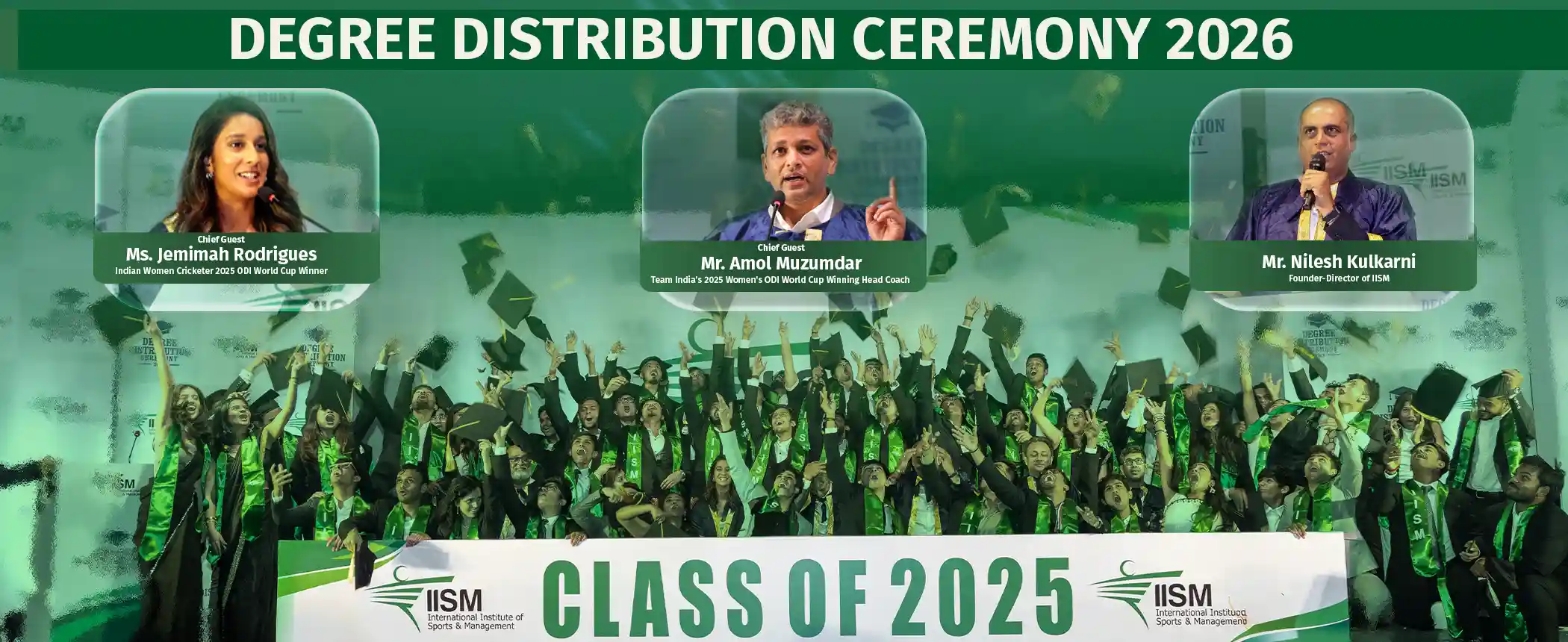
What separates a good programme from a great one? Live exposure. Look for institutions that place students at real sporting events, not just classrooms. IISM, Asia’s first and largest sports education institute, running since 2010, has placed students at Star Sports, IPL, Baroda Cricket Association, Olympic Gold Quest, IMG, and more.
The Bottom Line
You don’t have to choose between loving sports and having a serious career. That’s a false choice, and it’s outdated!
The sports industry is growing faster than the talent pipeline supporting it.
A career in sports management is real and it’s growing.
In India specifically, it’s at an early enough stage that the people who get trained and get in now will be the ones leading the industry in ten years.
The question isn’t whether the opportunity is there. It is.
The question is whether you’re willing to put in the work to go get it.