Alumni Impact: Handling Khelo India, SAI & National Games ft. Aman Kumar
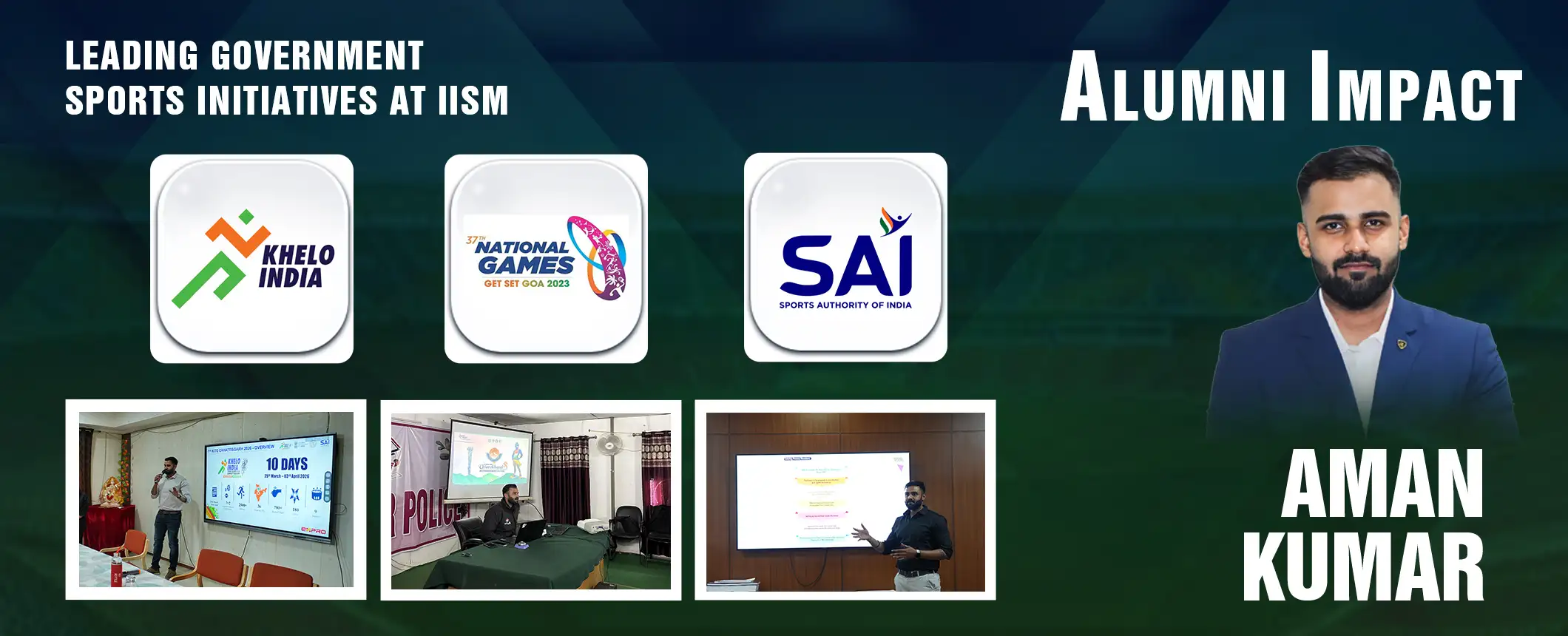
Private leagues like IPL, PKL, ISL often take the spotlight. Although, beyond them, India’s sports ecosystem has plenty of other sporting competitions like the Khelo India Games & National Games that are organized by governmental sports organizations. And there’s as much hassle in organizing these events smoothly, that too on a larger scale with multiple sports involved.
We had an interaction with Aman Kumar, an IISM Alumni, who has been working as a Manager – Sports Projects for IISM, having completed his Master of Sports Management (MSM) in 2020.
Aman Kumar: Managing Government Sports Initiatives at IISM
Over the past seven years, Aman has been actively involved in managing different iterations of the Khelo India events, National Games, which happen on biennial basis. He leads groups of IISM students as they head to the various editions of the Khelo India Games, working closely with the Sports Authority of India (SAI) and its related broadcasters & event management agencies.
“Currently, I oversee sports-related projects at IISM across both public and private sectors, ensuring smooth execution from planning to implementation. My responsibilities involve project planning, operational frameworks, SOP development, volunteer management, stakeholder coordination, documentation, budgeting, resource allocation, and ensuring projects are delivered efficiently within timelines.”
From a sports governance & grassroots sports perspective, here is Aman’s complete perspective about how the entire ecosystem of Khelo India games is managed by SAI and the relevant stakeholders while we as a country prepare to strengthen the sporting landscape for hosting the Commonwealth Games & the Olympics.
Can you tell us about your experience of dealing with the Sports Authority of India (SAI) and Indian Olympic Association (IOA)?
“My experience working with organizations such as the Sports Federation, Sports Authority of India (SAI) and the Indian Olympic Association (IOA) has provided me with a practical understanding of how sports administration functions at a national level.
Through IISM’s association as an Official Knowledge Partner with the Khelo India Division, SAI, I have had the opportunity to lead collaborations and work closely with multiple stakeholders across the sports ecosystem. This includes interactions with Khelo India teams, National Sports Federations (NSFs), Project Management Units (PMUs), State Sports Departments, Universities, Event Management Agencies, and organizing committees.”
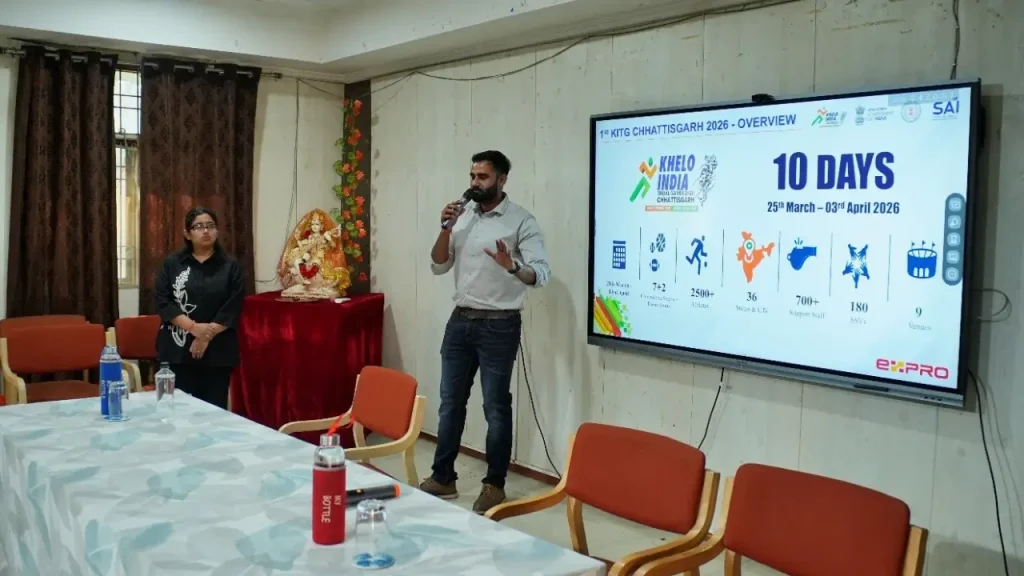
Aman Kumar at the Khelo India Tribal Games 2026
Aman highlighted how he has learned three major lessons via his association with governmental sports organizations like SAI, IOA & others:
-
Stakeholder Management
National-level sporting events involve multiple stakeholders with different responsibilities and objectives. Bringing everyone together and aligning them towards a common vision requires effective communication and coordination.
-
Planning & Documentation
Large-scale sporting events cannot operate on assumptions. Detailed documentation such as Standard Operating Procedures (SOPs), defined processes, reporting structures, hierarchy frameworks, and contingency plans play a crucial role in successful execution.
-
Adaptability
Government projects are dynamic by nature. Requirements can change rapidly, and professionals must continuously adapt while maintaining project timelines and operational efficiency.
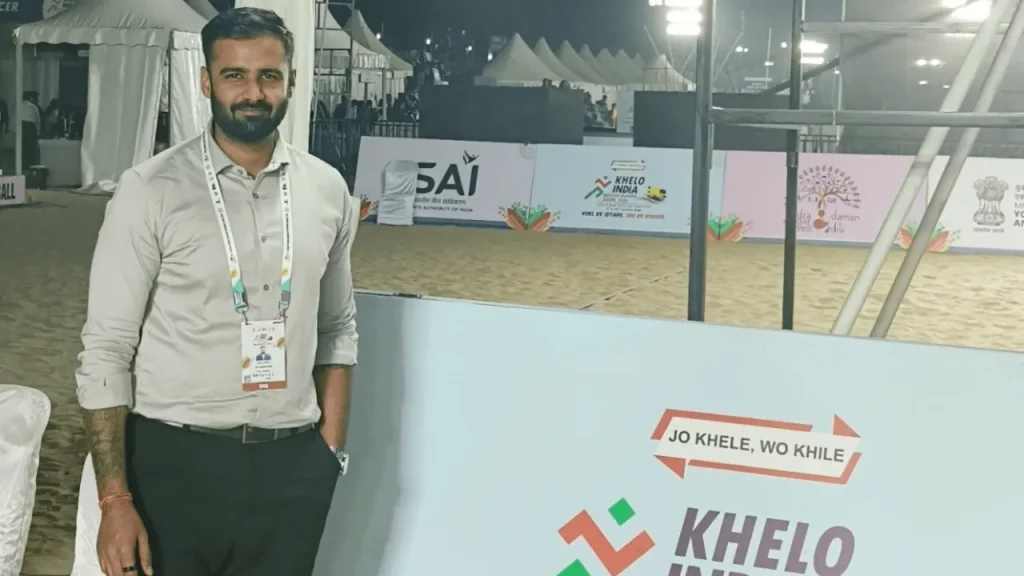
Aman Kumar at the Khelo India Beach Games – Diu 2026
“Through my experience with National Games and Khelo India projects, I have learned that successful sporting events are not built only on event-day execution. Their success is determined by months of planning, coordination, teamwork, and preparation behind the scenes.”
Can you explain how Khelo India is contributing to developing India’s sports ecosystem at the grassroots level?
Khelo India has become one of the most significant initiatives in India’s sports ecosystem since its launch in 2018. Earlier, many talented athletes across the country did not have adequate platforms to showcase their abilities. Talent identification was often inconsistent, and many athletes lacked opportunities and structured pathways for growth.
Khelo India has changed that by creating a well-defined athlete development system that focuses on Participation → Talent Identification → Development → High Performance.
Khelo India changed that by creating a structured pathway:
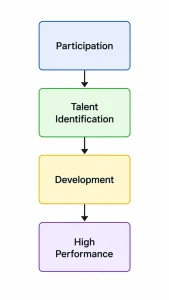
Khelo India – Athlete Development
Aman highlighted the key benefits of the whole Khelo India initiative, which has now turned into a Mission post the Hon’ble Finance Minister of India, Smt. Nirmala Sitharaman proposed the same in the FY2026-27 Sports Budget of India.
-
Providing competition exposure at an early stage
-
Identifying talent from schools, colleges, and universities
-
Supporting athletes through scholarships and development programs
-
Improving sports infrastructure across states
-
Encouraging states to invest more in sports development
-
Creating career and employment opportunities for athletes and sports professionals
“As someone who has worked behind the scenes in multiple editions of Khelo India, I have personally witnessed young athletes competing with confidence after receiving exposure at national platforms. Interestingly, I have also seen individuals who once participated in Khelo India now working within sports administration itself, including organizations such as SAI and various state sports departments. That demonstrates how the initiative is creating impact beyond just athlete development.”
How is the infrastructure and sports diversity at the Khelo India Beach Games & Winter Games, given India has been on the back foot in these sports?
India has traditionally focused more on mainstream sports. However, there has been increasing recognition that creating diverse sporting opportunities is necessary for identifying talent across different regions and sporting disciplines, Aman highlighted.
“The introduction of Khelo India Beach Games and Khelo India Winter Games is helping diversify India’s sporting ecosystem.
The Khelo India Beach Games provide a platform for sports that naturally align with India’s coastal geography. These games are conducted in coastal or beach locations, where the sports are played on sand or in coastal waters. These events create opportunities for athletes in disciplines that previously had limited visibility and support.”
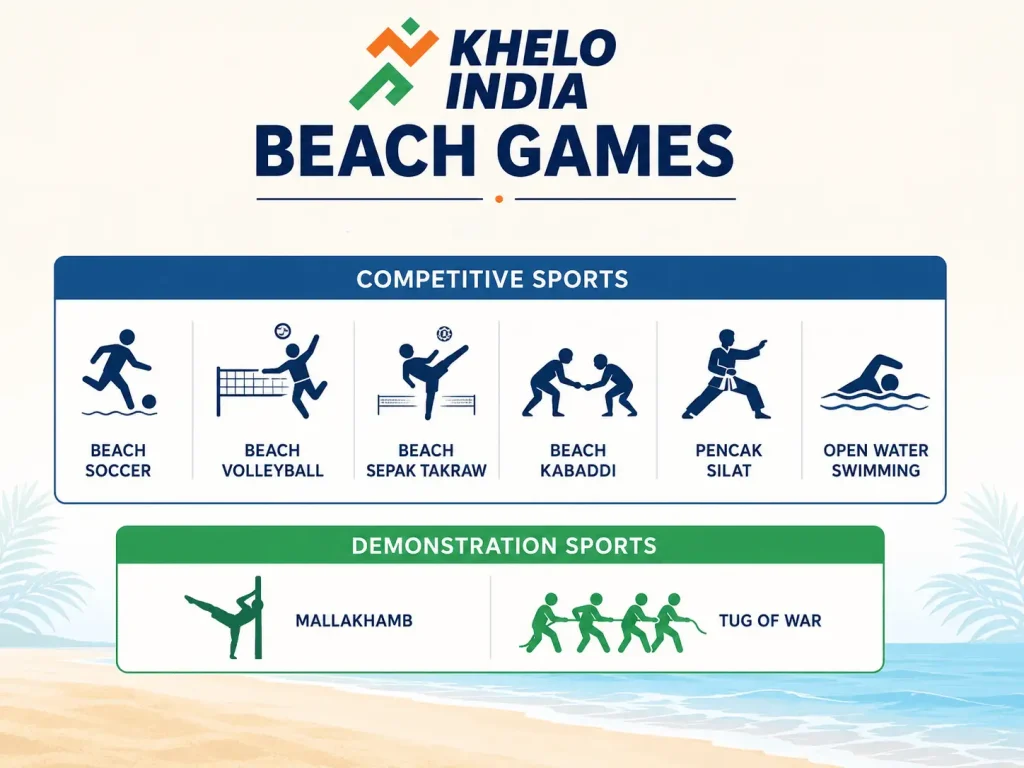
Sports at the Khelo India Beach Games
“Similarly, the Khelo India Winter Games are helping unlock opportunities in states with suitable climates and terrain, especially northern regions where winter sports can be developed. These games are conducted in regions that experience snow and cold weather conditions, primarily in states like Jammu & Kashmir, Ladakh, Himachal Pradesh.”
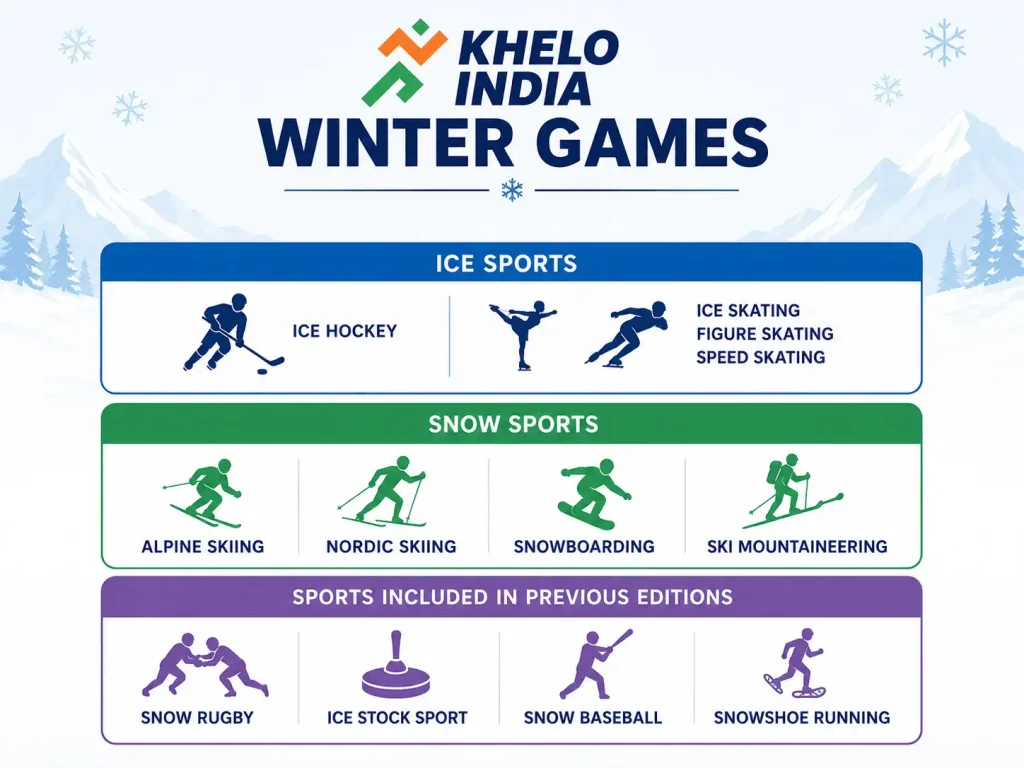
Sports at the Khelo India Winter Games
Aman also highlighted the biggest challenges in these sports continue to be infrastructure and awareness. However, these competitions are gradually helping by:
-
Creating awareness among young athletes
-
Encouraging state participation and talent scouting
-
Improving infrastructure investments
-
Identifying new talent pools at an early age
“For example, coastal states have natural advantages in beach sports, while northern regions have strong potential for winter sports. Leveraging regional strengths can create stronger athlete pipelines.
Similarly, initiatives like Khelo India Tribal Games, introduced to provide opportunities for tribal communities and identify hidden talent, demonstrate how the ecosystem is continuously expanding. Having worked on Khelo India Beach Games and Winter Games, I have seen firsthand how new sporting ecosystems are gradually being built. The long-term impact could be significant if investment and development continue.
Which among the current six types of Khelo India competitions is the most fun to work at?
“Personally, I would choose the Khelo India Youth Games and Khelo India University Games.
From a sports industry professional’s perspective, these events are highly dynamic because they involve multiple stakeholders, sports disciplines, and operational activities happening simultaneously.”
These are large-scale events that require significant investment and coordination from organizing committees, host states, and universities. They generate employment opportunities for sports professionals, support local economies, create awareness within communities, encourage infrastructure development, and provide volunteering opportunities.
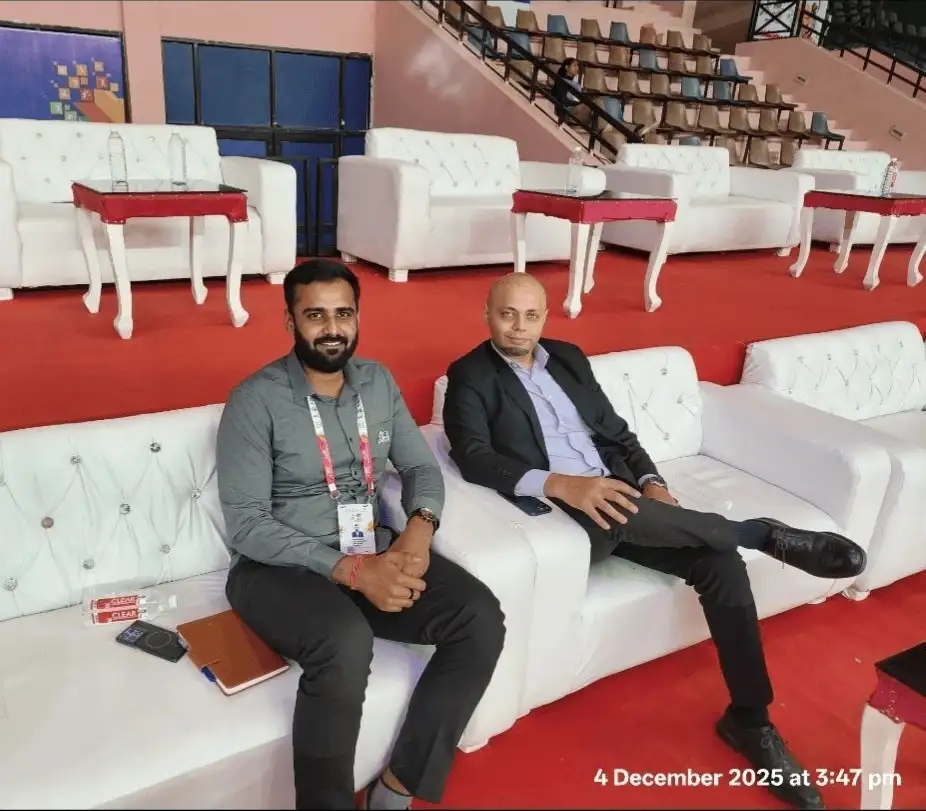
“From a fan and sports lover’s perspective, these events are equally exciting because they allow us to witness India’s future athletes competing with passion and determination. The energy at these events is unique. Young athletes participate with dreams of representing India at the highest level, and local students and athletes also get opportunities to volunteer and be part of the ecosystem.”
There is also a sense of satisfaction in knowing that some of these athletes may eventually become future Olympians. Khelo India Youth and University Games have become an important developmental pipeline for Indian sports, producing hundreds of athletes who have gone on to represent the country at international platforms.
How would you contrast the live exposure experience of leagues like IPL, PKL, ISL with that of Khelo India Games & National Games?
Aman mentioned how the experiences are completely different because both types of events operate with different objectives and priorities. Leagues such as IPL, PKL, and ISL function as highly commercial single sports game and entertainment products where the focus areas generally include:
-
Fan engagement
-
Sponsorship activation
-
Broadcasting operations
-
Branding and marketing
-
Spectator experience
The execution process in leagues is extremely fast-paced and commercially driven.
On the other hand, events like Khelo India Games and National Games are multi-sports event built around athlete development and strengthening India’s sports ecosystem.
These events involve:
-
Multiple sports being conducted simultaneously
-
Government stakeholders
-
Athlete services and support systems
-
Volunteer management systems
-
Technical and operational coordination
“Khelo India and National Games expose professionals to a complete sports ecosystem. Leagues teach you how sports entertainment operates, whereas multi-sport events teach you how sports systems operate.
Personally, both experiences have added value to my professional growth. However, multi-sport events have contributed more significantly because they provide broader exposure and deeper understanding of sports administration and ecosystem development.”
Can you explain the kind of facilities SAI Centres have and how they’re uplifting Indian athletes?
Over the years, Sports Authority of India (SAI) Centres have evolved significantly and today they provide athletes with a complete ecosystem designed to support performance and development.
The facilities generally include:
-
World-class training infrastructure
-
Sports science and performance analysis support
-
Physiotherapy and rehabilitation services
-
Nutrition guidance and diet planning
-
Strength and conditioning support
-
Sports psychology services
-
Accommodation and educational support
The Sports Authority of India (SAI) operates a total of 187 centres across the country, training over 9,000 athletes. These facilities range from grassroots coaching to elite athlete development.
The breakdown of SAI’s 187 centres includes:
Regional Centres: 12 locations (e.g., Mumbai, Bengaluru, Kolkata, Guwahati) that monitor sports schemes.
National Centres of Excellence (NCOEs): 23 centres focused on elite athletes.
SAI Training Centres (STC): 69 facilities grooming junior-level sports persons.
Extension Centres of STC/SAG: 26 centres
National Sports Talent Contest (NSTC): 77 centres (Regular Schools, Indigenous Games & Martial Arts, and Akharas).
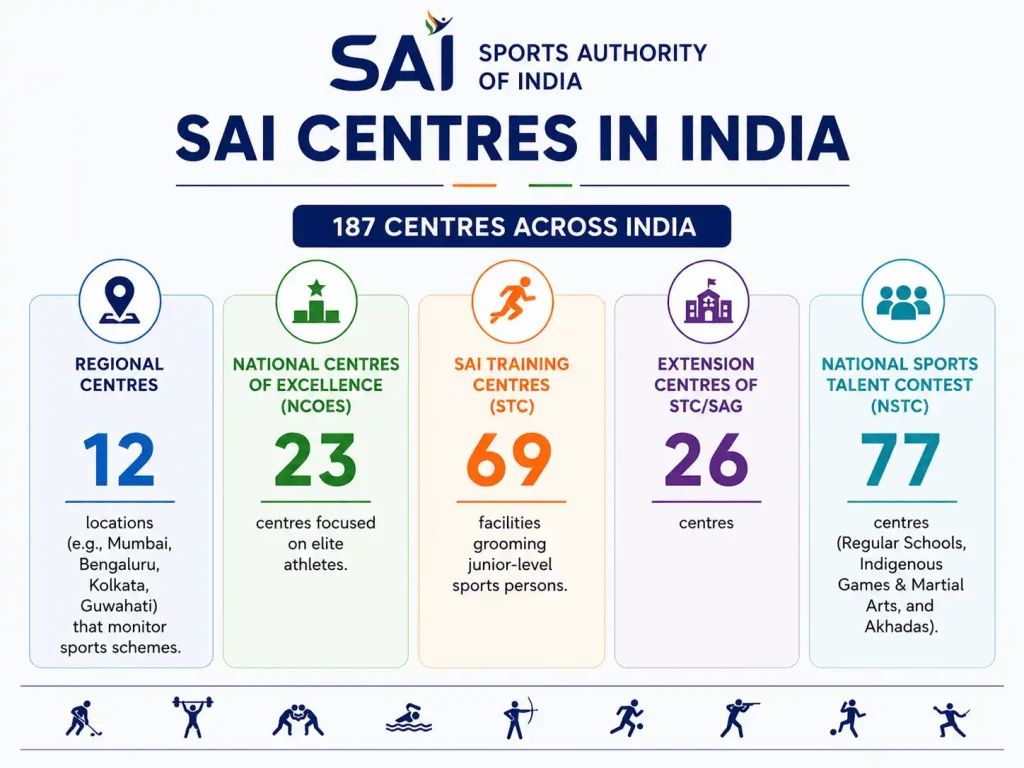
Breakdown of SAI Centres in India
“The biggest impact of these centres is that athletes can focus entirely on performance without worrying about resources and support systems.
Modern sports performance is no longer dependent solely on talent. Success requires a combination of coaching, technology, nutrition, recovery, and mental conditioning. SAI Centres are helping bridge this gap by providing athletes with a structured pathway and a holistic environment for development.”
Having studied as well as worked at IISM, how do you think IISM has helped you evolve as a sports professional?
IISM has played a major role in shaping my professional journey because I have experienced it from two different perspectives — first as a student and now as a working professional.
“Before joining IISM, I had very little understanding of how the sports industry actually functioned. Like many students, I had questions: How do I build a career in sports? What opportunities exist? Where do I begin?
In 2018, I joined IISM to pursue my Master’s degree because I wanted to build a career in what I believed was an exciting and rapidly growing industry. After entering the field, I realized that sports management itself is like a large tree with multiple branches attached to it — sports marketing, sponsorship, journalism, sports law, operations, event management, analytics, and many more.
IISM helped me identify the area that best aligned with my strengths, interests, and professional abilities. More importantly, the learning was never limited to classrooms. We were not only studying theories; we were gaining live event exposure, understanding practical operations, and interacting directly with industry professionals.”
Today, working at IISM has also allowed me to understand the effort, planning, and relationships that go into creating opportunities for aspiring sports professionals.
IISM helped me develop skills such as:
-
Leadership and team management
-
Communication and stakeholder management
-
Problem-solving abilities
-
Event operations expertise
-
Professional discipline
“One thing I value most is exposure. Opportunities to work across projects like IPL, ISL, PKL, Khelo India, National Games, and government initiatives accelerated my learning significantly.
I feel fortunate that my journey has come full circle — from being a student learning about the sports industry to now contributing toward creating opportunities for others.”
What’s one thing you love about your job?
“One thing I genuinely enjoy about my work is that every project brings a completely new learning experience.
No projects are ever the same. One may involve working with hundreds of individuals during execution, while another may involve planning operational structures, documentation, or coordinating with government stakeholders.
This constant change keeps the work exciting and challenging.
More importantly, I enjoy knowing that my work contributes toward something larger than simply conducting an event. It contributes toward strengthening the sports ecosystem in India and creating opportunities for athletes and sports professionals.”
What do you think IISM can do to capitalize on the 2030 Commonwealth Games & the 2036 Olympics in India from a live exposure perspective?
India is entering an exciting phase in its sporting journey. The possibility of hosting the 2030 Commonwealth Games, the 2036 Olympics, and international events such as the 2029 World Police and Fire Games (WPFG) creates massive opportunities not only for athletes but also for future sports professionals and educational institutions.
The 2029 World Police and Fire Games alone is expected to welcome over 10,000 athletes from 70+ countries, demonstrating India’s growing capability in hosting large-scale multi-sport events.
I believe IISM can leverage this opportunity in several ways:
1. Develop Olympic and Commonwealth Experiential programmes
IISM can create structured pathways where students gain hands-on experience by working directly with organizing committees, host states, and event stakeholders through internships and live projects.
2. Introduce Specialized Masterclasses and Certification programmes
Focused subjects can include:
-
Sports Governance
-
Olympic Operations & Event Management
-
Venue Operations and Management
-
Sports Technology and Digital Systems
-
Volunteer Leadership and Training
-
Accreditation and Workforce Management
-
Data Management and Reporting
3. Build Strategic Collaborations
Potential collaborations can include:
-
Sports universities
-
Sports federations
-
Event management agencies
-
Host state sports departments
-
Local organizing committees
-
Project Management Units
4. Create Live Simulation Projects
Students should not only learn theoretical concepts but also experience practical simulations involving venue operations, command centres, crisis management, stakeholder coordination, and real-time decision-making.
5. Build a Volunteer and Workforce Ecosystem
Major sporting events require thousands of trained professionals and volunteers. IISM can establish one of India’s largest sports workforce databases and talent pipelines that organizations can directly access for recruitment and deployment.
The 2036 Olympics should not simply be viewed as a sporting event; it should be viewed as a nation-building opportunity for sports education and workforce development.
“Events such as the World Police and Fire Games, Commonwealth Games, and potentially the Olympics should become catalysts for building an entire sports ecosystem for the future. If leveraged effectively, IISM can play a meaningful role in preparing the next generation of sports professionals who may eventually manage some of the world’s biggest sporting events.”
CONCLUSION
So, that was Aman Kumar’s perspective, having been an alumni professional who has closely worked with governmental sports organizations & seen India’s sports ecosystem from the grassroots level. For this, you need to develop an excellent & innate understanding of Sports Governance policies, systems & hierarchy structures.
And at IISM, we ensure you gain that understanding via our UG & PG courses in Sports Management & Sports Science. You can enrol in these courses to pave your career trajectory in the sports industry!
- Aman Kumar: Managing Government Sports Initiatives at IISM
- Can you tell us about your experience of dealing with the Sports Authority of India (SAI) and Indian Olympic Association (IOA)?
- Can you explain how Khelo India is contributing to developing India’s sports ecosystem at the grassroots level?
- How is the infrastructure and sports diversity at the Khelo India Beach Games & Winter Games, given India has been on the back foot in these sports?
- Which among the current six types of Khelo India competitions is the most fun to work at?
- How would you contrast the live exposure experience of leagues like IPL, PKL, ISL with that of Khelo India Games & National Games?
- Can you explain the kind of facilities SAI Centres have and how they’re uplifting Indian athletes?
- Having studied as well as worked at IISM, how do you think IISM has helped you evolve as a sports professional?
- What’s one thing you love about your job?
- What do you think IISM can do to capitalize on the 2030 Commonwealth Games & the 2036 Olympics in India from a live exposure perspective?