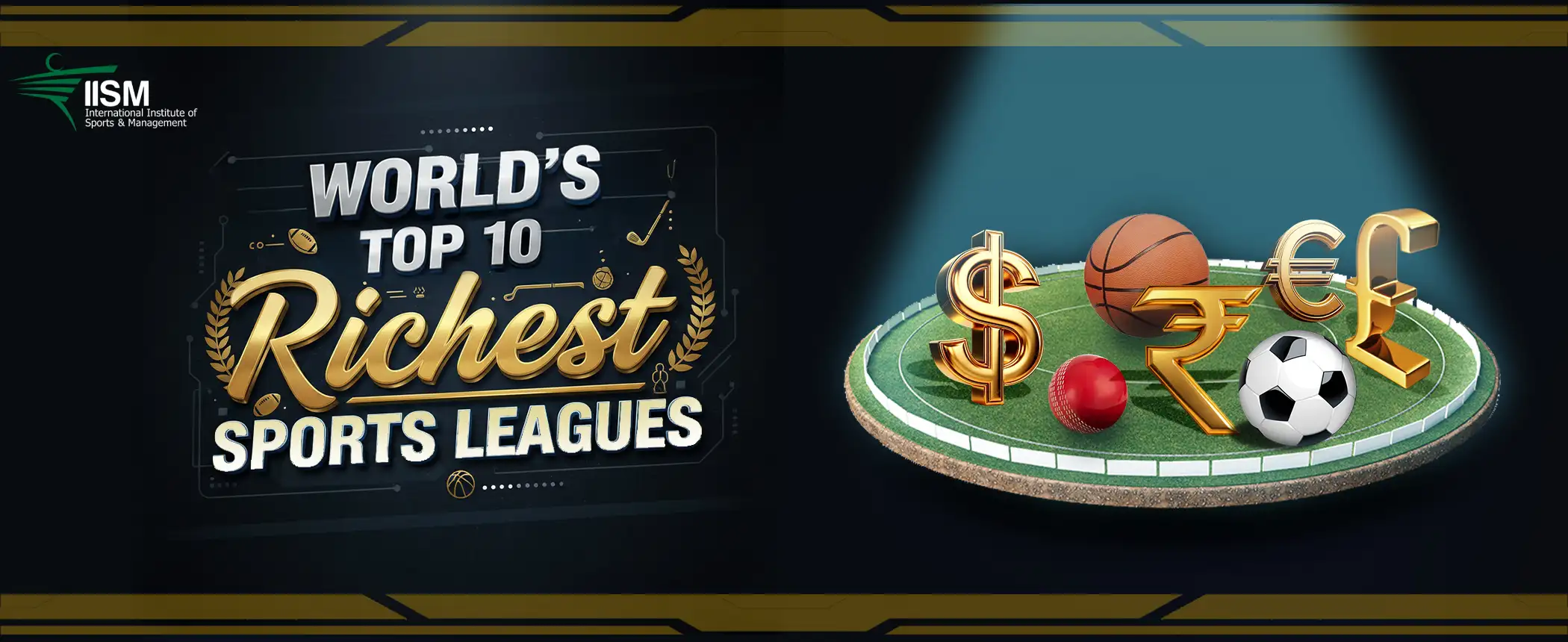
World’s Top 10 Richest Sports Leagues: The Billion Dollar Powerhouses
Once seen as recreation or entertainment, sports today has evolved into an investible economic sector with clear revenue streams. The sports industry is about billion-dollar market that bring together fans, brands, and athletes from around the globe. What began as mere competitions has evolved into a booming industry that fuels economies, creates jobs, and builds cultural legacies.
According to The Business Research Company, the global sports industry grew from US$486.6 billion in 2022 to US$512.1 billion in 2023, and is projected to reach around US$623 billion by 2027. Behind this massive success are the world’s leading sports leagues, each combining strategy, innovation, and spectacle to generate staggering revenues and fan engagement.
Here’s a closer look at the top 10 richest sports leagues in the world, including India’s pride – the Indian Premier League (IPL), which has quickly climbed to global prominence.
Top 10 Richest Sports Leagues in the World
(Please note that the sequence presented here is not in chronological order.)
National Football League (NFL)
Revenue: $23 Billion in 2024 (Source: NFL revenue ‘cleared US$23bn’ for 2024 financial year)
Sport: American Football
Founded: 1920
Top Sponsors: PepsiCo, Nike, Verizon, Bud Light
The NFL reigns supreme as the world’s richest sports league. With $21 billion in revenue (2024), it remains the undisputed leader in sports business. Its 32 teams, iconic rivalries, and blockbuster Super Bowl events that attract millions of viewers annually. What sets the NFL apart is its commercial structure – long-term broadcasting contracts with ESPN, Fox, and NBC generate billions each year. The Dallas Cowboys alone are valued at over $10 billion, making them the most valuable sports franchise globally. Despite pandemic setbacks, the NFL bounced back impressively and is now targeting a jaw-dropping $25 billion in revenue by 2027.
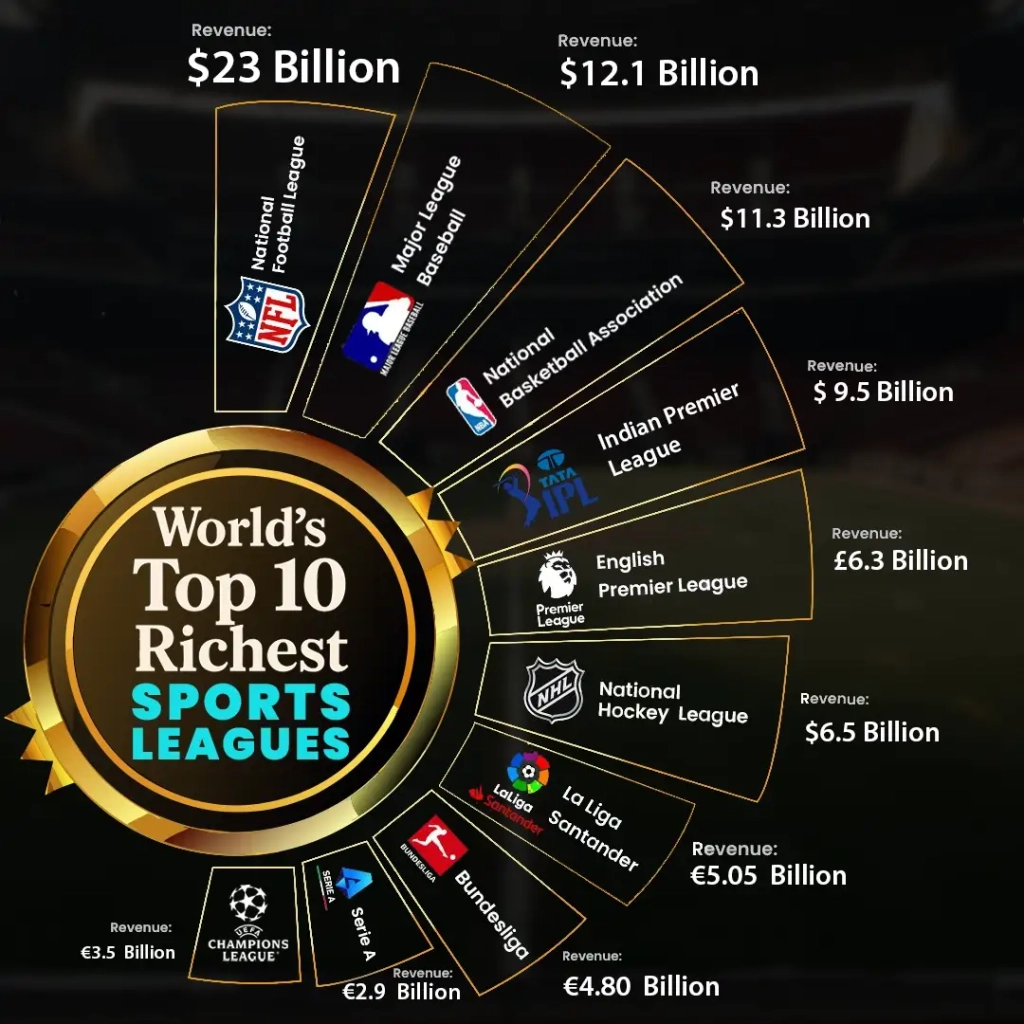
Top 10 Richest sports leagues in the world Infographic
Indian Premier League (IPL)
Business Valuation: $18.5 Billion in 2025 (Source: IPL valuation jumps nearly 13% to $18.5 billion on strong media deals, fan growth)
Revenue: $9.5 Billion in 2023 (Source: Top 10 richest sports leagues in the world including National Football League, Indian Premier League, and others)
Sport: Cricket
Founded: 2008
Top Sponsors: TATA, Jio, MRF
In just over 15 years, the Indian Premier League has become a global phenomenon – the only cricket league to challenge the economic dominance of American sports. The league is estimated to garner $18.5 billion in business valuation (2025) and $9.5 billion in revenue (2023). From its T20 format to celebrity team owners and passionate fans, the IPL blends entertainment and athleticism like no other.
A major reason behind its success lies in its record-breaking media rights deal, worth $6.2 billion for the 2023–2027 cycle, making it one of the most valuable broadcasting agreements in sports history. Franchises like the Mumbai Indians and Chennai Super Kings are now household names, commanding valuations rivaling global football clubs. The IPL has proven that India’s sporting power is beyond the field in the sports business.
Read more: The Contribution of the IPL To The Current Sports Landscape
Major League Baseball (MLB)
Revenue: $12.1 Billion in 2024 (Source: MLB Revenues Hit Record $12.1 Billion In 2024)
Sport: Baseball
Founded: 1876
Top Sponsors: Chevrolet, Mastercard
America’s pastime continues to be a revenue juggernaut. The MLB generated about $12.1 billion in 2024, placing it among the top richest sports leagues. With 30 teams and 162 games per season, MLB thrives on volume, tradition, and television partnerships. The Los Angeles Dodgers and New York Yankees remain their crown jewels, consistently attracting millions of fans and sponsorships from major global brands. After a pandemic dip, MLB has hit new highs through smart broadcasting deals and player branding opportunities, ensuring baseball remains as lucrative as it is historic.
National Basketball Association (NBA)
Business Valuation: $132.8 B in 2024 (Source: NBA Teams Surpassed US$ 11.3 Billion in Revenue in 2024; Total Valuation Reached US$ 132.8 Billion)
Current Revenue: $11.3 B (Source: NBA revenues set to rise by 12% to ‘US$14.3bn’ in 2025/26)
Predicted Revenue: $14.3 B in 2025/2026
Sport: Basketball
Founded: 1946
Top Sponsors: Nike, Pepsi, State Farm
With $11.3B revenue currently, the NBA has transformed basketball into a global brand, expecting its revenue to reach over $14.3 billion in 2025/2026. The league’s global strategy, led by icons like LeBron James and Stephen Curry, has expanded its fan base far beyond American borders. Its jersey partnerships with Nike and team-specific sponsorships have revolutionized sports merchandising.
With digital content, international games, and innovative fan engagement, the NBA continues to prove that modern sports are as much about storytelling and brand identity as about competition.
English Premier League (EPL)
Revenue: £6.3 Billion in 2023-2024 (Source: Premier League revenue hits record £6.3 billion amid fan protests and competitive concerns)
Sport: Football (Soccer)
Founded: 1992
Top Sponsors: Barclays, Nike, EA Sports
The EPL remains football’s richest and most-watched domestic league. With approximately £6.3 billion in revenue (2024), it’s the beating heart of global football fandom. Clubs such as Manchester United, Liverpool, Chelsea, and Arsenal command huge international followings. A significant portion of EPL revenue now comes from international broadcasting rights, signaling its global appeal. Interestingly, this is the first time in its history that the league earns more from international than domestic media deals, boasting its worldwide popularity.
National Hockey League (NHL)
Revenue: $6.5 Billion in 2024 (Source: Stability meets optimism: What the data says about the NHL’s US$6.5bn business)
Sport: Ice Hockey
Founded: 1917
Top Sponsors: Geico, Honda, Budweiser
With an estimated $6.5 billion in annual revenue, the NHL is North America’s premier ice hockey league. Comprising 32 teams, the NHL is known for its energetic atmosphere and fiercely loyal fan base. Recent expansions, including the introduction of the Seattle Kraken and broadcasting partnerships with ESPN, have significantly boosted league revenues. The NHL’s commercial strategy, a blend of traditional ticket sales, broadcasting, and global sponsorships, ensures it maintains its place among the top sporting entities worldwide.
La Liga Santander
Revenue: €5.05 Billion in 2023-2024 (Source: LaLiga hails ‘all-time highs’ in revenue and attendance for 2023/24)
Sport: Football
Founded: 1929
Top Sponsors: Santander, Nike, Puma
Home to Real Madrid and FC Barcelona, La Liga remains a cornerstone of European football. Generating around €5.05 billion (2024), the Spanish league thrives on its global fan base and superstar athletes. Its broadcast deals, combined with long-standing partnerships with brands like Santander and Nike, make La Liga one of the most marketable sports properties on the planet. Despite financial challenges faced by some clubs, the league continues to adapt with digital fan engagement and youth development programs that sustain its prestige.
Bundesliga
Revenue: €4.80 Billion in 2023 -2024 (Source: Bundesliga clubs earn record revenues of €4.8bn in 2023/24)
Sport: Football
Founded: 1962
Top Sponsors: Adidas, Deutsche Telekom
The Bundesliga, Germany’s top-tier football league, stands out for its incredible fan culture and efficient business model. Earning around €4.80 billion annually, it boasts some of the world’s best-managed clubs like Bayern Munich and Borussia Dortmund.
With the highest average stadium attendance globally, the Bundesliga’s success lies in its balance, maintaining affordable fan access while securing profitable sponsorship and broadcasting deals.
UEFA Champions League
Revenue: €3.5 Billion in 2023 -2024 (Source: More Games, More Money? Understanding the Champions League’s New Structure)
Sport: Football
Founded: 1955
Top Sponsors: Heineken, Gazprom, Nissan
The UEFA Champions League isn’t a domestic league but remains one of the most prestigious and profitable tournaments in sports. Generating about €3.5 billion, it features the best clubs from Europe’s top leagues competing on one stage. Its unmatched global viewership and sponsorship roster make it a marketing dream — blending elite competition with international appeal.
Serie A
Revenue: €2.9 Billion in 2023-2024 (Source: European soccer revenues rise to €38bn in 2023-24)
Sport: Football (Soccer)
Founded: 1898
Top Sponsors: TIM, Puma, Nike
Serie A generated roughly €2.9 billion in revenue in the 2023/24 season
This resurgence didn’t come from just one source, though. Its strength lies in a balanced revenue model.
Serie A’s clubs saw their non-matchday income jump to around €1.0 billion (a 9% rise), fueled by fresh sponsorship deals (especially from North American-owned teams) and stronger merchandise sales. Its Matchday income also climbed, reaching €0.4 billion, as average attendance across the league crept up to 30,916 per match. However, broadcasting revenues dipped slightly to €1.5 billion, dragged down by weaker performance from Italian clubs in UEFA competitions.
Despite rising costs, especially on wages, which hit around €2.0 billion, the clubs managed to pull off an aggregate operating profit of €40 million. Their pre-tax losses also narrowed to €300 million, signaling more stable financial ground.
The Societal & Economic Impact:
Across the world’s top leagues, this shift is fueling profound economic and social transformations. Major sporting competitions draw in tourism -fans fly in for marquee matchups, filling hotels, restaurants, and local businesses, dramatically boosting cities’ hospitality sectors. At the same time, these leagues create vast employment opportunities, not only for athletes and coaches but also for stadium staff, broadcasters, event organizers, and ancillary services.
To stage these global spectacles, massive infrastructure development is often required: modern arenas, transport upgrades, and accommodation improvements all follow to support the demand. This physical investment contributes to long-term urban regeneration, improving both the quality of life and future economic potential of host cities. Beyond the financials, there’s a meaningful societal impact too. Leagues help professionalize sports, giving athletes structured careers and allowing local communities to build pride and engagement around their teams.
The combined effect is powerful. These global leagues are not just sports brands, they are catalysts for job creation, tourism-driven growth, urban renewal, and social cohesion. As the sports business continues to expand, it is helping to build the future of the sports industry – economically, culturally, and sustainably.
Click to read next blog – Top 20 Sports Companies in India Every Future Sports Manager Must Know