Can Stadiums in India Evolve? — Facilities, Comfort & Multi-Use
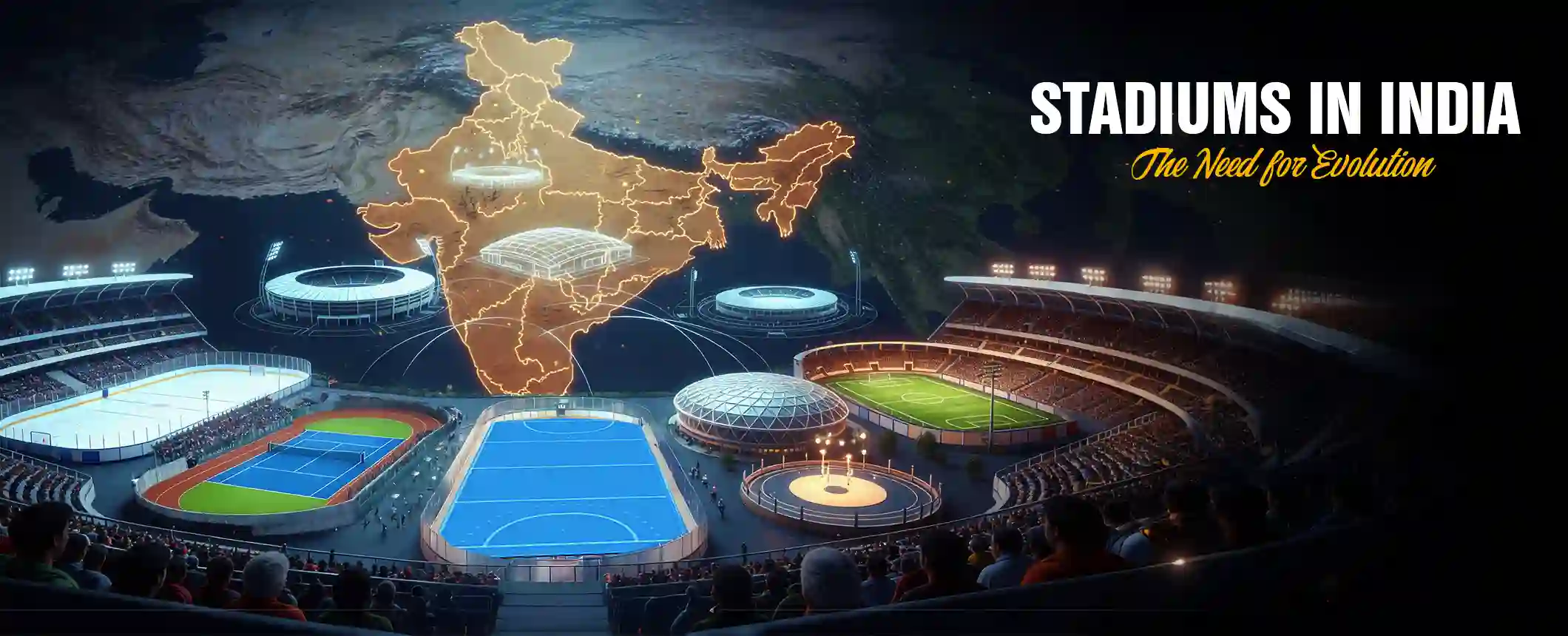
India’s sports calendar has really diversified in the past few years. Beyond cricket world cups, multiple leagues & tournaments at the regional & international level are being held across various sports. Be it hockey, football, tennis, badminton, wrestling, or athletics — India’s sporting landscape is moving from being cricket-centric. However, from an infrastructure perspective, the stadiums in India need to be way better & more diverse to host these wide range of sports.
While India has the biggest cricket stadium in terms of capacity in Ahmedabad, arenas & grounds for sports like football, badminton, hockey, etc. don’t match the level of infrastructure in the Indian cricket ecosystem — at least not the way cricket stadiums are spread across the country.
Likewise, the top-class stadiums for football, track & field events and other sporting arenas are also built for that particular sport. While leagues like WPL, PKL, ISL, Hockey India League, Pro Wrestling League along with multi-sport competitions like Khelo India & National Games do benefit from the variety of stadiums & arena facilities, the scope always remains limited.
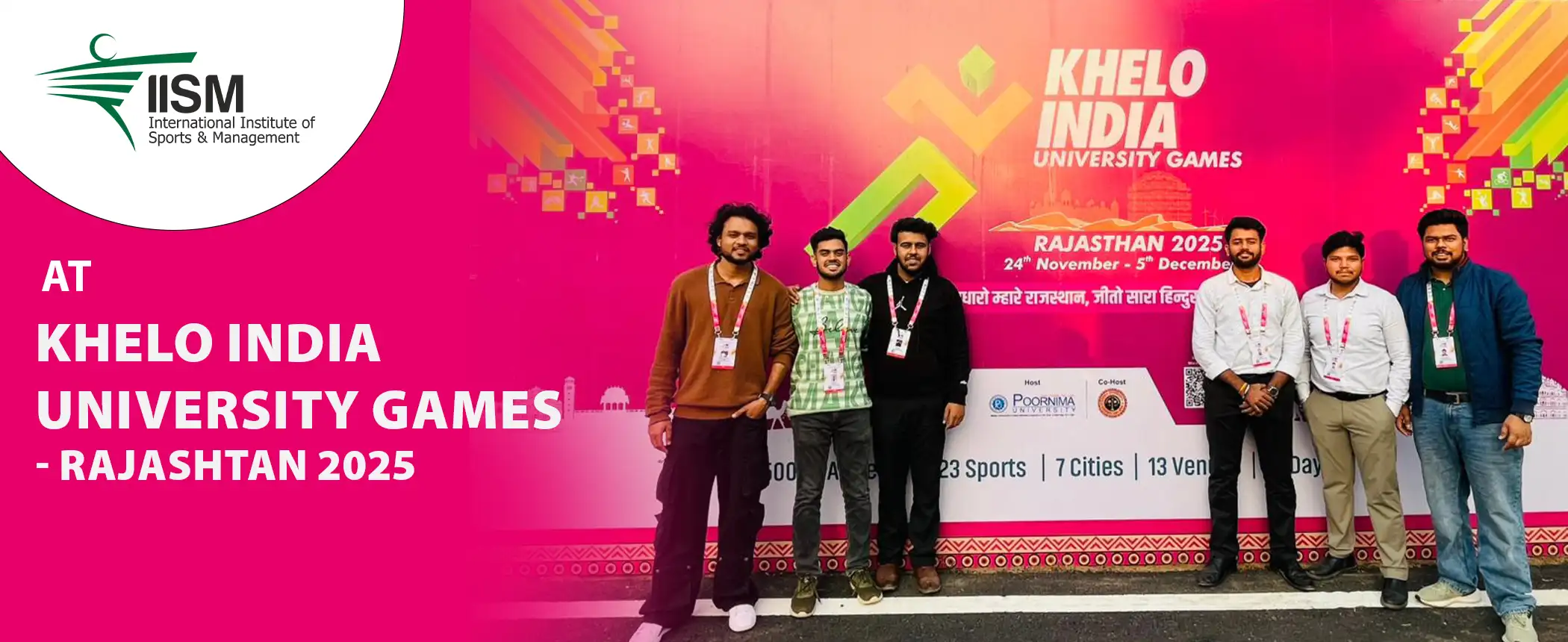
Also Read: IISM’s Role in 5th Khelo India University Games – Rajasthan 2025
These single-sport arenas cannot be used or converted to be used for another sport or hosting any other non-sporting events. For instance, a football stadium once used for the ISL for 2-3 months may remain vacant for the rest of the year. So, there is a need for multi-purpose stadiums in India, which can be used for a variety of sporting as well as non-sporting events.
But first let’s understand the expanse of stadiums in India, with capacity, amenities & the kind of sporting tournaments — such as Cricket World Cups, Hockey World Cups, Khelo India Games. And from that, we can explore the scope of stadiums needed for various sports and the increasing need for multi-purpose stadiums, given the increase in events like concerts, exhibitions & expos, etc. across the country.
Biggest Stadiums in India: At a Glance
While our country lacks the easy availability of multi-sport arenas, the biggest stadiums in India do have the capacity, infrastructure & amenities to host a variety of sports such as cricket, football, hockey, athletics, tennis, badminton, etc. In fact, some of the venues such as the Jawaharlal Nehru Stadium in Delhi and the JRD Tata Sports Complex in Jamshedpur, have facilities & arenas for almost all major sporting disciplines that Indian athletes participate in.
Here’s a comprehensive table of the top 10 stadiums in India in terms of their capacity & sporting facilities:
| Stadium Name | City | Capacity | Sports Played |
|---|---|---|---|
| Narendra Modi Stadium | Ahmedabad | 1,32,000 | Cricket |
| Salt Lake Stadium | Kolkata | 85,000 | Football, Athletics, Hockey |
| Eden Gardens | Kolkata | 68,000 | Cricket |
| Shaheed Veer Narayan Singh International Cricket Stadium | Raipur | 65,000 | Cricket |
| Jawaharlal Nehru Stadium | Delhi | 60,000 | Football, Athletics, Cricket, Volleyball, Basketball, Badminton, Weightlifting |
| Greenfield International Stadium | Thiruvananthapuram | 50,000 | Cricket, Football, Squash, Volleyball, Basketball, Table Tennis, Swimming |
| Brabourne Stadium – Cricket Club of India | Mumbai | 50,000 | Cricket, Tennis, Billiards, Snooker, Badminton, Squash, Swimming |
| Dr. DY Patil Sports Academy | Navi Mumbai | 45,000 | Cricket, Football, Swimming, Tennis, Badminton, Squash, Basketball, Athletics, Table Tennis |
| Jawaharlal Nehru Stadium | Kochi | 41,000 | Cricket, Football |
| JRD Tata Sports Complex | Jamshedpur | 40,000 | Football, Athletics, Archery, Basketball, Hockey, Swimming, Volleyball, Badminton, Boxing, Tennis, Table Tennis, Shooting, etc. |
Many of these stadiums are evidently already a multi-purpose venue with facilities and arenas for various sports as mentioned in the above table. And naturally, they have the flexibility to get converted to be used for non-sporting events like concerts & expos. But naturally, with cricket being a major sport with a massive following and player pool in the country, the number of cricket-exclusive stadiums outnumber these diverse arenas.
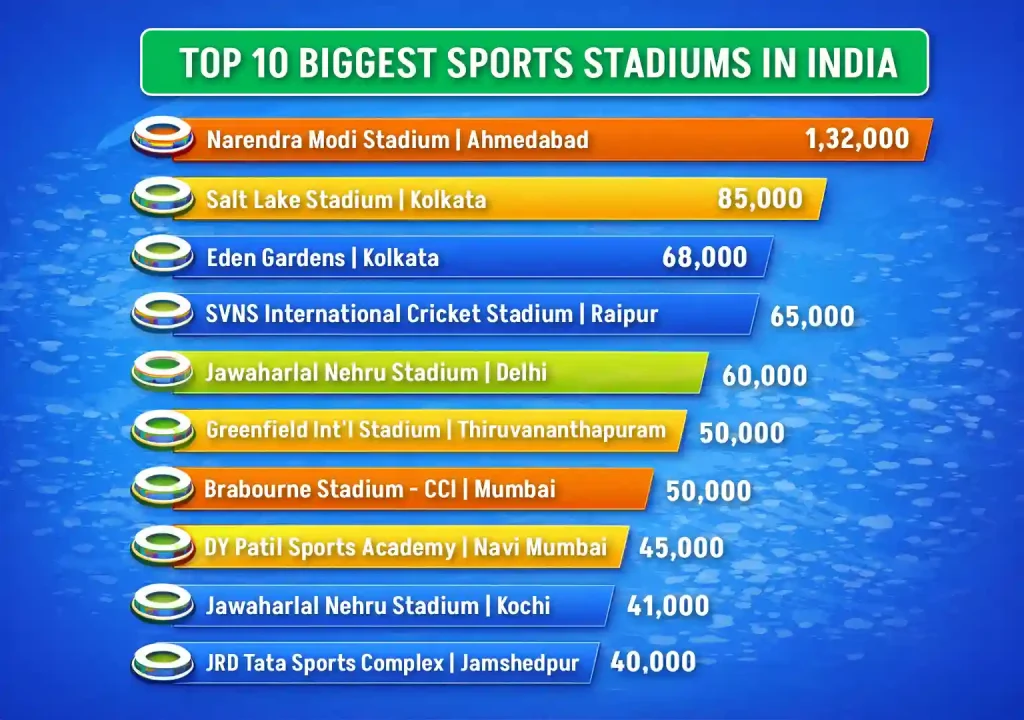
Top 10 Biggest Sports Stadiums in India (by capacity)
FAQs – Stadiums in India
How many stadiums does India have?
Currently, India has 80+ cricket stadiums that have hosted at least one international match (Test, ODI, T20I).
As for non-cricketing venues, India possesses around 30 to 40 stadiums with several other smaller arenas & facilities, easily taking the overall number to over 150.
Which is the biggest stadium in India?
The Narendra Modi Stadium in Motera, Ahmedabad is the biggest stadium in India and in the world as well, with a capacity of hosting 1,32,000 people.
What is a Multi-purpose Stadium?
A Multi-purpose stadium is a venue that can be converted to host all kinds of sports as well as non-sporting events like concerts & exhibitions.
Which is the largest Multi-purpose Stadium in India?
The Salt Lake Stadium in Kolkata, with a capacity of 85,000, can be deemed as the largest multi-purpose stadium in India, given it actually hosts multiple sports.
And while the Narendra Modi Stadium in Ahmedabad has emerged as the largest stadium with a capacity of 1,32,000 & has a bigger field size, its tendency to mainly host cricket games doesn’t help it qualify as a multi-purpose sports stadium, at least as things stand.
India Becoming a Hub for World Cups & Global Tournaments
In the past decade, India has seen a plethora of World Cups & international tournaments being hosted. ICC Cricket World Cups are naturally a mainstay on the Indian sporting calendar, given the sport’s popularity in the country. Though, apart from them, India has also hosted two Hockey World Cups in Odisha, where the state government has uplifted hockey infrastructure massively by building stadiums & facilities.
Similarly, the 2017 FIFA U17 Football World Cup, the 2025 Squash World Cup, the World Para Athletics Championships are some of several other global tournaments held in India. Even the 2026 BWF Badminton World Championships are scheduled to be held in Delhi later in August.
Major World Championship/International Tournaments held in India
-
2018 & 2023 FIH Men’s Hockey World Cups
-
2023 & 2025 FIDE Chess Olympiads
-
2025 Squash World Cup
-
2025 World Para Athletics Championships
-
2026 BWF Badminton World Championships — to be hosted in August 2026
Naturally, this has strengthened India’s bid for the 2036 Olympic Games, while we have already secured the hosting rights for the 2030 Commonwealth Games. After Delhi hosted the 2010 edition, Ahmedabad is being developed as major hub by building state-of-the-art sports complexes, arenas & stadiums in & around the city.
Also Read: How is India Preparing for the 2030 Commonwealth Games and the 2036 Olympics?
As for hosting major cricket tournaments like the ODI & T20 World Cups, India’s central cricket governing body — BCCI is doing an exceptional job, which was evident in the Men’s & Women’s ODI World Cups held in 2023 & 2025 respectively.
Cricket World Cups held in India since 2000
-
2011 Men’s ODI World Cup
-
2013 Women’s ODI World Cup
-
2016 Men’s T20 World Cup
-
2023 Men’s ODI World Cup
-
2025 Women’s ODI World Cup
-
2026 Men’s T20 World Cup — Currently Ongoing
Even the organized scheduling of the ongoing Men’s T20 World Cup in tandem with Sri Lanka is a great example to learn from in terms of handling major venues & coordinating logistics for international sporting tournaments. Here’s a snapshot of the venues of the 2026 Men’s T20 World Cup.
2026 Men’s T20 World Cup Venues
Apart from Sri Lanka’s R Premadasa Stadium & the Sinhalese Sports Club Stadium in Colombo along with the Pallekele International Cricket Stadium in Kandy, India is hosting the T20 World Cup matches at 5 major venues.
| Stadium Name | City | Capacity |
|---|---|---|
| Wankhede Stadium | Mumbai | 33,000 |
| Eden Gardens | Kolkata | 68,000 |
| MA Chidambaram Stadium | Chennai | 38,000 |
| Arun Jaitley Stadium | Delhi | 48,000 |
| Narendra Modi Stadium | Chennai | 1,32,000 |
From a logistical perspective, the BCCI along with the ICC have managed the scheduling across these venues quite well, with many of the travelling teams like South Africa, New Zealand, England, West Indies, Scotland, South Africa, Nepal and Italy being designated one or two venues out of these five at the maximum for their league games. This has facilitated travelling fatigue for all of these teams and also made it easier for their fans to follow their respective teams in their designated cities.
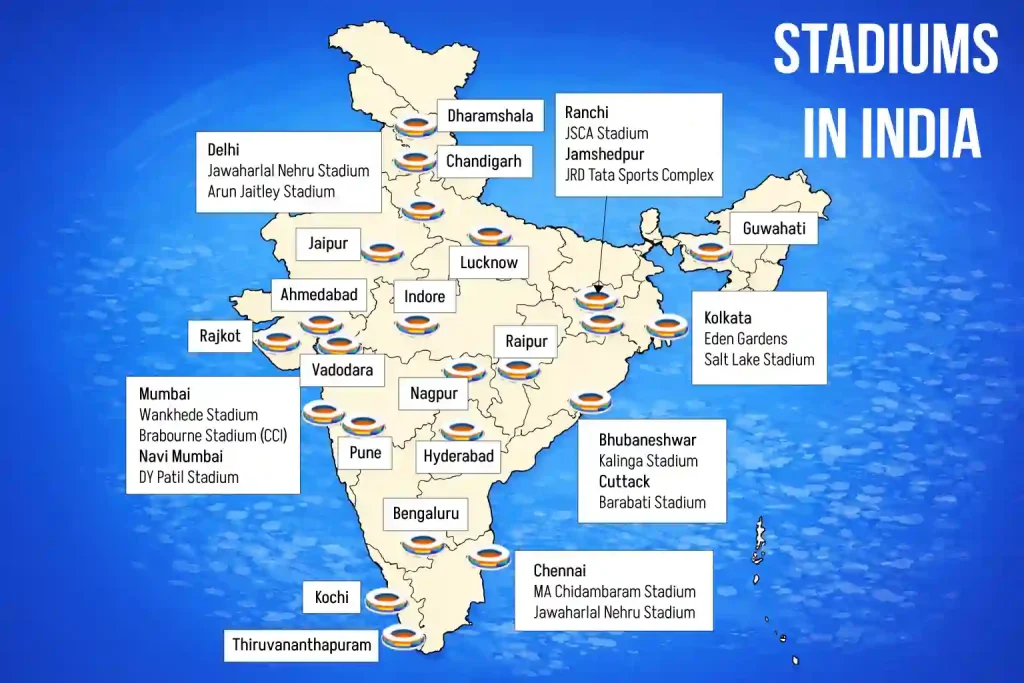
All major sports stadiums & arenas in India
This can be a great blueprint for other multi-sport international tournaments being held in India, if they are being conducted across multiple cities. In terms of India’s Commonwealth & Olympic Games hosting plans, such logistical planning can come in handy to accommodate a large number of international fans in & around the city of Ahmedabad with sports events happening across multiple stadiums & arenas, which are being built from a future perspective, too.
Multi-purpose Stadiums
What is a Multi-purpose Stadium?
A Multi-purpose stadium is a venue that can be converted to host all kinds of sporting & non-sporting events. From hosting cricket to being ready for football or athletics, and from being a sporting arena to being prepared to host a concert or an exhibition event. Multi-purpose stadiums are a game-changer in terms of revenues for stadium facility managers, as their revenue streams aren’t dependent on only one type of sport or event.
Now, it isn’t like India doesn’t have multi-purpose stadiums. Many venues like the Jawaharlal Nehru Stadiums in Delhi, Kochi & Chennai, the DY Patil Stadium in Navi Mumbai, the Brabourne Stadium in Mumbai, the Greenfield International Stadium in Thiruvananthapuram, and the JRD Tata Sports Complex in Jamshedpur are multi-purpose arenas. With facilities & infrastructure for multiple sports, these venues in India showcase that our country can utilize its stadium infrastructure throughout the year.
But there’s a considerable gap when we compare India’s multi-purpose stadium infrastructure with that of foreign countries.
Foreign Multi-purpose Stadiums
The Wembley Stadium in London, UK and the Melbourne Cricket Ground (MCG) in Melbourne, Australia are classic examples of a top-class multi-purpose stadium. The Wembley — having a capacity of 90,000 — is mainly a football stadium, but has also regularly hosts rugby matches along with other sports like boxing & wrestling.
Meanwhile, the MCG — which is the largest in terms of ground size — has been home to cricket for the longest time, but has also hosted Australian Rules Football (AFL), American Football (NFL), Rugby and several other sports. Being one of the primary venues for the 1956 Olympics, the 2006 Commonwealth Games, the MCG has the ability to be modified for a variety of sporting disciplines.
Similarly, the Allianz Arena in Munich, the O2 in London, the Olympiastadion in Berlin, and the MetLife Stadium in New Jersey are similar diverse multi-purpose stadiums that host a variety of sports along with non-sporting events like concerts, expos, etc.
Why does India need Multi-purpose stadiums?
Multiple Sources of Revenue
With the increasing frequency of concerts in India, there is a demand from popular singers that our country lacks proper concert infrastructure or convertible stadiums that can be utilized to perform concerts seamlessly. While foreign venues like Wembley, the Allianz Arena & O2 are often used for both sporting events & concerts, Indian stadiums often lack that versatility.
The Narendra Modi Stadium in Ahmedabad, the DY Patil Stadium in Navi Mumbai and the Jawaharlal Nehru Stadium in Delhi have been host to popular band & popstar concerts of late. But even they lack the world-class infrastructure that the international stadiums in Australia, Europe & the UK possess.
If India can develop multi-purpose stadiums, the massive investment in it can be better utilized with revenues around the year, rather than money only coming in when major sports events happen. From concerts to exhibitions, expos & other variety of events can take place besides the sporting leagues & tournaments. The capacity utilization of the stadium in addition to the cost efficiency will improve massively with such an arrangement.
Grassroots Level Accessibility
Grassroots level athletes & local youngsters getting the access to stadium facilities & arenas is something that Indian stadiums need to work upon compared to foreign countries in Europe and Australia. In Australia in particular, sporting arenas can be utilized by players of multiple sports. The MCG, for instance, has a drop-in pitch installed for its cricket matches during the summer. Post that, the pitch is removed to prepare the ground for the AFL season.
Similarly, there are many stadiums in the world that get converted for track & field events, football, rugby, wrestling, boxing and several other sports. And not just for international-level events — even local grassroots-level leagues & competitions can access the stadium per their requirements.
India can learn from this flexibility of a multi-purpose stadium to develop a strong grassroots sporting culture. Naturally, we will need extensive manpower for managing such facilities & stadiums, which makes facility management a crucial pillar in this whole endeavour.
Sports Facility Management: The Invisible Backbone
From maintenance of grounds to pitch curation, rotation — sports facility managers play a critical role in handling stadium operations throughout the year. Be it during events & matches or the off-season, managing and maintaining the facility is a tedious task. But if done correctly, a stadium can host multiple sports & events across the calendar year. From hosting football & cricket games to organizing concerts & expos during the off-season — facility managers can come in handy for every single operational aspect.
A classic example of facility or venue management can be given via IISM students’ recent internship experience at the Baroda Cricket Association in Vadodara, Gujarat. 15 of these aspiring sports managers interned with the BCA and handle venue operations at the Kotambi stadium during the India vs New Zealand Men’s ODI and the second leg of the Women’s Premier League (WPL) 2026. From ticketing to accreditation, coordinating with travel and food vendors, and even managing security & housekeeping, our students were involved in end-to-end venue operations at the Kotambi stadium.
Such exposure to youngsters is crucial for India’s sports ecosystem and the better upkeep of sporting arenas & facilities in the country. And for multi-purpose stadiums, it gets even more important. Imagine the need for venue management professionals when we have several multi-purpose stadiums hosting events throughout the year.
Road Ahead for Stadiums in India
So, how can India’s stadiums be upgraded to the next level? Firstly, there needs to be change in the outlook towards building stadium infrastructure at the design & architecture level. Modular seating with comfort prioritized for the audience is something crucial at a fundamental level. Similarly the pitch & turf in the field of play needs to be hybrid & modifiable as per various sports’ needs.
Stadiums with retractable roofs are also something that should be considered as a contingency against volatile rainy weather. While sports like cricket & football need natural elements to enhance the game, other sports like tennis, wresting, badminton, etc. may benefit massively from such solutions.
And lastly, tech integration is the most crucial part with the flexibility & convenience of digital ticketing and payments at the venue. Given many in-stadium vendors rely on cash payments during tournaments in India, this is a major factor that needs to be addressed by the venue managers themselves. Similarly, developing energy-efficienct lighting, utilizing solar power & increasing usage of data-driven maintenance can go a long way in uplifting India stadium infrastructure. And for that, the public-private partnerships that do stadium financing also need to match their vision for such level of stadiums & arenas in the country.
Conclusion
India doesn’t just need more stadiums for sports like football, hockey, tennis, basketball, etc. These stadiums need to be smarter & multi-purpose. And even though cricket & kabaddi have thrived with world-class stadiums across the country, even their infrastructure needs a face lift with top-class facilities for the players & amenities for the audiences.
While having large capacity stadiums is a great deal, maintaining the quality of infrastructure of that magnitude also needs a lot of effort, manpower & skills for handling venue operations. This is where sports facility managers step in. Today, India is producing a lot of talented youngsters wanting to work in the sports industry and for them, there are several pathways to foray into Sports Management fields like broadcasting, sports retail, event management. Venue Operations & Facility Management is one of them.
Now, with the boom in sporting leagues like IPL, WPL, PKL, ISL and global world championship events along with World Cups happening in India more often, the need for sports facility managers is on the up. And these youngsters pursuing sports management are getting plenty of opportunities to handle venue operations during all of the above leagues & tournaments.
If you also wish to pursue this career pathway in sports management, get in touch with us at IISM.