How is India preparing for the 2030 Commonwealth Games and the 2036 Olympics?
India’s Evolving Legacy as a Global Sports Host
India’s ambition to host the Commonwealth Games 2030 and the Olympic Games 2036 is rooted in a long and steadily evolving legacy of international sports hosting. Over the decades, India’s journey as a host nation has reflected a clear progression, from taking major steps in earlier decades to recent several leagues hosting, driven by growing organizational capability, expanding infrastructure, and rising confidence on the global stage.
From the Asian Games in 1951 and 1982, which first established India’s presence in multi-sport hosting and transformed broadcast and urban infrastructure, to the Commonwealth Games 2010, which generated significant economic impact through transport infrastructure, each major event has left behind tangible and intangible legacies.
Cricket World Cups, FIFA tournaments, Hockey World Cups, and global events like the FIDE Chess Olympiad have further reinforced India’s reputation as a host capable of managing scale, diversity, and commercial complexity.
Crucially, these events have not only delivered world-class sporting spectacles but have also generated economic multipliers, increased cultural visibility, facilitated infrastructure upgrades, and fostered national pride – key outcomes highlighted in global sports impact studies. This cumulative experience now underpins India’s current strategy: boosting the 2030 Commonwealth Games as a stepping stone toward a credible 2036 Olympics bid, with a focus on sustainability, legacy, and long-term value rather than one-time spectacle.
India’s Legacy of Hosting International Sporting Events
Before focusing on future ambitions, it is important to recognise India’s proven hosting credentials. Over the years, the country has successfully delivered several landmark global tournaments:
- 2010 Commonwealth Games (Delhi): Despite early challenges, the Games marked a turning point in India’s sports infrastructure development, leaving behind world-class venues, improved urban transport, and heightened global visibility.
- 2011 ICC Cricket World Cup: Co-hosted by India, the tournament showcased India’s organisational capability, massive fan engagement, and commercial strength in global sport.
- FIFA U-17 World Cup 2017: India’s first-ever FIFA tournament was widely praised for fan experience, packed stadiums, grassroots activation, and professional execution.
- FIH Hockey Men’s World Cup 2018 (Bhubaneswar): Considered one of the best-organised Hockey World Cups, it set new benchmarks for fan engagement, city branding, and volunteer management.
- 2023 ICC Men’s Cricket World Cup: Hosted across multiple cities, the tournament demonstrated India’s ability to manage complex logistics, large crowds, global broadcasting, and multi-venue coordination.
- 2025 World Para Athletics Championships: A significant milestone for inclusivity, reinforcing India’s growing commitment to para-sports and accessible sporting infrastructure.
- FIDE Chess Olympiad 2023 hosted in Chennai & FIDE Chess Olympiad 2025 hosted in Goa: With this significant sports event, India pinned its place firmly on the global chess map.
- Squash World Cup 2025 Chennai: India not only hosted the tournament but also became the first Asian country to win the Squash World Cup and fourth after Australia, England and Egypt.
- ICC Women’s World Cup 2025: A defining chapter in women’s sport, underscoring India’s evolving sporting ecosystem through its commitment to excellence, inclusivity, and the advancement of women’s cricket on a global stage.
Together, these events have strengthened India’s reputation as a reliable, passionate, and commercially viable host nation.
A Strategic Shift Towards 2030 and 2036, citing sports events hosted in Ahmedabad
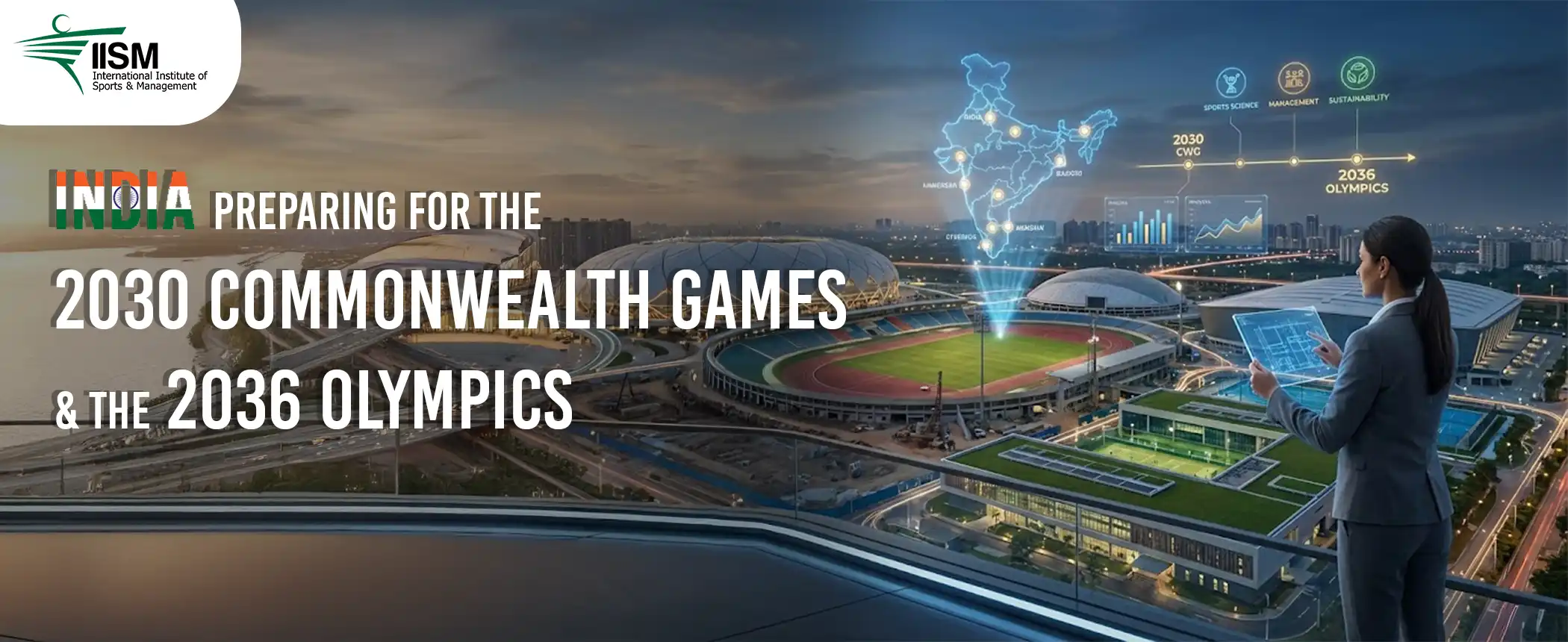
Building on the historical legacy, India’s focus has now shifted towards the Centenary Commonwealth Games in 2030, with Ahmedabad emerging as the central hub of preparation. The Games are being viewed as a strategic rehearsal for the 2036 Olympics.
That said, India is already paving its future roadmap. Let’s go through the several sports events already hosted in Ahmedabad:
- Commonwealth Weightlifting Championships (2025)
- Asian Aquatics Championships (2025) at the Olympic-standard Veer Savarkar Sports Complex
- AFC U-17 Asian Cup 2026 Qualifiers
In many ways, these events were trial runs, allowing the city to learn what is required to host major global competitions. This includes smooth coordination, venue preparedness, athlete care, broadcasting, and volunteer management.
Economic Impact
Ahmedabad’s recent hosting of international sports events has demonstrated how they impacted the economic aspect of India. These tournaments have generated large-scale employment across construction, event operations, hospitality, security, logistics, media, and broadcasting, while significantly boosting revenues for hotels, airlines, transport services, restaurants, and local businesses. Beyond immediate gains, such events attract sponsorships, strengthen broadcasting and ticketing markets, and boost sports tourism. Not to mention, these leagues and tournaments ensure sustained economic activity while infrastructure investments accelerate urban development, enhance investor confidence, and support the emergence of sports-focused career ecosystems in management, marketing, analytics, and event operations.
Societal Impact
The societal value of hosting major sports events extends far beyond stadium boundaries. International competitions inspire youth participation and aspiration, strengthening grassroots sport and athlete pipelines. Volunteers, officials, coaches, and administrators gain exposure to global best practices, elevating skill development and professional standards across the ecosystem. The inclusion of para-sport and multi-disciplinary events promotes accessibility, inclusivity, and awareness in urban planning and public infrastructure. Host cities experience pride and global recognition, while the visibility of elite sport encourages healthier lifestyles, community engagement, and a deeper cultural connection with sports.
Upcoming Sports Events Before 2030
As part of its structured build-up, Ahmedabad, Bhubaneswar, New Delhi, Bengaluru, Pune, and other cities of India will host several key competitions:
- Asian Weightlifting Championships
- Asia Para-Archery Cup
- World Athletics Continental Tour Silver Level meet 2026 (Bhubaneswar)
- 2026 Men’s T20 World Cup
- National Indoor Championships 2026 (Athletics) (Bhubaneswar)
- 2026 BWF World Championships (Badminton) (New Delhi)
- World Police and Fire Games in 2029
Moreover, India has already bid for several championships & tournaments as well, like
- Asian Cup football in 2031
- AFC Beach Soccer Asian Cup in 2026
- World U20 Athletics Championships in 2028
- Asian Swimming Championships in 2028
These events will further refine operational systems, test accessibility norms, and strengthen India’s experience across diverse sports.
Predicted Economic and Societal Impact of Upcoming Sports Events
Predicted Economic Impact
The upcoming calendar of international sports events is expected to create a cycle of sustained economic activity. Recurring competitions will enable continuous employment across event operations, venue management, hospitality, logistics, media, and allied services, while strengthening Ahmedabad’s positioning as a sports tourism destination. Improved destination branding will eventually attract higher footfall, longer stays, and repeat international visitors, enhancing revenue streams for local businesses. Over time, consistent event hosting will improve the financial sustainability of sports venues, reducing reliance on public funding and encouraging greater private-sector participation in sports infrastructure, operations, and commercial partnerships.
Predicted Societal Impact
From a societal perspective, regular exposure to international competition is expected to significantly strengthen India’s talent pipeline. The repeated hosting of multi-disciplinary sports events will accelerate the professionalization of sports management, officiating, and technical administration, aligning domestic standards with global best practices. With time, the normalisation of large-scale event hosting will build institutional confidence, development of grassroots sports & athletes from school level, volunteer capacity, and operational excellence essential for future Commonwealth and Olympic ambitions.
Why India Is Ready to Host the World’s Biggest Sporting Moments?
Cities in India, such as New Delhi, Bhubaneswar, Bengaluru, Pune, and especially Ahmedabad, have become host cities for major sports events due to a strong government vision, world-class infrastructure, and a strategic push to build a vibrant sports ecosystem.
For Ahmedabad, the Gujarat government’s long-term sports policy and increased investments aim to position the city as a global sports destination, moving beyond traditional hubs to attract international competitions. The city boasts top-tier venues like the Narendra Modi Stadium, the world’s largest cricket stadium, and expansive new developments such as the Sardar Vallabhbhai Patel Sports Enclave and the Veer Savarkar Sports Complex, all designed to meet international and Olympic standards. These facilities, along with improved urban connectivity and planning, support a broad range of sports and events.
Also, Bhubaneswar has emerged as India’s smart sports city, backed by strong state government investment and partnerships with global sporting bodies. The city has focused on building High-Performance Centres for sports like hockey, archery, and athletics, with world-class infrastructure such as the Kalinga Stadium.
New Delhi has concentrated on developing and maintaining large international-standard venues, many of which were created for the 2010 Commonwealth Games. With iconic facilities like the Jawaharlal Nehru Stadium, Thyagaraj Stadium, Indira Gandhi Indoor Stadium, and the CWG Village, the city continues to support athletes through financial aid and access to advanced coaching, including training opportunities outside Delhi.
Hosting major events generates jobs, boosts tourism and local businesses, and draws significant infrastructure investment that benefits the city long term. Ahmedabad’s successful bids for events, culminating in the 2030 Commonwealth Games, are part of a broader strategy to showcase India’s capability to host mega sporting events and strengthen its bid for the 2036 Olympics. Such events enhance India’s international image, foster grassroots sports culture, and create lasting sporting legacies.
How This Strengthens India’s Olympic Ambitions
- Demonstrating Global Readiness: Successfully delivering mega-events such as the proposed 2030 Commonwealth Games would showcase India’s organisational competence, governance standards, and modern infrastructure, helping rebuild global confidence and decisively move past the reputational setbacks of the 2010 Delhi CWG.
- A Clear Pathway to the 2036 Olympics: The 2030 Commonwealth Games bid is not an end goal, but a strategic milestone. It serves as a rehearsal for India’s larger ambition of hosting the 2036 Summer Olympics, with Ahmedabad positioned as the anchor host city.
- Strengthening India’s Soft Power: Hosting world-class sporting events amplifies India’s global image, reinforcing its stature as an emerging sporting nation while enhancing diplomatic influence, cultural visibility, and international partnerships.
- Building a Sustainable Sporting Legacy: The infrastructural plans are designed to support elite athlete development, grassroots participation, community engagement, and long-term urban growth.
A Defining Moment for Indian Sports
The Commonwealth Games 2030 represent more than a milestone. They symbolise India’s readiness to stand among the world’s leading sporting nations. Backed by decades of hosting experience, growing infrastructure, National Sports policy, successful leagues, and a passionate sports culture, India is preparing not just to host events but to shape the future of global sports.
As the country looks toward the Olympic Games 2036, the foundation being laid today through international tournaments, inclusive policies, and sustainable planning signals a confident, capable, and ambitious sporting nation. The journey to 2030 and 2036 is already underway, and it has the potential to redefine India’s place on the global sporting map.