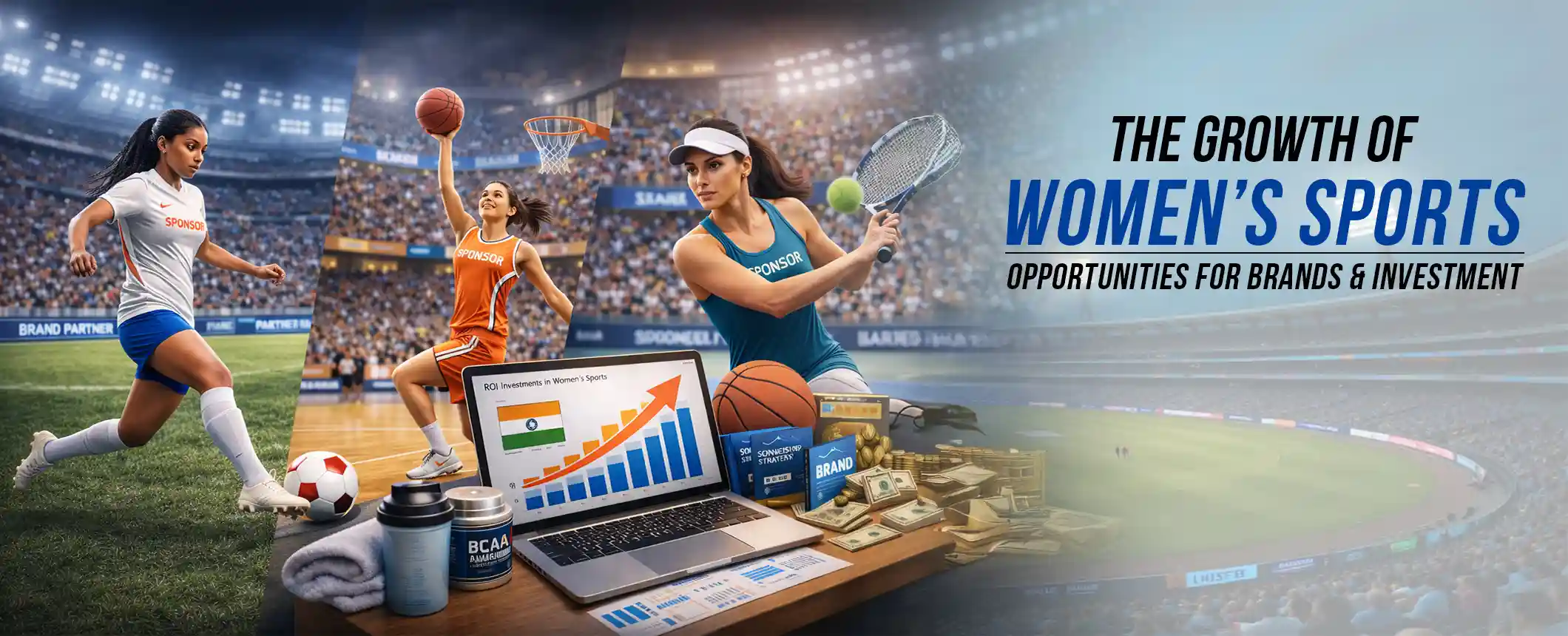
The Growth of Women’s Sports: Opportunities for Brands & Investment
Women in Blue has changed the picture of women’s sports.
When Harmanpreet Kaur lifted the World Cup trophy, the moment was written in history forever, but that also brought a cultural reset in the growth of women’s sports.
For decades, women’s cricket in India lived on the fringes of a cricket-obsessed nation, admired but rarely celebrated. That single moment on the global stage did what years of campaigns, policies, and promises could not. It pushed women’s sports into the national spotlight. The packed stands, viral clips, and trending hashtags were enough to claim the beginning of a movement. That said, women’s sports in India represent far more than competition. It is reshaping how audiences consume sports, how media tell stories, and how brands and investors evaluate opportunity. From cricket grounds to shooting ranges and football pitches, female athletes are changing the narrative, driving participation, commanding attention, and building emotional connections with fans in ways that feel authentic and future-facing.
India has seen a sharp rise in women’s participation across sports: Registered women footballers have increased more than fourfold since 2016, female representation in shooting has doubled, and women’s medal contribution at the Asian Games has steadily climbed. These aren’t isolated spikes; they signal a structural change.
India is now witnessing a transformation powered largely by women.
For brands and investors, this moment is impossible to ignore. Women’s sports offer growing audiences, loyal fan bases, and narratives rooted in resilience and aspiration -values modern consumers actively seek. As athletes like Harmanpreet Kaur become icons beyond their sport, they unlock new commercial ecosystems, from sponsorships and media rights to grassroots development and long-term brand equity.
The Rise of Women’s Sports in India – A compelling business story waiting to be fully written
Govt. Initiation Behind the Rise of Women’s Sports
Government-backed initiatives have played a pivotal role in accelerating the growth of women’s sports in India by actively encouraging private sector participation while offering direct institutional support.
Launched in 2021 by the Ministry of Youth Affairs and Sports (MYAS), ASMITA – Achieving Sports Milestone by Inspiring Women Through Action, emerged from the former Khelo India Women’s League and reflects the resilience and rising ambition of Indian women athletes.
Under the Khelo India framework, ASMITA leagues provide structured competition, financial assistance, and talent identification opportunities across age groups at zonal and national levels, supported by the Sports Authority of India (SAI) and National Sports Federations.
The impact of ASMITA is visible in its scale and reach. In FY 2024–25, 550 ASMITA leagues were conducted across 27 sports disciplines. These leagues engaged over 53,000 women athletes. The competitions reached more than 450 cities across 34 States and Union Territories. Building on this momentum, FY 2025–26 has an even larger vision. A total of 852 ASMITA leagues are planned across 15 sports disciplines. These leagues aim to reach more than 70,000 women athletes nationwide. Together, these efforts reinforce ASMITA as a cornerstone of India’s grassroots-driven growth in women’s sports.
By creating a consistent competitive structure and a nationwide talent pipeline, ASMITA is also strengthening the commercial foundation of women’s sports, making leagues more attractive to sponsors, broadcasters, and investors while enabling athletes to build sustainable professional careers.
Investment in Indian women’s sports
Capri Sports is steadily strengthening its investment in women’s sports in India, building a multi-sport and impact-driven presence. The group owns the UP Warriorz, a founding franchise of the Women’s Premier League (WPL), and Warriorz FC, a Mumbai-based women’s football team, reinforcing its long-term commitment to women-led leagues.
Through its CSR arm, Beyond the Scorecard, Capri Sports has supported over 11 programmes, positively impacting more than 10,000 girls and underserved youth by using sport as a pathway to education, nutrition, leadership, and visibility. Expanding this vision, Capri Sports launched The Sports Women (TSW) in August 2025- an initiative focused on reshaping how women athletes in India are supported, celebrated, and empowered. As Director Jinisha Sharma notes, the initiative aims to build platforms and create opportunities that reflect the true potential of Indian women athletes. Media reports further highlight Capri Sports’ growing confidence in the sector, with the acquisition of UP Warriorz for ₹757 crore and plans to increase investments in women’s sports, underscoring the rising commercial and social value of the women’s sports ecosystem.
Source: KPMG Sportlight: The Business of Sports in India:
Women’s sports are no longer viewed as a niche segment but are rapidly emerging as a powerful commercial property for global and Indian brands alike. This shift is evident in the scale of audience engagement, with the FIFA Women’s World Cup 2023 drawing nearly 2 billion viewers worldwide and attracting major sponsors such as Visa, Adidas, and Coca-Cola. Across industries, sponsorship strategies are increasingly embedding gender parity, positioning women’s sports as a core pillar rather than a secondary investment.
At the global level, the International Cricket Council (ICC) has entered a landmark women’s-only partnership with Google, launched ahead of the ICC Women’s Cricket World Cup 2025 and T20 World Cup 2026. The collaboration aims to enhance fan engagement and accessibility in women’s cricket by leveraging technologies, including Android, Google Gemini, Google Pay, and Google Pixel.
The WPL as a Magnet for Brand Investment
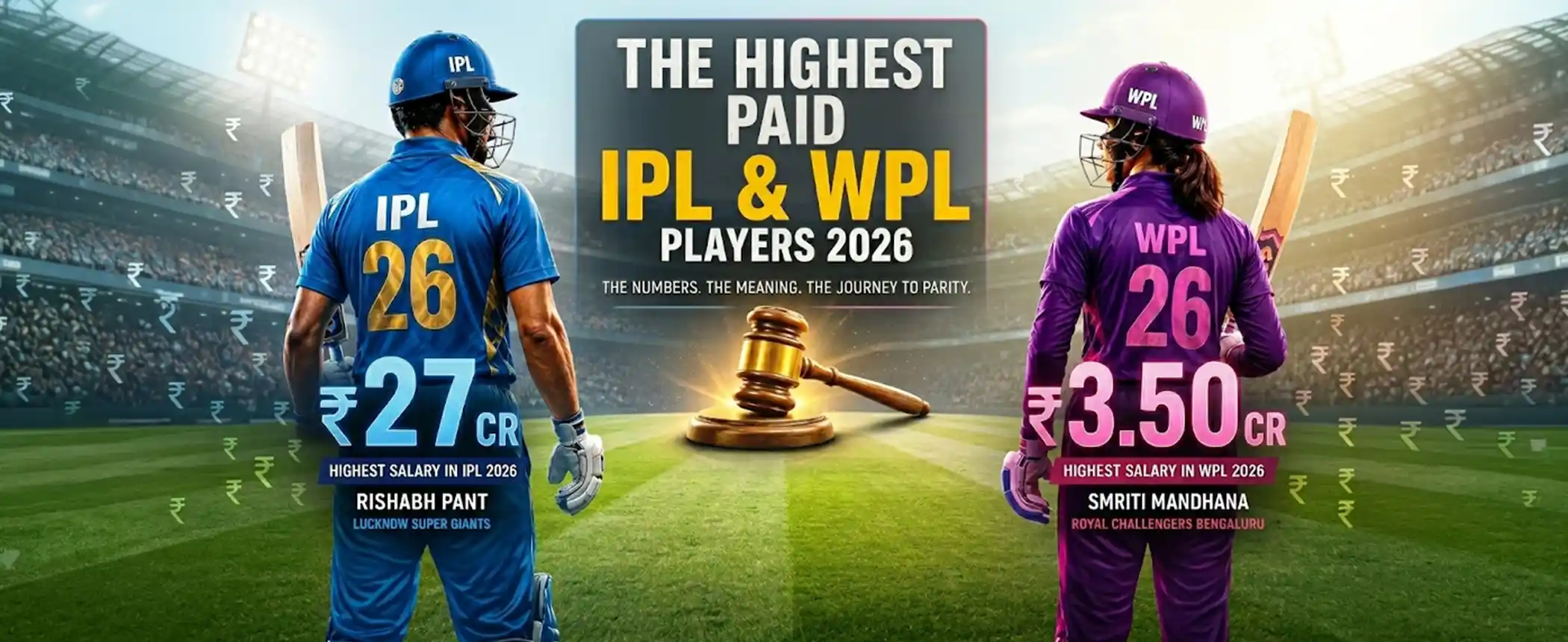
In India, the commercial momentum is equally strong, reflecting the rapid growth of women in sports across leagues and audiences. The BCCI has secured sponsorship deals worth ₹48 crore for the Women’s Premier League (WPL) 2026 and 2027 seasons, with ChatGPT and Kingfisher Packaged Drinking Water joining the league’s ecosystem as premier partner, while Bisleri has come on board as the beverage partner, signalling growing brand confidence in the commercial and cultural value of women’s sports.
Future Roadmap:
Women’s sports in India are undergoing a fundamental shift.
The commercial value of women’s sports in India is projected to reach nearly $900 million by 2030, driven by a rapidly expanding ecosystem that extends beyond on-field performance. The Women’s Premier League (WPL) has been a key catalyst, demonstrating strong viewership, rising sponsorship interest, and the creation of viable professional pathways for women athletes. With an estimated 30 lakh social media fanbase, the WPL has emerged as the fastest-growing women’s league in India, gaining traction with every season.
This transformation is not limited to cricket.
Across disciplines, Indian women athletes are delivering historic performances on the global stage, PV Sindhu’s two Olympic medals in badminton, Mary Kom and Mirabai Chanu’s medal-winning feats in boxing and weightlifting, and Manu Bhaker becoming the first Indian shooter to win two medals at a single Olympic Games. Adding to this momentum is the rise of young chess grandmaster Divya Deshmukh. Together, these achievements signal more than sporting success; they reflect a cultural and commercial evolution, with women athletes inspiring a new generation and firmly positioning the future of Indian sports as female.
India’s women’s World Cup victory triggered a clear “sports equity shift,” marked by surging viewership of women’s tournaments, record ticket sales, and unprecedented digital and social media engagement. This momentum has quickly translated into a commercial opportunity.
The sponsorship focus of brands like Puma and JSW on women’s sports, influencer partnerships, and athlete-led brand endorsements makes women athletes recognized as valuable brand assets rather than niche ambassadors.
At the league level, Women’s Premier League franchises have reported increased merchandise sales and sustained growth in fan engagement following the World Cup. Importantly, financial progress is now aligned with recognition. Record prize money and moves toward equal pay have strengthened athlete confidence and positioned India as a global example of gender parity in sports economics.